Ram Pada Das, Minati Nayak, Beena Gobind Singh, Koushik Majee, Amit Kunwar
{"title":"姜黄素交联对以姜黄素为载体的明胶纳米载体细胞递送的影响。","authors":"Ram Pada Das, Minati Nayak, Beena Gobind Singh, Koushik Majee, Amit Kunwar","doi":"10.1155/ijbm/9512576","DOIUrl":null,"url":null,"abstract":"<p><p>Gelatin-based nanoformulations have received special attention for drug delivery applications because of their regulatory acceptability. A thorough understanding of the factors controlling the interaction of gelatin nanocarriers with cellular systems is crucial for their future biomedical applications. The present study addresses the effect of genipin crosslinking on the ability of gelatin nanoparticles (GNPs) to deliver curcumin, a pharmacologically active ingredient from turmeric into lung cancer (A549) cells. Briefly, the methodology was optimized to prepare GNP (15 mg/mL) crosslinked with 0.25, 0.5, and 1.0 mg/mL of genipin (GN-GNP1-3, respectively). The crosslinking of GN-GNP1-3 was established through UV-VIS, Fourier transform infrared spectroscopy, and circular dichroism measurements. Dynamic light scattering and transmission electron microscopy showed nearly identical hydrodynamic size (165 ± 15 nm) and shape (spherical) for GN-GNP1-3. Subsequently, these nanocarriers were loaded with curcumin and evaluated for drug delivery properties (loading efficiency and release kinetics), cellular uptake, cytotoxicity, and associated mechanisms. These studies together revealed that GN-GNP1-3 of increasing degree of crosslinking exhibited higher curcumin loading efficiency, facilitated slow and sustained release of curcumin over a prolonged period (80 h) by a non-Fickian mechanism, and ultimately increased the cellular uptake and the effectiveness (or cytotoxicity) of entrapped curcumin in A549 cells. The pharmacological abrogation investigations established that curcumin-loaded GN-GNP3 was internalized within A549 cells through caveolae-mediated endocytosis. In conclusion, genipin crosslinking of gelatin-based nanocarriers seemed to be a novel strategy to increase the cellular uptake cum effectiveness of a hydrophobic payload like curcumin.</p>","PeriodicalId":13704,"journal":{"name":"International Journal of Biomaterials","volume":"2026 ","pages":"9512576"},"PeriodicalIF":4.5000,"publicationDate":"2026-02-13","publicationTypes":"Journal Article","fieldsOfStudy":null,"isOpenAccess":false,"openAccessPdf":"https://www.ncbi.nlm.nih.gov/pmc/articles/PMC12905463/pdf/","citationCount":"0","resultStr":"{\"title\":\"Effect of Genipin Crosslinking on the Cellular Delivery of Gelatin Nanocarriers Using Curcumin as a Payload.\",\"authors\":\"Ram Pada Das, Minati Nayak, Beena Gobind Singh, Koushik Majee, Amit Kunwar\",\"doi\":\"10.1155/ijbm/9512576\",\"DOIUrl\":null,\"url\":null,\"abstract\":\"<p><p>Gelatin-based nanoformulations have received special attention for drug delivery applications because of their regulatory acceptability. A thorough understanding of the factors controlling the interaction of gelatin nanocarriers with cellular systems is crucial for their future biomedical applications. The present study addresses the effect of genipin crosslinking on the ability of gelatin nanoparticles (GNPs) to deliver curcumin, a pharmacologically active ingredient from turmeric into lung cancer (A549) cells. Briefly, the methodology was optimized to prepare GNP (15 mg/mL) crosslinked with 0.25, 0.5, and 1.0 mg/mL of genipin (GN-GNP1-3, respectively). The crosslinking of GN-GNP1-3 was established through UV-VIS, Fourier transform infrared spectroscopy, and circular dichroism measurements. Dynamic light scattering and transmission electron microscopy showed nearly identical hydrodynamic size (165 ± 15 nm) and shape (spherical) for GN-GNP1-3. Subsequently, these nanocarriers were loaded with curcumin and evaluated for drug delivery properties (loading efficiency and release kinetics), cellular uptake, cytotoxicity, and associated mechanisms. These studies together revealed that GN-GNP1-3 of increasing degree of crosslinking exhibited higher curcumin loading efficiency, facilitated slow and sustained release of curcumin over a prolonged period (80 h) by a non-Fickian mechanism, and ultimately increased the cellular uptake and the effectiveness (or cytotoxicity) of entrapped curcumin in A549 cells. The pharmacological abrogation investigations established that curcumin-loaded GN-GNP3 was internalized within A549 cells through caveolae-mediated endocytosis. In conclusion, genipin crosslinking of gelatin-based nanocarriers seemed to be a novel strategy to increase the cellular uptake cum effectiveness of a hydrophobic payload like curcumin.</p>\",\"PeriodicalId\":13704,\"journal\":{\"name\":\"International Journal of Biomaterials\",\"volume\":\"2026 \",\"pages\":\"9512576\"},\"PeriodicalIF\":4.5000,\"publicationDate\":\"2026-02-13\",\"publicationTypes\":\"Journal Article\",\"fieldsOfStudy\":null,\"isOpenAccess\":false,\"openAccessPdf\":\"https://www.ncbi.nlm.nih.gov/pmc/articles/PMC12905463/pdf/\",\"citationCount\":\"0\",\"resultStr\":null,\"platform\":\"Semanticscholar\",\"paperid\":null,\"PeriodicalName\":\"International Journal of Biomaterials\",\"FirstCategoryId\":\"1085\",\"ListUrlMain\":\"https://doi.org/10.1155/ijbm/9512576\",\"RegionNum\":0,\"RegionCategory\":null,\"ArticlePicture\":[],\"TitleCN\":null,\"AbstractTextCN\":null,\"PMCID\":null,\"EPubDate\":\"2026/1/1 0:00:00\",\"PubModel\":\"eCollection\",\"JCR\":\"Q3\",\"JCRName\":\"MATERIALS SCIENCE, BIOMATERIALS\",\"Score\":null,\"Total\":0}","platform":"Semanticscholar","paperid":null,"PeriodicalName":"International Journal of Biomaterials","FirstCategoryId":"1085","ListUrlMain":"https://doi.org/10.1155/ijbm/9512576","RegionNum":0,"RegionCategory":null,"ArticlePicture":[],"TitleCN":null,"AbstractTextCN":null,"PMCID":null,"EPubDate":"2026/1/1 0:00:00","PubModel":"eCollection","JCR":"Q3","JCRName":"MATERIALS SCIENCE, BIOMATERIALS","Score":null,"Total":0}
Effect of Genipin Crosslinking on the Cellular Delivery of Gelatin Nanocarriers Using Curcumin as a Payload.
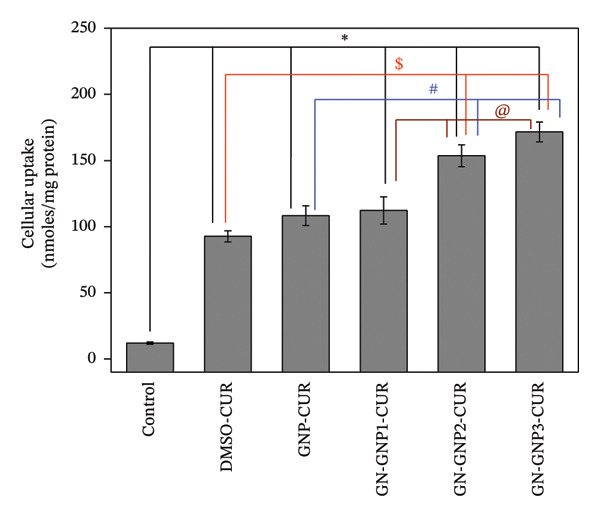
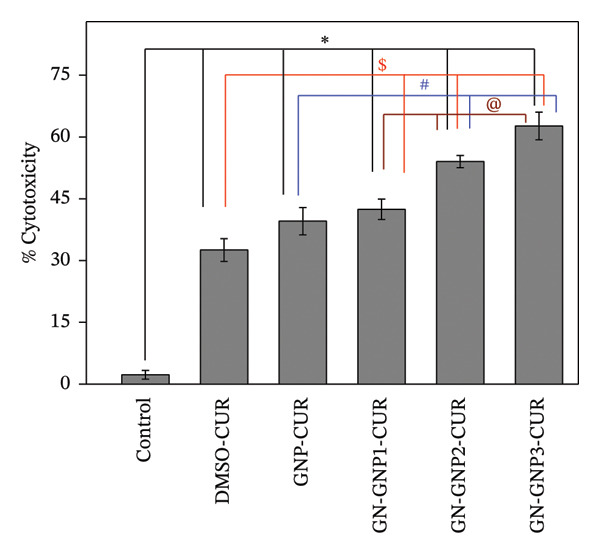
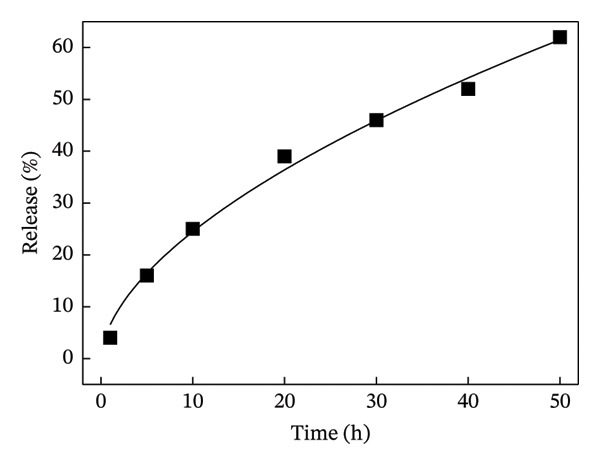
Gelatin-based nanoformulations have received special attention for drug delivery applications because of their regulatory acceptability. A thorough understanding of the factors controlling the interaction of gelatin nanocarriers with cellular systems is crucial for their future biomedical applications. The present study addresses the effect of genipin crosslinking on the ability of gelatin nanoparticles (GNPs) to deliver curcumin, a pharmacologically active ingredient from turmeric into lung cancer (A549) cells. Briefly, the methodology was optimized to prepare GNP (15 mg/mL) crosslinked with 0.25, 0.5, and 1.0 mg/mL of genipin (GN-GNP1-3, respectively). The crosslinking of GN-GNP1-3 was established through UV-VIS, Fourier transform infrared spectroscopy, and circular dichroism measurements. Dynamic light scattering and transmission electron microscopy showed nearly identical hydrodynamic size (165 ± 15 nm) and shape (spherical) for GN-GNP1-3. Subsequently, these nanocarriers were loaded with curcumin and evaluated for drug delivery properties (loading efficiency and release kinetics), cellular uptake, cytotoxicity, and associated mechanisms. These studies together revealed that GN-GNP1-3 of increasing degree of crosslinking exhibited higher curcumin loading efficiency, facilitated slow and sustained release of curcumin over a prolonged period (80 h) by a non-Fickian mechanism, and ultimately increased the cellular uptake and the effectiveness (or cytotoxicity) of entrapped curcumin in A549 cells. The pharmacological abrogation investigations established that curcumin-loaded GN-GNP3 was internalized within A549 cells through caveolae-mediated endocytosis. In conclusion, genipin crosslinking of gelatin-based nanocarriers seemed to be a novel strategy to increase the cellular uptake cum effectiveness of a hydrophobic payload like curcumin.


 求助内容:
求助内容: 应助结果提醒方式:

 京公网安备 11010802042870号


