Maria A. Gordeeva , Eugenia N. Homutinnikova , Gennady K. Vdovin , Dmitry A. Medvedev
{"title":"固体氧化物电化学电池的欧姆电阻和极化电阻是否相互独立?","authors":"Maria A. Gordeeva , Eugenia N. Homutinnikova , Gennady K. Vdovin , Dmitry A. Medvedev","doi":"10.1016/j.ijhydene.2026.154040","DOIUrl":null,"url":null,"abstract":"<div><div>Solid oxide electrochemical cells (SOCs) operating at low and intermediate temperatures represent a promising technology for efficient and environmentally friendly energy conversion. The performance of these cells is predominantly governed by their total area specific resistance, which comprises two principal components: the ohmic resistance (associated with ionic transport within the electrolyte) and the polarization resistance (originating from electrode reaction kinetics). Consequently, the rational design of high-performance SOCs necessitates the independent optimization of these resistive contributions. It is generally accepted that ohmic and polarization resistances are intrinsic properties of the electrolyte and electrodes, respectively, and can thus be controlled separately through material doping or microstructural engineering of the corresponding components. However, the electrolyte and electrode materials form a common area (interface), indicating their close relation to each other. In the present study, a simple experiment was conducted to confirm the relationship between ohmic and polarization resistances. In detail, several symmetrical cells were prepared using the same electrode material and various electrolytes. It was shown that the polarization resistance of the electrode was as low as higher ionic conductivity of the electrolytes under identical experimental conditions. The obtained results are further discussed within the broader context of literature data for protonic ceramic fuel and electrolysis cells, revealing a commonality: the performance of the electrode is not an isolated property but is intrinsically linked to the characteristics of the electrolyte with which it interfaces.</div></div>","PeriodicalId":337,"journal":{"name":"International Journal of Hydrogen Energy","volume":"218 ","pages":"Article 154040"},"PeriodicalIF":8.3000,"publicationDate":"2026-03-17","publicationTypes":"Journal Article","fieldsOfStudy":null,"isOpenAccess":false,"openAccessPdf":"","citationCount":"0","resultStr":"{\"title\":\"Are the ohmic and polarization resistances of solid oxide electrochemical cells independent from each other?\",\"authors\":\"Maria A. Gordeeva , Eugenia N. Homutinnikova , Gennady K. Vdovin , Dmitry A. Medvedev\",\"doi\":\"10.1016/j.ijhydene.2026.154040\",\"DOIUrl\":null,\"url\":null,\"abstract\":\"<div><div>Solid oxide electrochemical cells (SOCs) operating at low and intermediate temperatures represent a promising technology for efficient and environmentally friendly energy conversion. The performance of these cells is predominantly governed by their total area specific resistance, which comprises two principal components: the ohmic resistance (associated with ionic transport within the electrolyte) and the polarization resistance (originating from electrode reaction kinetics). Consequently, the rational design of high-performance SOCs necessitates the independent optimization of these resistive contributions. It is generally accepted that ohmic and polarization resistances are intrinsic properties of the electrolyte and electrodes, respectively, and can thus be controlled separately through material doping or microstructural engineering of the corresponding components. However, the electrolyte and electrode materials form a common area (interface), indicating their close relation to each other. In the present study, a simple experiment was conducted to confirm the relationship between ohmic and polarization resistances. In detail, several symmetrical cells were prepared using the same electrode material and various electrolytes. It was shown that the polarization resistance of the electrode was as low as higher ionic conductivity of the electrolytes under identical experimental conditions. The obtained results are further discussed within the broader context of literature data for protonic ceramic fuel and electrolysis cells, revealing a commonality: the performance of the electrode is not an isolated property but is intrinsically linked to the characteristics of the electrolyte with which it interfaces.</div></div>\",\"PeriodicalId\":337,\"journal\":{\"name\":\"International Journal of Hydrogen Energy\",\"volume\":\"218 \",\"pages\":\"Article 154040\"},\"PeriodicalIF\":8.3000,\"publicationDate\":\"2026-03-17\",\"publicationTypes\":\"Journal Article\",\"fieldsOfStudy\":null,\"isOpenAccess\":false,\"openAccessPdf\":\"\",\"citationCount\":\"0\",\"resultStr\":null,\"platform\":\"Semanticscholar\",\"paperid\":null,\"PeriodicalName\":\"International Journal of Hydrogen Energy\",\"FirstCategoryId\":\"5\",\"ListUrlMain\":\"https://www.sciencedirect.com/science/article/pii/S0360319926006774\",\"RegionNum\":2,\"RegionCategory\":\"工程技术\",\"ArticlePicture\":[],\"TitleCN\":null,\"AbstractTextCN\":null,\"PMCID\":null,\"EPubDate\":\"2026/2/14 0:00:00\",\"PubModel\":\"Epub\",\"JCR\":\"Q1\",\"JCRName\":\"CHEMISTRY, PHYSICAL\",\"Score\":null,\"Total\":0}","platform":"Semanticscholar","paperid":null,"PeriodicalName":"International Journal of Hydrogen Energy","FirstCategoryId":"5","ListUrlMain":"https://www.sciencedirect.com/science/article/pii/S0360319926006774","RegionNum":2,"RegionCategory":"工程技术","ArticlePicture":[],"TitleCN":null,"AbstractTextCN":null,"PMCID":null,"EPubDate":"2026/2/14 0:00:00","PubModel":"Epub","JCR":"Q1","JCRName":"CHEMISTRY, PHYSICAL","Score":null,"Total":0}
Are the ohmic and polarization resistances of solid oxide electrochemical cells independent from each other?
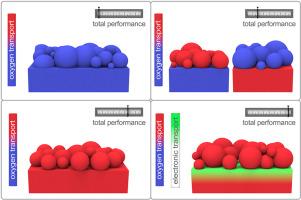
Solid oxide electrochemical cells (SOCs) operating at low and intermediate temperatures represent a promising technology for efficient and environmentally friendly energy conversion. The performance of these cells is predominantly governed by their total area specific resistance, which comprises two principal components: the ohmic resistance (associated with ionic transport within the electrolyte) and the polarization resistance (originating from electrode reaction kinetics). Consequently, the rational design of high-performance SOCs necessitates the independent optimization of these resistive contributions. It is generally accepted that ohmic and polarization resistances are intrinsic properties of the electrolyte and electrodes, respectively, and can thus be controlled separately through material doping or microstructural engineering of the corresponding components. However, the electrolyte and electrode materials form a common area (interface), indicating their close relation to each other. In the present study, a simple experiment was conducted to confirm the relationship between ohmic and polarization resistances. In detail, several symmetrical cells were prepared using the same electrode material and various electrolytes. It was shown that the polarization resistance of the electrode was as low as higher ionic conductivity of the electrolytes under identical experimental conditions. The obtained results are further discussed within the broader context of literature data for protonic ceramic fuel and electrolysis cells, revealing a commonality: the performance of the electrode is not an isolated property but is intrinsically linked to the characteristics of the electrolyte with which it interfaces.
期刊介绍:
The objective of the International Journal of Hydrogen Energy is to facilitate the exchange of new ideas, technological advancements, and research findings in the field of Hydrogen Energy among scientists and engineers worldwide. This journal showcases original research, both analytical and experimental, covering various aspects of Hydrogen Energy. These include production, storage, transmission, utilization, enabling technologies, environmental impact, economic considerations, and global perspectives on hydrogen and its carriers such as NH3, CH4, alcohols, etc.
The utilization aspect encompasses various methods such as thermochemical (combustion), photochemical, electrochemical (fuel cells), and nuclear conversion of hydrogen, hydrogen isotopes, and hydrogen carriers into thermal, mechanical, and electrical energies. The applications of these energies can be found in transportation (including aerospace), industrial, commercial, and residential sectors.