J. Aravind Kumar , A. Annam Renita , S. Sathish , D. Prabu , Ashwin Jacob , Ahmad Hosseini-Bandegharaei , M. Kavisri , Meivelu Moovendhan
{"title":"环境中的微塑料:来源,影响,降解策略和能源回收方案-严格审查","authors":"J. Aravind Kumar , A. Annam Renita , S. Sathish , D. Prabu , Ashwin Jacob , Ahmad Hosseini-Bandegharaei , M. Kavisri , Meivelu Moovendhan","doi":"10.1016/j.pce.2026.104323","DOIUrl":null,"url":null,"abstract":"<div><div>Microplastics, pervasive in the environment, have emanated as a pressing environmental implication due to their widespread dispersal and potential adverse effects on ecosystems and human health. This comprehensive review succumbs an in-depth scrutiny of microplastics, encompassing their sources, distributions, and environmental impacts. Sources of microplastics encompass a wide array of industrial and household activities, ranging from daily care products to the food industry and common household items. In addition, algae play a key part in the degrading processes that microplastics undergo, with macro- and microalgae being major players in remediation initiatives. To understand the flowing ecological effects, the complex relationships that microplastics have with marine organisms, especially those that are part of the marine food web are examined. Furthermore, cutting-edge process technologies like anaerobic digestion, hydrothermal liquefaction (HTL), and thermal hydrolysis process (THP) present viable paths for managing microplastics, with a focus on energy recovery via co-digestion procedures. The review additionally presents potential directives for forthcoming research, highlighting the necessity of continuing efforts to maximize cleanup tactics, lessen environmental effects, and protect ecosystems around the world from the increasingly dangerous threat of microplastic pollution. Biodegradation strategies for disintegrating such microplastic were also highlighted and explored at the outset.</div></div>","PeriodicalId":54616,"journal":{"name":"Physics and Chemistry of the Earth","volume":"143 ","pages":"Article 104323"},"PeriodicalIF":4.1000,"publicationDate":"2026-06-01","publicationTypes":"Journal Article","fieldsOfStudy":null,"isOpenAccess":false,"openAccessPdf":"","citationCount":"0","resultStr":"{\"title\":\"Microplastics in the environment: Sources, impacts, degradation strategies and energy recovery options-A rigorous review\",\"authors\":\"J. Aravind Kumar , A. Annam Renita , S. Sathish , D. Prabu , Ashwin Jacob , Ahmad Hosseini-Bandegharaei , M. Kavisri , Meivelu Moovendhan\",\"doi\":\"10.1016/j.pce.2026.104323\",\"DOIUrl\":null,\"url\":null,\"abstract\":\"<div><div>Microplastics, pervasive in the environment, have emanated as a pressing environmental implication due to their widespread dispersal and potential adverse effects on ecosystems and human health. This comprehensive review succumbs an in-depth scrutiny of microplastics, encompassing their sources, distributions, and environmental impacts. Sources of microplastics encompass a wide array of industrial and household activities, ranging from daily care products to the food industry and common household items. In addition, algae play a key part in the degrading processes that microplastics undergo, with macro- and microalgae being major players in remediation initiatives. To understand the flowing ecological effects, the complex relationships that microplastics have with marine organisms, especially those that are part of the marine food web are examined. Furthermore, cutting-edge process technologies like anaerobic digestion, hydrothermal liquefaction (HTL), and thermal hydrolysis process (THP) present viable paths for managing microplastics, with a focus on energy recovery via co-digestion procedures. The review additionally presents potential directives for forthcoming research, highlighting the necessity of continuing efforts to maximize cleanup tactics, lessen environmental effects, and protect ecosystems around the world from the increasingly dangerous threat of microplastic pollution. Biodegradation strategies for disintegrating such microplastic were also highlighted and explored at the outset.</div></div>\",\"PeriodicalId\":54616,\"journal\":{\"name\":\"Physics and Chemistry of the Earth\",\"volume\":\"143 \",\"pages\":\"Article 104323\"},\"PeriodicalIF\":4.1000,\"publicationDate\":\"2026-06-01\",\"publicationTypes\":\"Journal Article\",\"fieldsOfStudy\":null,\"isOpenAccess\":false,\"openAccessPdf\":\"\",\"citationCount\":\"0\",\"resultStr\":null,\"platform\":\"Semanticscholar\",\"paperid\":null,\"PeriodicalName\":\"Physics and Chemistry of the Earth\",\"FirstCategoryId\":\"89\",\"ListUrlMain\":\"https://www.sciencedirect.com/science/article/pii/S1474706526000562\",\"RegionNum\":3,\"RegionCategory\":\"地球科学\",\"ArticlePicture\":[],\"TitleCN\":null,\"AbstractTextCN\":null,\"PMCID\":null,\"EPubDate\":\"2026/1/28 0:00:00\",\"PubModel\":\"Epub\",\"JCR\":\"Q2\",\"JCRName\":\"GEOSCIENCES, MULTIDISCIPLINARY\",\"Score\":null,\"Total\":0}","platform":"Semanticscholar","paperid":null,"PeriodicalName":"Physics and Chemistry of the Earth","FirstCategoryId":"89","ListUrlMain":"https://www.sciencedirect.com/science/article/pii/S1474706526000562","RegionNum":3,"RegionCategory":"地球科学","ArticlePicture":[],"TitleCN":null,"AbstractTextCN":null,"PMCID":null,"EPubDate":"2026/1/28 0:00:00","PubModel":"Epub","JCR":"Q2","JCRName":"GEOSCIENCES, MULTIDISCIPLINARY","Score":null,"Total":0}
Microplastics in the environment: Sources, impacts, degradation strategies and energy recovery options-A rigorous review
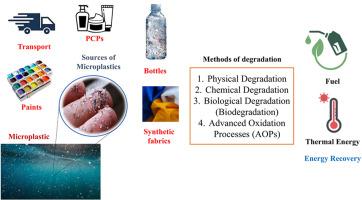
Microplastics, pervasive in the environment, have emanated as a pressing environmental implication due to their widespread dispersal and potential adverse effects on ecosystems and human health. This comprehensive review succumbs an in-depth scrutiny of microplastics, encompassing their sources, distributions, and environmental impacts. Sources of microplastics encompass a wide array of industrial and household activities, ranging from daily care products to the food industry and common household items. In addition, algae play a key part in the degrading processes that microplastics undergo, with macro- and microalgae being major players in remediation initiatives. To understand the flowing ecological effects, the complex relationships that microplastics have with marine organisms, especially those that are part of the marine food web are examined. Furthermore, cutting-edge process technologies like anaerobic digestion, hydrothermal liquefaction (HTL), and thermal hydrolysis process (THP) present viable paths for managing microplastics, with a focus on energy recovery via co-digestion procedures. The review additionally presents potential directives for forthcoming research, highlighting the necessity of continuing efforts to maximize cleanup tactics, lessen environmental effects, and protect ecosystems around the world from the increasingly dangerous threat of microplastic pollution. Biodegradation strategies for disintegrating such microplastic were also highlighted and explored at the outset.
期刊介绍:
Physics and Chemistry of the Earth is an international interdisciplinary journal for the rapid publication of collections of refereed communications in separate thematic issues, either stemming from scientific meetings, or, especially compiled for the occasion. There is no restriction on the length of articles published in the journal. Physics and Chemistry of the Earth incorporates the separate Parts A, B and C which existed until the end of 2001.
Please note: the Editors are unable to consider submissions that are not invited or linked to a thematic issue. Please do not submit unsolicited papers.
The journal covers the following subject areas:
-Solid Earth and Geodesy:
(geology, geochemistry, tectonophysics, seismology, volcanology, palaeomagnetism and rock magnetism, electromagnetism and potential fields, marine and environmental geosciences as well as geodesy).
-Hydrology, Oceans and Atmosphere:
(hydrology and water resources research, engineering and management, oceanography and oceanic chemistry, shelf, sea, lake and river sciences, meteorology and atmospheric sciences incl. chemistry as well as climatology and glaciology).
-Solar-Terrestrial and Planetary Science:
(solar, heliospheric and solar-planetary sciences, geology, geophysics and atmospheric sciences of planets, satellites and small bodies as well as cosmochemistry and exobiology).