Yafei Zhao , Qiong Zhang , Wenxuan Ma , Yongqiang He , Aiyun Zhao , Meng Qi , Hui Dong
{"title":"新疆屠宰场羊肉囊菌的分子特征。","authors":"Yafei Zhao , Qiong Zhang , Wenxuan Ma , Yongqiang He , Aiyun Zhao , Meng Qi , Hui Dong","doi":"10.1016/j.fawpar.2026.e00318","DOIUrl":null,"url":null,"abstract":"<div><div><em>Sarcocystis</em> is an important zoonotic protozoan parasites. This study collected 354 tissue samples (22 skeletal muscle samples, 74 diaphragm samples, 171 heart samples, and 87 esophagus samples) from 354 sheep across seven slaughterhouses in seven cities of Xinjiang. Screening for <em>Sarcocystis</em> spp. was performed using PCR targeting the <em><em>18S rRNA</em></em> gene, with confirmation PCR targeting the <em><em>COX 1</em></em> gene. The infection rate was determined to be 30.2% (107/354). All seven cities tested positive for <em>Sarcocystis</em>, with the highest infection rate in Tacheng (95.5%, 21/22) and the lowest infection rate in Kuqa (9.2%, 9/98). The infection rates by tissue were as follows: 95.5% (21/22) in skeletal muscles, 40.5% (30/74) in diaphragm, 24.0% (41/171) in heart, and 17.2% (15/87) in esophageal, respectively. Two <em>Sarcocystis</em> species were identified from the 107 positive samples: <em>S. tenella</em> (<em>n</em> = 106) and <em>S. arieticanis</em> (n = 1). Five genotypes of <em>S. tenella</em> and one genotype of <em>S. arieticanis</em> were identified, all of which clustered closely with previously discovered isolates. These results enhance our understanding of the epidemiological status of <em>Sarcocystis</em> in sheep in Xinjiang.</div></div>","PeriodicalId":37941,"journal":{"name":"Food and Waterborne Parasitology","volume":"42 ","pages":"Article e00318"},"PeriodicalIF":3.1000,"publicationDate":"2026-03-01","publicationTypes":"Journal Article","fieldsOfStudy":null,"isOpenAccess":false,"openAccessPdf":"","citationCount":"0","resultStr":"{\"title\":\"Molecular characteristics of Sarcocystis spp. in sheep from slaughterhouse in Xinjiang, China\",\"authors\":\"Yafei Zhao , Qiong Zhang , Wenxuan Ma , Yongqiang He , Aiyun Zhao , Meng Qi , Hui Dong\",\"doi\":\"10.1016/j.fawpar.2026.e00318\",\"DOIUrl\":null,\"url\":null,\"abstract\":\"<div><div><em>Sarcocystis</em> is an important zoonotic protozoan parasites. This study collected 354 tissue samples (22 skeletal muscle samples, 74 diaphragm samples, 171 heart samples, and 87 esophagus samples) from 354 sheep across seven slaughterhouses in seven cities of Xinjiang. Screening for <em>Sarcocystis</em> spp. was performed using PCR targeting the <em><em>18S rRNA</em></em> gene, with confirmation PCR targeting the <em><em>COX 1</em></em> gene. The infection rate was determined to be 30.2% (107/354). All seven cities tested positive for <em>Sarcocystis</em>, with the highest infection rate in Tacheng (95.5%, 21/22) and the lowest infection rate in Kuqa (9.2%, 9/98). The infection rates by tissue were as follows: 95.5% (21/22) in skeletal muscles, 40.5% (30/74) in diaphragm, 24.0% (41/171) in heart, and 17.2% (15/87) in esophageal, respectively. Two <em>Sarcocystis</em> species were identified from the 107 positive samples: <em>S. tenella</em> (<em>n</em> = 106) and <em>S. arieticanis</em> (n = 1). Five genotypes of <em>S. tenella</em> and one genotype of <em>S. arieticanis</em> were identified, all of which clustered closely with previously discovered isolates. These results enhance our understanding of the epidemiological status of <em>Sarcocystis</em> in sheep in Xinjiang.</div></div>\",\"PeriodicalId\":37941,\"journal\":{\"name\":\"Food and Waterborne Parasitology\",\"volume\":\"42 \",\"pages\":\"Article e00318\"},\"PeriodicalIF\":3.1000,\"publicationDate\":\"2026-03-01\",\"publicationTypes\":\"Journal Article\",\"fieldsOfStudy\":null,\"isOpenAccess\":false,\"openAccessPdf\":\"\",\"citationCount\":\"0\",\"resultStr\":null,\"platform\":\"Semanticscholar\",\"paperid\":null,\"PeriodicalName\":\"Food and Waterborne Parasitology\",\"FirstCategoryId\":\"1085\",\"ListUrlMain\":\"https://www.sciencedirect.com/science/article/pii/S2405676626000041\",\"RegionNum\":0,\"RegionCategory\":null,\"ArticlePicture\":[],\"TitleCN\":null,\"AbstractTextCN\":null,\"PMCID\":null,\"EPubDate\":\"2026/1/31 0:00:00\",\"PubModel\":\"Epub\",\"JCR\":\"Q2\",\"JCRName\":\"PARASITOLOGY\",\"Score\":null,\"Total\":0}","platform":"Semanticscholar","paperid":null,"PeriodicalName":"Food and Waterborne Parasitology","FirstCategoryId":"1085","ListUrlMain":"https://www.sciencedirect.com/science/article/pii/S2405676626000041","RegionNum":0,"RegionCategory":null,"ArticlePicture":[],"TitleCN":null,"AbstractTextCN":null,"PMCID":null,"EPubDate":"2026/1/31 0:00:00","PubModel":"Epub","JCR":"Q2","JCRName":"PARASITOLOGY","Score":null,"Total":0}
Molecular characteristics of Sarcocystis spp. in sheep from slaughterhouse in Xinjiang, China
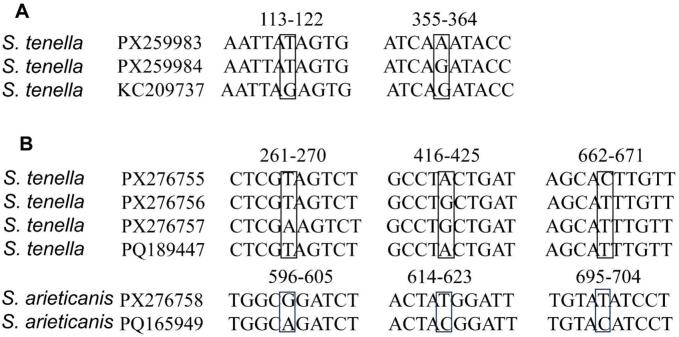
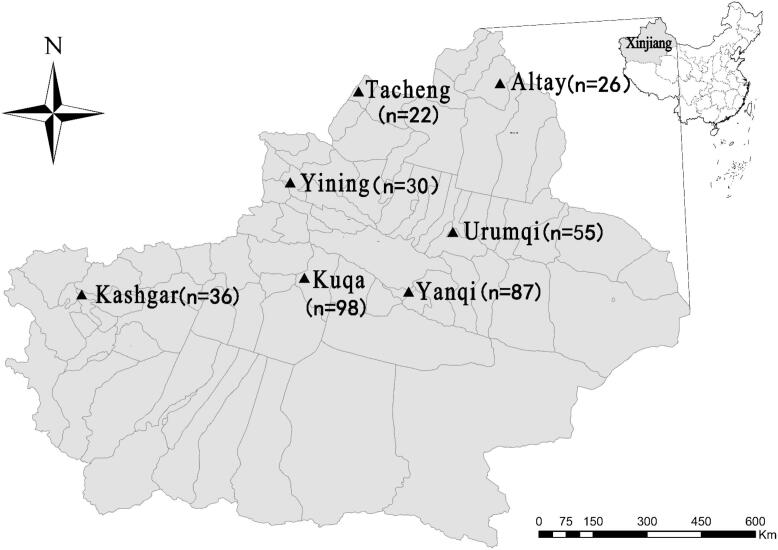
Sarcocystis is an important zoonotic protozoan parasites. This study collected 354 tissue samples (22 skeletal muscle samples, 74 diaphragm samples, 171 heart samples, and 87 esophagus samples) from 354 sheep across seven slaughterhouses in seven cities of Xinjiang. Screening for Sarcocystis spp. was performed using PCR targeting the 18S rRNA gene, with confirmation PCR targeting the COX 1 gene. The infection rate was determined to be 30.2% (107/354). All seven cities tested positive for Sarcocystis, with the highest infection rate in Tacheng (95.5%, 21/22) and the lowest infection rate in Kuqa (9.2%, 9/98). The infection rates by tissue were as follows: 95.5% (21/22) in skeletal muscles, 40.5% (30/74) in diaphragm, 24.0% (41/171) in heart, and 17.2% (15/87) in esophageal, respectively. Two Sarcocystis species were identified from the 107 positive samples: S. tenella (n = 106) and S. arieticanis (n = 1). Five genotypes of S. tenella and one genotype of S. arieticanis were identified, all of which clustered closely with previously discovered isolates. These results enhance our understanding of the epidemiological status of Sarcocystis in sheep in Xinjiang.
期刊介绍:
Food and Waterborne Parasitology publishes high quality papers containing original research findings, investigative reports, and scientific proceedings on parasites which are transmitted to humans via the consumption of food or water. The relevant parasites include protozoa, nematodes, cestodes and trematodes which are transmitted by food or water and capable of infecting humans. Pertinent food includes products of animal or plant origin which are domestic or wild, and consumed by humans. Animals and plants from both terrestrial and aquatic sources are included, as well as studies related to potable and other types of water which serve to harbor, perpetuate or disseminate food and waterborne parasites. Studies dealing with prevalence, transmission, epidemiology, risk assessment and mitigation, including control measures and test methodologies for parasites in food and water are of particular interest. Evidence of the emergence of such parasites and interactions among domestic animals, wildlife and humans are of interest. The impact of parasites on the health and welfare of humans is viewed as very important and within scope of the journal. Manuscripts with scientifically generated information on associations between food and waterborne parasitic diseases and lifestyle, culture and economies are also welcome. Studies involving animal experiments must meet the International Guiding Principles for Biomedical Research Involving Animals as issued by the Council for International Organizations of Medical Sciences.