{"title":"用于体内光学无线通信研究的开源、低成本3d打印测试平台。","authors":"Syifaul Fuada , Lukasz Surazynski , Mariella Särestöniemi , Teemu Myllylä , Marcos Katz","doi":"10.1016/j.ohx.2026.e00744","DOIUrl":null,"url":null,"abstract":"<div><div>This hardware paper introduces an experimental testbed for in-body optical wireless communication (OWC) studies. The conventional version often relies on bulky optical benches and costly supporting equipment, which are often cost-prohibitive for many research institutions. The proposed testbed featured a small footprint, lightweight, a vertically aligned optical path (with fixed optical component placement), and ambient light shielding. It can be printed using commercial 3D printing, reducing costs compared to conventional optical benches. The 3D-printable testbed consists of a box-like chassis that securely positions a near-infrared (NIR) LED TX at the top and a photodetector RX at the bottom, with a tissue sample (<em>e.g.</em>, ex-vivo porcine tissue or a tissue-mimicking phantom) held firmly in between. All design files, including CAD and STL formats, along with detailed assembly instructions, are made openly available. The inherent design structure enables faster alignment, and the shields can effectively protect against exposure to indoor ambient light (<em>e.g.</em>, typical laboratory lighting), thereby improving experimental reliability. The modular nature of the testbed allows for easy customization to accommodate sensors of different wavelengths and different tissue models. The proposed testbed offers practical benefits and an accessible solution for researchers conducting in-body OWC studies, especially when access to high-end optical equipment is limited.</div></div>","PeriodicalId":37503,"journal":{"name":"HardwareX","volume":"25 ","pages":"Article e00744"},"PeriodicalIF":2.1000,"publicationDate":"2026-03-01","publicationTypes":"Journal Article","fieldsOfStudy":null,"isOpenAccess":false,"openAccessPdf":"","citationCount":"0","resultStr":"{\"title\":\"Open-source, low-cost 3D-printable testbed for in-body optical wireless communications research\",\"authors\":\"Syifaul Fuada , Lukasz Surazynski , Mariella Särestöniemi , Teemu Myllylä , Marcos Katz\",\"doi\":\"10.1016/j.ohx.2026.e00744\",\"DOIUrl\":null,\"url\":null,\"abstract\":\"<div><div>This hardware paper introduces an experimental testbed for in-body optical wireless communication (OWC) studies. The conventional version often relies on bulky optical benches and costly supporting equipment, which are often cost-prohibitive for many research institutions. The proposed testbed featured a small footprint, lightweight, a vertically aligned optical path (with fixed optical component placement), and ambient light shielding. It can be printed using commercial 3D printing, reducing costs compared to conventional optical benches. The 3D-printable testbed consists of a box-like chassis that securely positions a near-infrared (NIR) LED TX at the top and a photodetector RX at the bottom, with a tissue sample (<em>e.g.</em>, ex-vivo porcine tissue or a tissue-mimicking phantom) held firmly in between. All design files, including CAD and STL formats, along with detailed assembly instructions, are made openly available. The inherent design structure enables faster alignment, and the shields can effectively protect against exposure to indoor ambient light (<em>e.g.</em>, typical laboratory lighting), thereby improving experimental reliability. The modular nature of the testbed allows for easy customization to accommodate sensors of different wavelengths and different tissue models. The proposed testbed offers practical benefits and an accessible solution for researchers conducting in-body OWC studies, especially when access to high-end optical equipment is limited.</div></div>\",\"PeriodicalId\":37503,\"journal\":{\"name\":\"HardwareX\",\"volume\":\"25 \",\"pages\":\"Article e00744\"},\"PeriodicalIF\":2.1000,\"publicationDate\":\"2026-03-01\",\"publicationTypes\":\"Journal Article\",\"fieldsOfStudy\":null,\"isOpenAccess\":false,\"openAccessPdf\":\"\",\"citationCount\":\"0\",\"resultStr\":null,\"platform\":\"Semanticscholar\",\"paperid\":null,\"PeriodicalName\":\"HardwareX\",\"FirstCategoryId\":\"1085\",\"ListUrlMain\":\"https://www.sciencedirect.com/science/article/pii/S2468067226000040\",\"RegionNum\":0,\"RegionCategory\":null,\"ArticlePicture\":[],\"TitleCN\":null,\"AbstractTextCN\":null,\"PMCID\":null,\"EPubDate\":\"2026/1/20 0:00:00\",\"PubModel\":\"Epub\",\"JCR\":\"Q3\",\"JCRName\":\"ENGINEERING, ELECTRICAL & ELECTRONIC\",\"Score\":null,\"Total\":0}","platform":"Semanticscholar","paperid":null,"PeriodicalName":"HardwareX","FirstCategoryId":"1085","ListUrlMain":"https://www.sciencedirect.com/science/article/pii/S2468067226000040","RegionNum":0,"RegionCategory":null,"ArticlePicture":[],"TitleCN":null,"AbstractTextCN":null,"PMCID":null,"EPubDate":"2026/1/20 0:00:00","PubModel":"Epub","JCR":"Q3","JCRName":"ENGINEERING, ELECTRICAL & ELECTRONIC","Score":null,"Total":0}
引用次数: 0
摘要
本文介绍了一种用于体内光无线通信(OWC)研究的硬件实验平台。传统的版本通常依赖于笨重的光学工作台和昂贵的配套设备,这对许多研究机构来说往往是成本过高的。该试验台占地面积小,重量轻,具有垂直对齐的光路(具有固定的光学元件位置)和环境光屏蔽。它可以使用商业3D打印打印,与传统的光学工作台相比,降低了成本。3d打印测试平台由一个盒状的底盘组成,该底盘可安全地将近红外(NIR) LED TX放置在顶部,将光电探测器RX放置在底部,并将组织样本(例如离体猪组织或组织模拟幽灵)牢固地夹在两者之间。所有设计文件,包括CAD和STL格式,以及详细的组装说明,都是公开提供的。固有的设计结构使校准更快,并且屏蔽可以有效地防止暴露在室内环境光(例如典型的实验室照明),从而提高实验可靠性。测试平台的模块化特性允许轻松定制,以适应不同波长和不同组织模型的传感器。所提出的测试平台为研究人员进行体内OWC研究提供了实际的好处和可行的解决方案,特别是在高端光学设备有限的情况下。
Open-source, low-cost 3D-printable testbed for in-body optical wireless communications research
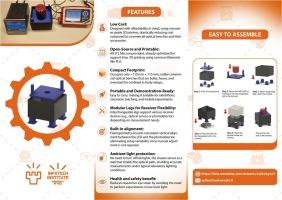
This hardware paper introduces an experimental testbed for in-body optical wireless communication (OWC) studies. The conventional version often relies on bulky optical benches and costly supporting equipment, which are often cost-prohibitive for many research institutions. The proposed testbed featured a small footprint, lightweight, a vertically aligned optical path (with fixed optical component placement), and ambient light shielding. It can be printed using commercial 3D printing, reducing costs compared to conventional optical benches. The 3D-printable testbed consists of a box-like chassis that securely positions a near-infrared (NIR) LED TX at the top and a photodetector RX at the bottom, with a tissue sample (e.g., ex-vivo porcine tissue or a tissue-mimicking phantom) held firmly in between. All design files, including CAD and STL formats, along with detailed assembly instructions, are made openly available. The inherent design structure enables faster alignment, and the shields can effectively protect against exposure to indoor ambient light (e.g., typical laboratory lighting), thereby improving experimental reliability. The modular nature of the testbed allows for easy customization to accommodate sensors of different wavelengths and different tissue models. The proposed testbed offers practical benefits and an accessible solution for researchers conducting in-body OWC studies, especially when access to high-end optical equipment is limited.
HardwareXEngineering-Industrial and Manufacturing Engineering
CiteScore
4.10
自引率
18.20%
发文量
124
审稿时长
24 weeks
期刊介绍:
HardwareX is an open access journal established to promote free and open source designing, building and customizing of scientific infrastructure (hardware). HardwareX aims to recognize researchers for the time and effort in developing scientific infrastructure while providing end-users with sufficient information to replicate and validate the advances presented. HardwareX is open to input from all scientific, technological and medical disciplines. Scientific infrastructure will be interpreted in the broadest sense. Including hardware modifications to existing infrastructure, sensors and tools that perform measurements and other functions outside of the traditional lab setting (such as wearables, air/water quality sensors, and low cost alternatives to existing tools), and the creation of wholly new tools for either standard or novel laboratory tasks. Authors are encouraged to submit hardware developments that address all aspects of science, not only the final measurement, for example, enhancements in sample preparation and handling, user safety, and quality control. The use of distributed digital manufacturing strategies (e.g. 3-D printing) is encouraged. All designs must be submitted under an open hardware license.