Emma Aneheim , Sture Lindegren , Holger Jensen , Tom Bäck
{"title":"不同形式的非共轭砹-211与血清白蛋白的自发关联。","authors":"Emma Aneheim , Sture Lindegren , Holger Jensen , Tom Bäck","doi":"10.1016/j.nucmedbio.2026.109608","DOIUrl":null,"url":null,"abstract":"<div><h3>Aim/introduction</h3><div>Astatine-211 is one of the alpha-particle emitting nuclides investigated for use within Targeted Alpha Therapy (TAT) of disseminated cancer. In previous studies, a difference in blood clearance has been observed when comparing astatinated compounds with their iodinated counterparts. This has been explained by a potentially prolonged retention in the blood by present free astatine. This study examined the spontaneous binding of non-conjugated astatine to albumin under physiological conditions in vitro and compared it to that of iodine. Additionally, the in vivo blood circulation patterns of free astatine were assessed and contrasted with those of iodine.</div></div><div><h3>Materials and methods</h3><div>Astatine solutions were formulated following dry distillation and evaporation to dryness of astatine solvated in CHCl<sub>3</sub>. In vitro evaluation of astatine and iodine association to albumin was mainly performed using size exclusion chromatography applying both disposable columns (PD10 and NAP10) as well as an FPLC system (ÄKTA) with online UV detection and activity fraction collection. Also methanol precipitation and radio-TLC methods were used for analysis. In vivo evaluation was performed using furry BALB/C mice (3/group) with both i.v. and i.p. injection of astatine, followed by sequential blood sampling from the tail vein and biodistribution.</div></div><div><h3>Results</h3><div>Oxidized and unmodified forms of free astatine display a significantly higher and more rapid association to albumin in vitro compared to reduced forms, with >97% compared to <25% associated after 10 min. Both the corresponding oxidized and reduced forms of iodine display a very low and slow association to albumin with <5% associated after 40 min. Oxidized, unmodified and reduced astatine show very similar blood profiles over time as well as a similar uptake in biodistribution after 20–22 h following i.p. injection. Upon i.v. injection a larger difference in blood profiles between the species could be observed, which in turn was different compared to the curve obtained after i.p. injection. In addition, an unexpected uptake of astatide in stomach was found. In all cases the blood profile and biodistribution of astatine was significantly different compared to iodine, which displayed a greater and more rapid blood clearance and specific accumulation in thyroid.</div></div><div><h3>Conclusion</h3><div>Different forms of unbound astatine differ in their association to albumin. However, all investigated forms of free astatine associates to albumin to a much higher degree than iodine. This behavior could explain the prolonged blood circulation of free astatine compared to iodine.</div></div>","PeriodicalId":19363,"journal":{"name":"Nuclear medicine and biology","volume":"154 ","pages":"Article 109608"},"PeriodicalIF":3.0000,"publicationDate":"2026-03-01","publicationTypes":"Journal Article","fieldsOfStudy":null,"isOpenAccess":false,"openAccessPdf":"","citationCount":"0","resultStr":"{\"title\":\"Spontaneous association of different forms of non-conjugated astatine-211 to serum albumin\",\"authors\":\"Emma Aneheim , Sture Lindegren , Holger Jensen , Tom Bäck\",\"doi\":\"10.1016/j.nucmedbio.2026.109608\",\"DOIUrl\":null,\"url\":null,\"abstract\":\"<div><h3>Aim/introduction</h3><div>Astatine-211 is one of the alpha-particle emitting nuclides investigated for use within Targeted Alpha Therapy (TAT) of disseminated cancer. In previous studies, a difference in blood clearance has been observed when comparing astatinated compounds with their iodinated counterparts. This has been explained by a potentially prolonged retention in the blood by present free astatine. This study examined the spontaneous binding of non-conjugated astatine to albumin under physiological conditions in vitro and compared it to that of iodine. Additionally, the in vivo blood circulation patterns of free astatine were assessed and contrasted with those of iodine.</div></div><div><h3>Materials and methods</h3><div>Astatine solutions were formulated following dry distillation and evaporation to dryness of astatine solvated in CHCl<sub>3</sub>. In vitro evaluation of astatine and iodine association to albumin was mainly performed using size exclusion chromatography applying both disposable columns (PD10 and NAP10) as well as an FPLC system (ÄKTA) with online UV detection and activity fraction collection. Also methanol precipitation and radio-TLC methods were used for analysis. In vivo evaluation was performed using furry BALB/C mice (3/group) with both i.v. and i.p. injection of astatine, followed by sequential blood sampling from the tail vein and biodistribution.</div></div><div><h3>Results</h3><div>Oxidized and unmodified forms of free astatine display a significantly higher and more rapid association to albumin in vitro compared to reduced forms, with >97% compared to <25% associated after 10 min. Both the corresponding oxidized and reduced forms of iodine display a very low and slow association to albumin with <5% associated after 40 min. Oxidized, unmodified and reduced astatine show very similar blood profiles over time as well as a similar uptake in biodistribution after 20–22 h following i.p. injection. Upon i.v. injection a larger difference in blood profiles between the species could be observed, which in turn was different compared to the curve obtained after i.p. injection. In addition, an unexpected uptake of astatide in stomach was found. In all cases the blood profile and biodistribution of astatine was significantly different compared to iodine, which displayed a greater and more rapid blood clearance and specific accumulation in thyroid.</div></div><div><h3>Conclusion</h3><div>Different forms of unbound astatine differ in their association to albumin. However, all investigated forms of free astatine associates to albumin to a much higher degree than iodine. This behavior could explain the prolonged blood circulation of free astatine compared to iodine.</div></div>\",\"PeriodicalId\":19363,\"journal\":{\"name\":\"Nuclear medicine and biology\",\"volume\":\"154 \",\"pages\":\"Article 109608\"},\"PeriodicalIF\":3.0000,\"publicationDate\":\"2026-03-01\",\"publicationTypes\":\"Journal Article\",\"fieldsOfStudy\":null,\"isOpenAccess\":false,\"openAccessPdf\":\"\",\"citationCount\":\"0\",\"resultStr\":null,\"platform\":\"Semanticscholar\",\"paperid\":null,\"PeriodicalName\":\"Nuclear medicine and biology\",\"FirstCategoryId\":\"3\",\"ListUrlMain\":\"https://www.sciencedirect.com/science/article/pii/S0969805126000077\",\"RegionNum\":4,\"RegionCategory\":\"医学\",\"ArticlePicture\":[],\"TitleCN\":null,\"AbstractTextCN\":null,\"PMCID\":null,\"EPubDate\":\"2026/2/2 0:00:00\",\"PubModel\":\"Epub\",\"JCR\":\"Q1\",\"JCRName\":\"RADIOLOGY, NUCLEAR MEDICINE & MEDICAL IMAGING\",\"Score\":null,\"Total\":0}","platform":"Semanticscholar","paperid":null,"PeriodicalName":"Nuclear medicine and biology","FirstCategoryId":"3","ListUrlMain":"https://www.sciencedirect.com/science/article/pii/S0969805126000077","RegionNum":4,"RegionCategory":"医学","ArticlePicture":[],"TitleCN":null,"AbstractTextCN":null,"PMCID":null,"EPubDate":"2026/2/2 0:00:00","PubModel":"Epub","JCR":"Q1","JCRName":"RADIOLOGY, NUCLEAR MEDICINE & MEDICAL IMAGING","Score":null,"Total":0}
Spontaneous association of different forms of non-conjugated astatine-211 to serum albumin
Aim/introduction
Astatine-211 is one of the alpha-particle emitting nuclides investigated for use within Targeted Alpha Therapy (TAT) of disseminated cancer. In previous studies, a difference in blood clearance has been observed when comparing astatinated compounds with their iodinated counterparts. This has been explained by a potentially prolonged retention in the blood by present free astatine. This study examined the spontaneous binding of non-conjugated astatine to albumin under physiological conditions in vitro and compared it to that of iodine. Additionally, the in vivo blood circulation patterns of free astatine were assessed and contrasted with those of iodine.
Materials and methods
Astatine solutions were formulated following dry distillation and evaporation to dryness of astatine solvated in CHCl3. In vitro evaluation of astatine and iodine association to albumin was mainly performed using size exclusion chromatography applying both disposable columns (PD10 and NAP10) as well as an FPLC system (ÄKTA) with online UV detection and activity fraction collection. Also methanol precipitation and radio-TLC methods were used for analysis. In vivo evaluation was performed using furry BALB/C mice (3/group) with both i.v. and i.p. injection of astatine, followed by sequential blood sampling from the tail vein and biodistribution.
Results
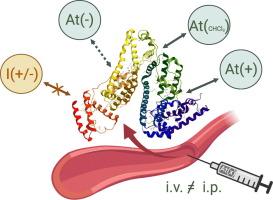
Oxidized and unmodified forms of free astatine display a significantly higher and more rapid association to albumin in vitro compared to reduced forms, with >97% compared to <25% associated after 10 min. Both the corresponding oxidized and reduced forms of iodine display a very low and slow association to albumin with <5% associated after 40 min. Oxidized, unmodified and reduced astatine show very similar blood profiles over time as well as a similar uptake in biodistribution after 20–22 h following i.p. injection. Upon i.v. injection a larger difference in blood profiles between the species could be observed, which in turn was different compared to the curve obtained after i.p. injection. In addition, an unexpected uptake of astatide in stomach was found. In all cases the blood profile and biodistribution of astatine was significantly different compared to iodine, which displayed a greater and more rapid blood clearance and specific accumulation in thyroid.
Conclusion
Different forms of unbound astatine differ in their association to albumin. However, all investigated forms of free astatine associates to albumin to a much higher degree than iodine. This behavior could explain the prolonged blood circulation of free astatine compared to iodine.
期刊介绍:
Nuclear Medicine and Biology publishes original research addressing all aspects of radiopharmaceutical science: synthesis, in vitro and ex vivo studies, in vivo biodistribution by dissection or imaging, radiopharmacology, radiopharmacy, and translational clinical studies of new targeted radiotracers. The importance of the target to an unmet clinical need should be the first consideration. If the synthesis of a new radiopharmaceutical is submitted without in vitro or in vivo data, then the uniqueness of the chemistry must be emphasized.
These multidisciplinary studies should validate the mechanism of localization whether the probe is based on binding to a receptor, enzyme, tumor antigen, or another well-defined target. The studies should be aimed at evaluating how the chemical and radiopharmaceutical properties affect pharmacokinetics, pharmacodynamics, or therapeutic efficacy. Ideally, the study would address the sensitivity of the probe to changes in disease or treatment, although studies validating mechanism alone are acceptable. Radiopharmacy practice, addressing the issues of preparation, automation, quality control, dispensing, and regulations applicable to qualification and administration of radiopharmaceuticals to humans, is an important aspect of the developmental process, but only if the study has a significant impact on the field.
Contributions on the subject of therapeutic radiopharmaceuticals also are appropriate provided that the specificity of labeled compound localization and therapeutic effect have been addressed.