Lei Wang, Weiming Zeng, Kai Long, Hongyu Chen, Rongfeng Lan, Li Liu, Wai Ting Siok, Nizhuan Wang
{"title":"生物医学领域光声成像重建与定量分析研究进展。","authors":"Lei Wang, Weiming Zeng, Kai Long, Hongyu Chen, Rongfeng Lan, Li Liu, Wai Ting Siok, Nizhuan Wang","doi":"10.1186/s42492-025-00213-x","DOIUrl":null,"url":null,"abstract":"<p><p>Photoacoustic imaging (PAI), a modality that combines the high contrast of optical imaging with the deep penetration of ultrasound, is rapidly transitioning from preclinical research to clinical practice. However, its widespread clinical adoption faces challenges such as the inherent trade-off between penetration depth and spatial resolution, along with the demand for faster imaging speeds. This review comprehensively examines the fundamental principles of PAI, focusing on three primary implementations: photoacoustic computed tomography, photoacoustic microscopy, and photoacoustic endoscopy. It critically analyzes their respective advantages and limitations to provide insights into practical applications. The discussion then extends to recent advancements in image reconstruction and artifact suppression, where both conventional and deep learning (DL)-based approaches have been highlighted for their role in enhancing image quality and streamlining workflows. Furthermore, this work explores progress in quantitative PAI, particularly its ability to precisely measure hemoglobin concentration, oxygen saturation, and other physiological biomarkers. Finally, this review outlines emerging trends and future directions, underscoring the transformative potential of DL in shaping the clinical evolution of PAI.</p>","PeriodicalId":29931,"journal":{"name":"Visual Computing for Industry Biomedicine and Art","volume":"9 1","pages":"3"},"PeriodicalIF":6.0000,"publicationDate":"2026-02-01","publicationTypes":"Journal Article","fieldsOfStudy":null,"isOpenAccess":false,"openAccessPdf":"https://www.ncbi.nlm.nih.gov/pmc/articles/PMC12860771/pdf/","citationCount":"0","resultStr":"{\"title\":\"Advances in photoacoustic imaging reconstruction and quantitative analysis for biomedical applications.\",\"authors\":\"Lei Wang, Weiming Zeng, Kai Long, Hongyu Chen, Rongfeng Lan, Li Liu, Wai Ting Siok, Nizhuan Wang\",\"doi\":\"10.1186/s42492-025-00213-x\",\"DOIUrl\":null,\"url\":null,\"abstract\":\"<p><p>Photoacoustic imaging (PAI), a modality that combines the high contrast of optical imaging with the deep penetration of ultrasound, is rapidly transitioning from preclinical research to clinical practice. However, its widespread clinical adoption faces challenges such as the inherent trade-off between penetration depth and spatial resolution, along with the demand for faster imaging speeds. This review comprehensively examines the fundamental principles of PAI, focusing on three primary implementations: photoacoustic computed tomography, photoacoustic microscopy, and photoacoustic endoscopy. It critically analyzes their respective advantages and limitations to provide insights into practical applications. The discussion then extends to recent advancements in image reconstruction and artifact suppression, where both conventional and deep learning (DL)-based approaches have been highlighted for their role in enhancing image quality and streamlining workflows. Furthermore, this work explores progress in quantitative PAI, particularly its ability to precisely measure hemoglobin concentration, oxygen saturation, and other physiological biomarkers. Finally, this review outlines emerging trends and future directions, underscoring the transformative potential of DL in shaping the clinical evolution of PAI.</p>\",\"PeriodicalId\":29931,\"journal\":{\"name\":\"Visual Computing for Industry Biomedicine and Art\",\"volume\":\"9 1\",\"pages\":\"3\"},\"PeriodicalIF\":6.0000,\"publicationDate\":\"2026-02-01\",\"publicationTypes\":\"Journal Article\",\"fieldsOfStudy\":null,\"isOpenAccess\":false,\"openAccessPdf\":\"https://www.ncbi.nlm.nih.gov/pmc/articles/PMC12860771/pdf/\",\"citationCount\":\"0\",\"resultStr\":null,\"platform\":\"Semanticscholar\",\"paperid\":null,\"PeriodicalName\":\"Visual Computing for Industry Biomedicine and Art\",\"FirstCategoryId\":\"94\",\"ListUrlMain\":\"https://doi.org/10.1186/s42492-025-00213-x\",\"RegionNum\":4,\"RegionCategory\":\"计算机科学\",\"ArticlePicture\":[],\"TitleCN\":null,\"AbstractTextCN\":null,\"PMCID\":null,\"EPubDate\":\"\",\"PubModel\":\"\",\"JCR\":\"Q2\",\"JCRName\":\"COMPUTER SCIENCE, INTERDISCIPLINARY APPLICATIONS\",\"Score\":null,\"Total\":0}","platform":"Semanticscholar","paperid":null,"PeriodicalName":"Visual Computing for Industry Biomedicine and Art","FirstCategoryId":"94","ListUrlMain":"https://doi.org/10.1186/s42492-025-00213-x","RegionNum":4,"RegionCategory":"计算机科学","ArticlePicture":[],"TitleCN":null,"AbstractTextCN":null,"PMCID":null,"EPubDate":"","PubModel":"","JCR":"Q2","JCRName":"COMPUTER SCIENCE, INTERDISCIPLINARY APPLICATIONS","Score":null,"Total":0}
Advances in photoacoustic imaging reconstruction and quantitative analysis for biomedical applications.
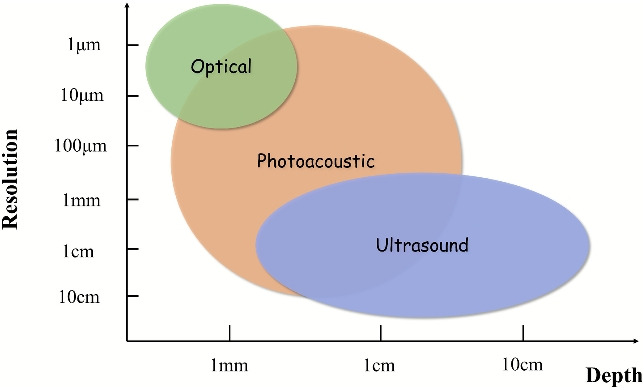
Photoacoustic imaging (PAI), a modality that combines the high contrast of optical imaging with the deep penetration of ultrasound, is rapidly transitioning from preclinical research to clinical practice. However, its widespread clinical adoption faces challenges such as the inherent trade-off between penetration depth and spatial resolution, along with the demand for faster imaging speeds. This review comprehensively examines the fundamental principles of PAI, focusing on three primary implementations: photoacoustic computed tomography, photoacoustic microscopy, and photoacoustic endoscopy. It critically analyzes their respective advantages and limitations to provide insights into practical applications. The discussion then extends to recent advancements in image reconstruction and artifact suppression, where both conventional and deep learning (DL)-based approaches have been highlighted for their role in enhancing image quality and streamlining workflows. Furthermore, this work explores progress in quantitative PAI, particularly its ability to precisely measure hemoglobin concentration, oxygen saturation, and other physiological biomarkers. Finally, this review outlines emerging trends and future directions, underscoring the transformative potential of DL in shaping the clinical evolution of PAI.




 求助内容:
求助内容: 应助结果提醒方式:

 京公网安备 11010802042870号


