综合可持续性评估,促进农业可持续水资源管理决策

IF 5.6 Q1 ENVIRONMENTAL SCIENCES
Tamara Avellán , Hanna Dencker , Jonas Nordström , Nóra Hatvani , Balázs Sándor Gál , Wieslaw Fialkiewicz
{"title":"综合可持续性评估,促进农业可持续水资源管理决策","authors":"Tamara Avellán ,&nbsp;Hanna Dencker ,&nbsp;Jonas Nordström ,&nbsp;Nóra Hatvani ,&nbsp;Balázs Sándor Gál ,&nbsp;Wieslaw Fialkiewicz","doi":"10.1016/j.indic.2026.101140","DOIUrl":null,"url":null,"abstract":"<div><div>Agricultural production necessitates sustainable practices to ensure long-term and sustained food security. Water is a key ingredient for food production. Ensuring sustainable water management in agriculture is thus essential for global wellbeing. But how do we make sure that our practices are sustainable? A large variety of sustainability assessments abound. Their results may even show conflicting results. In this study, we demonstrate the application of three sustainability assessment methods – Water Footprint Assessment, Cost-Benefit Analysis and Life Cycle Assessment – for the use of a water retainer product on different soil types, crops and growing seasons in a farm in Poland. In addition, we aggregate the results of these assessments through a Multi-Criteria Decision Analysis (PROMETHEE) to facilitate decision making. Our findings suggest that yields of all crops, on all soils in both growing seasons increased. However, yield gain was insufficient in most cases to offset the increased costs of using the water retainer product. The Multi-Criteria Decision Analysis showed that soil type and crops used had a larger effect on rank than the application of the water retainer. Overall, the conclusion from the various methods is to not recommend the use of the water retainer as an efficient water saving technology for the specific case. Our analysis showed the effects on the economic and environmental dimension of sustainability but does not include the social dimension due to the lack of data, leaving an incomplete picture of sustainability.</div></div>","PeriodicalId":36171,"journal":{"name":"Environmental and Sustainability Indicators","volume":"30 ","pages":"Article 101140"},"PeriodicalIF":5.6000,"publicationDate":"2026-06-01","publicationTypes":"Journal Article","fieldsOfStudy":null,"isOpenAccess":false,"openAccessPdf":"","citationCount":"0","resultStr":"{\"title\":\"Integrating sustainability assessments to facilitate decision making in sustainable water management in agriculture\",\"authors\":\"Tamara Avellán ,&nbsp;Hanna Dencker ,&nbsp;Jonas Nordström ,&nbsp;Nóra Hatvani ,&nbsp;Balázs Sándor Gál ,&nbsp;Wieslaw Fialkiewicz\",\"doi\":\"10.1016/j.indic.2026.101140\",\"DOIUrl\":null,\"url\":null,\"abstract\":\"<div><div>Agricultural production necessitates sustainable practices to ensure long-term and sustained food security. Water is a key ingredient for food production. Ensuring sustainable water management in agriculture is thus essential for global wellbeing. But how do we make sure that our practices are sustainable? A large variety of sustainability assessments abound. Their results may even show conflicting results. In this study, we demonstrate the application of three sustainability assessment methods – Water Footprint Assessment, Cost-Benefit Analysis and Life Cycle Assessment – for the use of a water retainer product on different soil types, crops and growing seasons in a farm in Poland. In addition, we aggregate the results of these assessments through a Multi-Criteria Decision Analysis (PROMETHEE) to facilitate decision making. Our findings suggest that yields of all crops, on all soils in both growing seasons increased. However, yield gain was insufficient in most cases to offset the increased costs of using the water retainer product. The Multi-Criteria Decision Analysis showed that soil type and crops used had a larger effect on rank than the application of the water retainer. Overall, the conclusion from the various methods is to not recommend the use of the water retainer as an efficient water saving technology for the specific case. Our analysis showed the effects on the economic and environmental dimension of sustainability but does not include the social dimension due to the lack of data, leaving an incomplete picture of sustainability.</div></div>\",\"PeriodicalId\":36171,\"journal\":{\"name\":\"Environmental and Sustainability Indicators\",\"volume\":\"30 \",\"pages\":\"Article 101140\"},\"PeriodicalIF\":5.6000,\"publicationDate\":\"2026-06-01\",\"publicationTypes\":\"Journal Article\",\"fieldsOfStudy\":null,\"isOpenAccess\":false,\"openAccessPdf\":\"\",\"citationCount\":\"0\",\"resultStr\":null,\"platform\":\"Semanticscholar\",\"paperid\":null,\"PeriodicalName\":\"Environmental and Sustainability Indicators\",\"FirstCategoryId\":\"1085\",\"ListUrlMain\":\"https://www.sciencedirect.com/science/article/pii/S2665972726000267\",\"RegionNum\":0,\"RegionCategory\":null,\"ArticlePicture\":[],\"TitleCN\":null,\"AbstractTextCN\":null,\"PMCID\":null,\"EPubDate\":\"2026/1/27 0:00:00\",\"PubModel\":\"Epub\",\"JCR\":\"Q1\",\"JCRName\":\"ENVIRONMENTAL SCIENCES\",\"Score\":null,\"Total\":0}","platform":"Semanticscholar","paperid":null,"PeriodicalName":"Environmental and Sustainability Indicators","FirstCategoryId":"1085","ListUrlMain":"https://www.sciencedirect.com/science/article/pii/S2665972726000267","RegionNum":0,"RegionCategory":null,"ArticlePicture":[],"TitleCN":null,"AbstractTextCN":null,"PMCID":null,"EPubDate":"2026/1/27 0:00:00","PubModel":"Epub","JCR":"Q1","JCRName":"ENVIRONMENTAL SCIENCES","Score":null,"Total":0}
引用次数: 0

摘要

农业生产需要可持续的做法,以确保长期和持续的粮食安全。水是粮食生产的关键要素。因此,确保农业用水的可持续管理对全球福祉至关重要。但我们如何确保我们的做法是可持续的呢?各种各样的可持续性评估比比皆是。他们的结果甚至可能显示出相互矛盾的结果。在这项研究中,我们展示了三种可持续性评估方法的应用——水足迹评估、成本效益分析和生命周期评估——在波兰的一个农场中,在不同的土壤类型、作物和生长季节使用保水剂产品。此外,我们通过多标准决策分析(PROMETHEE)汇总这些评估的结果,以促进决策制定。我们的研究结果表明,在两个生长季节,所有土壤上的所有作物的产量都增加了。然而,在大多数情况下,产量的增加不足以抵消使用保水剂产品所增加的成本。多准则决策分析表明,土壤类型和作物用量对土壤等级的影响大于保水剂用量。总的来说,从各种方法得出的结论是,不建议在具体情况下使用挡水器作为一种高效的节水技术。我们的分析显示了可持续发展对经济和环境维度的影响,但由于缺乏数据,没有包括社会维度,留下了一个不完整的可持续发展图景。
本文章由计算机程序翻译,如有差异,请以英文原文为准。

Integrating sustainability assessments to facilitate decision making in sustainable water management in agriculture

Integrating sustainability assessments to facilitate decision making in sustainable water management in agriculture
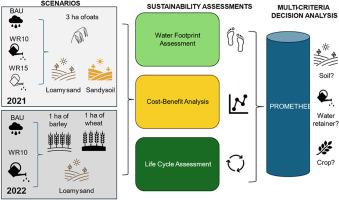
Agricultural production necessitates sustainable practices to ensure long-term and sustained food security. Water is a key ingredient for food production. Ensuring sustainable water management in agriculture is thus essential for global wellbeing. But how do we make sure that our practices are sustainable? A large variety of sustainability assessments abound. Their results may even show conflicting results. In this study, we demonstrate the application of three sustainability assessment methods – Water Footprint Assessment, Cost-Benefit Analysis and Life Cycle Assessment – for the use of a water retainer product on different soil types, crops and growing seasons in a farm in Poland. In addition, we aggregate the results of these assessments through a Multi-Criteria Decision Analysis (PROMETHEE) to facilitate decision making. Our findings suggest that yields of all crops, on all soils in both growing seasons increased. However, yield gain was insufficient in most cases to offset the increased costs of using the water retainer product. The Multi-Criteria Decision Analysis showed that soil type and crops used had a larger effect on rank than the application of the water retainer. Overall, the conclusion from the various methods is to not recommend the use of the water retainer as an efficient water saving technology for the specific case. Our analysis showed the effects on the economic and environmental dimension of sustainability but does not include the social dimension due to the lack of data, leaving an incomplete picture of sustainability.
求助全文
通过发布文献求助,成功后即可免费获取论文全文。 去求助
来源期刊
Environmental and Sustainability Indicators
Environmental and Sustainability Indicators Environmental Science-Environmental Science (miscellaneous)
CiteScore
7.80
自引率
2.30%
发文量
49
审稿时长
57 days

×
引用
GB/T 7714-2015
复制
MLA
复制
APA
复制
导出至
BibTeX EndNote RefMan NoteFirst NoteExpress
×
提示
您的信息不完整,为了账户安全,请先补充。
现在去补充
×
提示
您因"违规操作"
具体请查看互助需知
我知道了
×
提示
确定
请完成安全验证×
copy
已复制链接
快去分享给好友吧!
我知道了
右上角分享
点击右上角分享
0
联系我们:info@booksci.cn Book学术提供免费学术资源搜索服务,方便国内外学者检索中英文文献。致力于提供最便捷和优质的服务体验。 Copyright © 2023 布克学术 All rights reserved.
京ICP备2023020795号-1
ghs 京公网安备 11010802042870号
Book学术文献互助
Book学术文献互助群
群 号:604180095
Book学术官方微信
小红书