{"title":"草青霉介导的磷酸盐增溶作为一种促进大麦生长的生物刺激剂","authors":"Hitakshi Asnani, Preeti Yadav, Yatika Dixit, Arun Kumar Sharma, Mansi Kansal","doi":"10.1016/j.biteb.2026.102590","DOIUrl":null,"url":null,"abstract":"<div><div>Phosphate-solubilizing microorganisms (PSMs) enhance plant phosphorus uptake by converting insoluble phosphorus into a soluble form. This study isolated and evaluated PSMs from barley rhizosphere soils in Tonk, Rajasthan, using Pikovskaya's agar medium. Six bacterial and six fungal strains demonstrated phosphate solubilization, with <em>Penicillium oxalicum</em> (isolate BLF-7) showing the highest efficiency. <em>Penicillium oxalicum</em> exhibited the highest phosphate solubilization index (1.9 ± 0.02) and efficiency (49.42% ± 0.99). Subsequent investigation indicated that <em>P. oxalicum</em> exhibited elevated concentrations of soluble phosphorus (1147.93 ± 2.43 mg/L) on the 10th day of incubation and exhibited acid phosphatase activity (13.18 ± 0.51 μM/min/mL) on the 11th day. Furthermore, it produced indole-3-acetic acid (3.36 μg/mL) within three days, facilitating plant development. Pot studies with barley demonstrated a 20% enhancement in plant height, notable improvements in root and shoot biomass, and a 20% rise in chlorophyll content in plants treated with <em>P. oxalicum</em> and tricalcium phosphate. These findings underscore <em>P. oxalicum</em>'s dual role as a phosphate solubilizer and plant growth enhancer, affirming its promise as a sustainable biofertilizer.</div></div>","PeriodicalId":8947,"journal":{"name":"Bioresource Technology Reports","volume":"33 ","pages":"Article 102590"},"PeriodicalIF":0.0000,"publicationDate":"2026-02-01","publicationTypes":"Journal Article","fieldsOfStudy":null,"isOpenAccess":false,"openAccessPdf":"","citationCount":"0","resultStr":"{\"title\":\"Penicillium oxalicum mediated phosphate solubilization as a Bio-stimulant approach enhancing barley growth\",\"authors\":\"Hitakshi Asnani, Preeti Yadav, Yatika Dixit, Arun Kumar Sharma, Mansi Kansal\",\"doi\":\"10.1016/j.biteb.2026.102590\",\"DOIUrl\":null,\"url\":null,\"abstract\":\"<div><div>Phosphate-solubilizing microorganisms (PSMs) enhance plant phosphorus uptake by converting insoluble phosphorus into a soluble form. This study isolated and evaluated PSMs from barley rhizosphere soils in Tonk, Rajasthan, using Pikovskaya's agar medium. Six bacterial and six fungal strains demonstrated phosphate solubilization, with <em>Penicillium oxalicum</em> (isolate BLF-7) showing the highest efficiency. <em>Penicillium oxalicum</em> exhibited the highest phosphate solubilization index (1.9 ± 0.02) and efficiency (49.42% ± 0.99). Subsequent investigation indicated that <em>P. oxalicum</em> exhibited elevated concentrations of soluble phosphorus (1147.93 ± 2.43 mg/L) on the 10th day of incubation and exhibited acid phosphatase activity (13.18 ± 0.51 μM/min/mL) on the 11th day. Furthermore, it produced indole-3-acetic acid (3.36 μg/mL) within three days, facilitating plant development. Pot studies with barley demonstrated a 20% enhancement in plant height, notable improvements in root and shoot biomass, and a 20% rise in chlorophyll content in plants treated with <em>P. oxalicum</em> and tricalcium phosphate. These findings underscore <em>P. oxalicum</em>'s dual role as a phosphate solubilizer and plant growth enhancer, affirming its promise as a sustainable biofertilizer.</div></div>\",\"PeriodicalId\":8947,\"journal\":{\"name\":\"Bioresource Technology Reports\",\"volume\":\"33 \",\"pages\":\"Article 102590\"},\"PeriodicalIF\":0.0000,\"publicationDate\":\"2026-02-01\",\"publicationTypes\":\"Journal Article\",\"fieldsOfStudy\":null,\"isOpenAccess\":false,\"openAccessPdf\":\"\",\"citationCount\":\"0\",\"resultStr\":null,\"platform\":\"Semanticscholar\",\"paperid\":null,\"PeriodicalName\":\"Bioresource Technology Reports\",\"FirstCategoryId\":\"1085\",\"ListUrlMain\":\"https://www.sciencedirect.com/science/article/pii/S2589014X26000484\",\"RegionNum\":0,\"RegionCategory\":null,\"ArticlePicture\":[],\"TitleCN\":null,\"AbstractTextCN\":null,\"PMCID\":null,\"EPubDate\":\"2026/1/22 0:00:00\",\"PubModel\":\"Epub\",\"JCR\":\"Q1\",\"JCRName\":\"Environmental Science\",\"Score\":null,\"Total\":0}","platform":"Semanticscholar","paperid":null,"PeriodicalName":"Bioresource Technology Reports","FirstCategoryId":"1085","ListUrlMain":"https://www.sciencedirect.com/science/article/pii/S2589014X26000484","RegionNum":0,"RegionCategory":null,"ArticlePicture":[],"TitleCN":null,"AbstractTextCN":null,"PMCID":null,"EPubDate":"2026/1/22 0:00:00","PubModel":"Epub","JCR":"Q1","JCRName":"Environmental Science","Score":null,"Total":0}
Penicillium oxalicum mediated phosphate solubilization as a Bio-stimulant approach enhancing barley growth
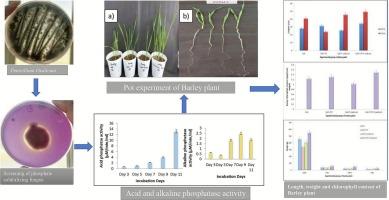
Phosphate-solubilizing microorganisms (PSMs) enhance plant phosphorus uptake by converting insoluble phosphorus into a soluble form. This study isolated and evaluated PSMs from barley rhizosphere soils in Tonk, Rajasthan, using Pikovskaya's agar medium. Six bacterial and six fungal strains demonstrated phosphate solubilization, with Penicillium oxalicum (isolate BLF-7) showing the highest efficiency. Penicillium oxalicum exhibited the highest phosphate solubilization index (1.9 ± 0.02) and efficiency (49.42% ± 0.99). Subsequent investigation indicated that P. oxalicum exhibited elevated concentrations of soluble phosphorus (1147.93 ± 2.43 mg/L) on the 10th day of incubation and exhibited acid phosphatase activity (13.18 ± 0.51 μM/min/mL) on the 11th day. Furthermore, it produced indole-3-acetic acid (3.36 μg/mL) within three days, facilitating plant development. Pot studies with barley demonstrated a 20% enhancement in plant height, notable improvements in root and shoot biomass, and a 20% rise in chlorophyll content in plants treated with P. oxalicum and tricalcium phosphate. These findings underscore P. oxalicum's dual role as a phosphate solubilizer and plant growth enhancer, affirming its promise as a sustainable biofertilizer.