Máté Zs. Leskó , Boglárka A. Topa , Ferenc Móricz , Ferenc Kristály , Délia H. Debus-Bulátkó , Richárd Z. Papp , Tamás G. Weiszburg , József Pálfy , Tamás Vigh , Péter Majoros , Lívia Leskóné Majoros , Norbert Zajzon
{"title":"热液源与上升流相关沉积成藏:新特提斯西部下侏罗统早期成矿过程新模式Úrkút锰矿床","authors":"Máté Zs. Leskó , Boglárka A. Topa , Ferenc Móricz , Ferenc Kristály , Délia H. Debus-Bulátkó , Richárd Z. Papp , Tamás G. Weiszburg , József Pálfy , Tamás Vigh , Péter Majoros , Lívia Leskóné Majoros , Norbert Zajzon","doi":"10.1016/j.geogeo.2025.100489","DOIUrl":null,"url":null,"abstract":"<div><div>The black shale-hosted manganese ore deposit of Úrkút in Hungary formed during the globally recognized Toarcian (Early Jurassic) Jenkyns Event. Although geochemical signatures of hydrothermal processes involved in the metallogenesis of manganese ores were first recognized in the 1980s, their source and geochemical characterisation remained controversial. Here, we address two key questions: (i) why economically significant manganese ore accumulation is exclusively restricted to the Úrkút and Eplény sub-basins, despite the widespread Jenkyns Event-related sedimentation across the Transdanubian Range, and (ii) what was the source of the manganese. Based on new clay mineralogical (identification of montmorillonite and beidellite with distinct formation environments), geochemical (behaviour of Fe and Mn; Co-Ni-Zn and Fe-Mn-(Co-Ni-Cu) ternary system analysis; Cd/Mo ratio), and sedimentological data (evidence for radiolarian blooms), we propose a new early-stage ore-forming model. We suggest that dissolved Fe and Mn from hot brine pools associated with the rifting of the Neotethys Ocean were transported over long distances under anoxic conditions during the Jenkyns Event. A long-lived upwelling system (from the Late Pliensbachian to Early Toarcian) caused water mixing in the Bakony basin, which triggered the precipitation of the “proto-ore” of the Úrkút and Eplény manganese ore deposits. Our results contribute to a better understanding of the manganese enrichment in the Úrkút and Eplény sub-basins, pointing to the critical interplay between global paleoenvironmental events and local depositional settings.</div></div>","PeriodicalId":100582,"journal":{"name":"Geosystems and Geoenvironment","volume":"5 2","pages":"Article 100489"},"PeriodicalIF":0.0000,"publicationDate":"2026-05-01","publicationTypes":"Journal Article","fieldsOfStudy":null,"isOpenAccess":false,"openAccessPdf":"","citationCount":"0","resultStr":"{\"title\":\"Hydrothermal source and upwelling-related sedimentary accumulation: A new model for early-stage ore forming processes of the western Neotethyan lower Jurassic Úrkút manganese ore deposit\",\"authors\":\"Máté Zs. Leskó , Boglárka A. Topa , Ferenc Móricz , Ferenc Kristály , Délia H. Debus-Bulátkó , Richárd Z. Papp , Tamás G. Weiszburg , József Pálfy , Tamás Vigh , Péter Majoros , Lívia Leskóné Majoros , Norbert Zajzon\",\"doi\":\"10.1016/j.geogeo.2025.100489\",\"DOIUrl\":null,\"url\":null,\"abstract\":\"<div><div>The black shale-hosted manganese ore deposit of Úrkút in Hungary formed during the globally recognized Toarcian (Early Jurassic) Jenkyns Event. Although geochemical signatures of hydrothermal processes involved in the metallogenesis of manganese ores were first recognized in the 1980s, their source and geochemical characterisation remained controversial. Here, we address two key questions: (i) why economically significant manganese ore accumulation is exclusively restricted to the Úrkút and Eplény sub-basins, despite the widespread Jenkyns Event-related sedimentation across the Transdanubian Range, and (ii) what was the source of the manganese. Based on new clay mineralogical (identification of montmorillonite and beidellite with distinct formation environments), geochemical (behaviour of Fe and Mn; Co-Ni-Zn and Fe-Mn-(Co-Ni-Cu) ternary system analysis; Cd/Mo ratio), and sedimentological data (evidence for radiolarian blooms), we propose a new early-stage ore-forming model. We suggest that dissolved Fe and Mn from hot brine pools associated with the rifting of the Neotethys Ocean were transported over long distances under anoxic conditions during the Jenkyns Event. A long-lived upwelling system (from the Late Pliensbachian to Early Toarcian) caused water mixing in the Bakony basin, which triggered the precipitation of the “proto-ore” of the Úrkút and Eplény manganese ore deposits. Our results contribute to a better understanding of the manganese enrichment in the Úrkút and Eplény sub-basins, pointing to the critical interplay between global paleoenvironmental events and local depositional settings.</div></div>\",\"PeriodicalId\":100582,\"journal\":{\"name\":\"Geosystems and Geoenvironment\",\"volume\":\"5 2\",\"pages\":\"Article 100489\"},\"PeriodicalIF\":0.0000,\"publicationDate\":\"2026-05-01\",\"publicationTypes\":\"Journal Article\",\"fieldsOfStudy\":null,\"isOpenAccess\":false,\"openAccessPdf\":\"\",\"citationCount\":\"0\",\"resultStr\":null,\"platform\":\"Semanticscholar\",\"paperid\":null,\"PeriodicalName\":\"Geosystems and Geoenvironment\",\"FirstCategoryId\":\"1085\",\"ListUrlMain\":\"https://www.sciencedirect.com/science/article/pii/S2772883825001372\",\"RegionNum\":0,\"RegionCategory\":null,\"ArticlePicture\":[],\"TitleCN\":null,\"AbstractTextCN\":null,\"PMCID\":null,\"EPubDate\":\"2025/12/30 0:00:00\",\"PubModel\":\"Epub\",\"JCR\":\"\",\"JCRName\":\"\",\"Score\":null,\"Total\":0}","platform":"Semanticscholar","paperid":null,"PeriodicalName":"Geosystems and Geoenvironment","FirstCategoryId":"1085","ListUrlMain":"https://www.sciencedirect.com/science/article/pii/S2772883825001372","RegionNum":0,"RegionCategory":null,"ArticlePicture":[],"TitleCN":null,"AbstractTextCN":null,"PMCID":null,"EPubDate":"2025/12/30 0:00:00","PubModel":"Epub","JCR":"","JCRName":"","Score":null,"Total":0}
Hydrothermal source and upwelling-related sedimentary accumulation: A new model for early-stage ore forming processes of the western Neotethyan lower Jurassic Úrkút manganese ore deposit
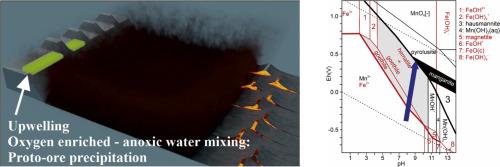
The black shale-hosted manganese ore deposit of Úrkút in Hungary formed during the globally recognized Toarcian (Early Jurassic) Jenkyns Event. Although geochemical signatures of hydrothermal processes involved in the metallogenesis of manganese ores were first recognized in the 1980s, their source and geochemical characterisation remained controversial. Here, we address two key questions: (i) why economically significant manganese ore accumulation is exclusively restricted to the Úrkút and Eplény sub-basins, despite the widespread Jenkyns Event-related sedimentation across the Transdanubian Range, and (ii) what was the source of the manganese. Based on new clay mineralogical (identification of montmorillonite and beidellite with distinct formation environments), geochemical (behaviour of Fe and Mn; Co-Ni-Zn and Fe-Mn-(Co-Ni-Cu) ternary system analysis; Cd/Mo ratio), and sedimentological data (evidence for radiolarian blooms), we propose a new early-stage ore-forming model. We suggest that dissolved Fe and Mn from hot brine pools associated with the rifting of the Neotethys Ocean were transported over long distances under anoxic conditions during the Jenkyns Event. A long-lived upwelling system (from the Late Pliensbachian to Early Toarcian) caused water mixing in the Bakony basin, which triggered the precipitation of the “proto-ore” of the Úrkút and Eplény manganese ore deposits. Our results contribute to a better understanding of the manganese enrichment in the Úrkút and Eplény sub-basins, pointing to the critical interplay between global paleoenvironmental events and local depositional settings.


 求助内容:
求助内容: 应助结果提醒方式:

 京公网安备 11010802042870号


