Yasemin Tunca, Nihal Fahrzadeh, Murat Tunca, Yüksel Akınay
{"title":"热成型前后不同热塑性固位材料的机械、表面和化学性能的比较:扫描电子显微镜和傅立叶变换红外光谱分析。","authors":"Yasemin Tunca, Nihal Fahrzadeh, Murat Tunca, Yüksel Akınay","doi":"10.4274/TurkJOrthod.2025.2025.85","DOIUrl":null,"url":null,"abstract":"<p><strong>Objective: </strong>The aim of this study was to evaluate the surface hardness, surface roughness, and chemical structure changes of four vacuum-formed retainer (VFR) materials after thermoforming.</p><p><strong>Methods: </strong>Four groups of VFR materials were evaluated: Taglus, Lumex-G, Atmos, and Duran. Each group consisted of 12 samples (n=12) that were thermoformed according to the manufacturer's guidelines. Surface roughness was measured using a high-precision profilometer, and hardness was assessed with a micro-Vickers hardness tester. Chemical structure analysis was conducted using Fourier transform infrared spectroscopy (FTIR), and surface morphology was examined using scanning electron microscopy (SEM).</p><p><strong>Results: </strong>Hardness measurements demonstrated a general decrease across all groups following thermoforming. After thermoforming, surface roughness increased significantly in the Taglus and Lumex-G groups, whereas the Atmos and Duran groups maintained greater surface stability. FTIR demonstrated that all materials retained their chemical stability, and no significant changes in functional groups were detected. SEM results revealed more pronounced surface irregularities in the Taglus and Lumex-G groups.</p><p><strong>Conclusion: </strong>Polyethylene terephthalate glycol copolyester-based materials with high surface homogeneity, such as Atmos and Duran, may be recommended for clinical use due to their superior surface stability and chemical resilience. By contrast, the surface irregularities observed in Taglus and Lumex-G may compromise their long-term clinical performance.</p>","PeriodicalId":37013,"journal":{"name":"Turkish Journal of Orthodontics","volume":"38 4","pages":"224-232"},"PeriodicalIF":1.4000,"publicationDate":"2025-12-30","publicationTypes":"Journal Article","fieldsOfStudy":null,"isOpenAccess":false,"openAccessPdf":"https://www.ncbi.nlm.nih.gov/pmc/articles/PMC12758443/pdf/","citationCount":"0","resultStr":"{\"title\":\"Comparison of Mechanical, Surface, and Chemical Properties of Different Thermoplastic Retainer Materials before and after Thermoforming: Scanning Electron Microscopy and Fourier Transform Infrared Spectroscopy Analyses.\",\"authors\":\"Yasemin Tunca, Nihal Fahrzadeh, Murat Tunca, Yüksel Akınay\",\"doi\":\"10.4274/TurkJOrthod.2025.2025.85\",\"DOIUrl\":null,\"url\":null,\"abstract\":\"<p><strong>Objective: </strong>The aim of this study was to evaluate the surface hardness, surface roughness, and chemical structure changes of four vacuum-formed retainer (VFR) materials after thermoforming.</p><p><strong>Methods: </strong>Four groups of VFR materials were evaluated: Taglus, Lumex-G, Atmos, and Duran. Each group consisted of 12 samples (n=12) that were thermoformed according to the manufacturer's guidelines. Surface roughness was measured using a high-precision profilometer, and hardness was assessed with a micro-Vickers hardness tester. Chemical structure analysis was conducted using Fourier transform infrared spectroscopy (FTIR), and surface morphology was examined using scanning electron microscopy (SEM).</p><p><strong>Results: </strong>Hardness measurements demonstrated a general decrease across all groups following thermoforming. After thermoforming, surface roughness increased significantly in the Taglus and Lumex-G groups, whereas the Atmos and Duran groups maintained greater surface stability. FTIR demonstrated that all materials retained their chemical stability, and no significant changes in functional groups were detected. SEM results revealed more pronounced surface irregularities in the Taglus and Lumex-G groups.</p><p><strong>Conclusion: </strong>Polyethylene terephthalate glycol copolyester-based materials with high surface homogeneity, such as Atmos and Duran, may be recommended for clinical use due to their superior surface stability and chemical resilience. By contrast, the surface irregularities observed in Taglus and Lumex-G may compromise their long-term clinical performance.</p>\",\"PeriodicalId\":37013,\"journal\":{\"name\":\"Turkish Journal of Orthodontics\",\"volume\":\"38 4\",\"pages\":\"224-232\"},\"PeriodicalIF\":1.4000,\"publicationDate\":\"2025-12-30\",\"publicationTypes\":\"Journal Article\",\"fieldsOfStudy\":null,\"isOpenAccess\":false,\"openAccessPdf\":\"https://www.ncbi.nlm.nih.gov/pmc/articles/PMC12758443/pdf/\",\"citationCount\":\"0\",\"resultStr\":null,\"platform\":\"Semanticscholar\",\"paperid\":null,\"PeriodicalName\":\"Turkish Journal of Orthodontics\",\"FirstCategoryId\":\"1085\",\"ListUrlMain\":\"https://doi.org/10.4274/TurkJOrthod.2025.2025.85\",\"RegionNum\":0,\"RegionCategory\":null,\"ArticlePicture\":[],\"TitleCN\":null,\"AbstractTextCN\":null,\"PMCID\":null,\"EPubDate\":\"\",\"PubModel\":\"\",\"JCR\":\"Q4\",\"JCRName\":\"DENTISTRY, ORAL SURGERY & MEDICINE\",\"Score\":null,\"Total\":0}","platform":"Semanticscholar","paperid":null,"PeriodicalName":"Turkish Journal of Orthodontics","FirstCategoryId":"1085","ListUrlMain":"https://doi.org/10.4274/TurkJOrthod.2025.2025.85","RegionNum":0,"RegionCategory":null,"ArticlePicture":[],"TitleCN":null,"AbstractTextCN":null,"PMCID":null,"EPubDate":"","PubModel":"","JCR":"Q4","JCRName":"DENTISTRY, ORAL SURGERY & MEDICINE","Score":null,"Total":0}
Comparison of Mechanical, Surface, and Chemical Properties of Different Thermoplastic Retainer Materials before and after Thermoforming: Scanning Electron Microscopy and Fourier Transform Infrared Spectroscopy Analyses.
Objective: The aim of this study was to evaluate the surface hardness, surface roughness, and chemical structure changes of four vacuum-formed retainer (VFR) materials after thermoforming.
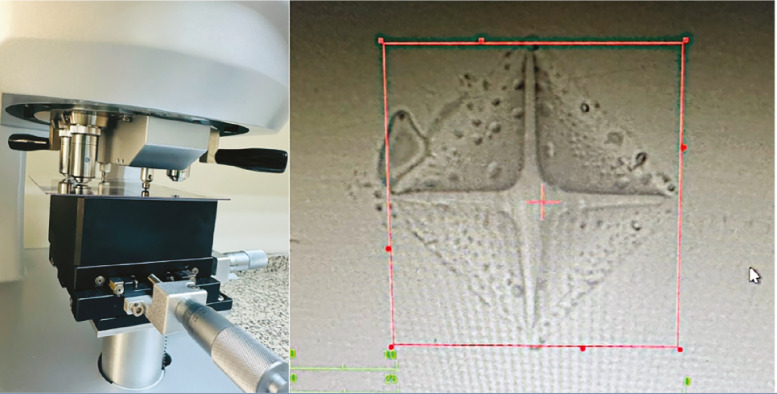
Methods: Four groups of VFR materials were evaluated: Taglus, Lumex-G, Atmos, and Duran. Each group consisted of 12 samples (n=12) that were thermoformed according to the manufacturer's guidelines. Surface roughness was measured using a high-precision profilometer, and hardness was assessed with a micro-Vickers hardness tester. Chemical structure analysis was conducted using Fourier transform infrared spectroscopy (FTIR), and surface morphology was examined using scanning electron microscopy (SEM).
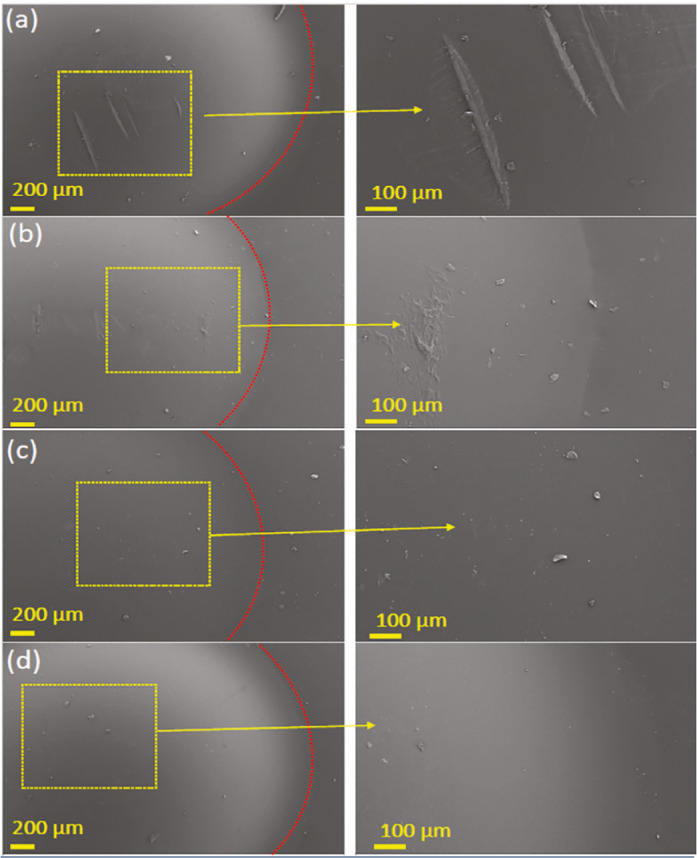
Results: Hardness measurements demonstrated a general decrease across all groups following thermoforming. After thermoforming, surface roughness increased significantly in the Taglus and Lumex-G groups, whereas the Atmos and Duran groups maintained greater surface stability. FTIR demonstrated that all materials retained their chemical stability, and no significant changes in functional groups were detected. SEM results revealed more pronounced surface irregularities in the Taglus and Lumex-G groups.
Conclusion: Polyethylene terephthalate glycol copolyester-based materials with high surface homogeneity, such as Atmos and Duran, may be recommended for clinical use due to their superior surface stability and chemical resilience. By contrast, the surface irregularities observed in Taglus and Lumex-G may compromise their long-term clinical performance.



 求助内容:
求助内容: 应助结果提醒方式:

 京公网安备 11010802042870号


