Arvind Kumar Singh , Aditya Abha Singh , Kumail Ahmad
{"title":"氧最低带的扩大是否影响了现代海洋盆地的健康?回顾","authors":"Arvind Kumar Singh , Aditya Abha Singh , Kumail Ahmad","doi":"10.1016/j.geogeo.2025.100483","DOIUrl":null,"url":null,"abstract":"<div><div>Oxygen minimum zones (OMZ) are represented by sharply depleted oxygen concentrations in the modern ocean basins. The expansion of these zones is documented since 1960. They have been expanding globally in the world's oceans with profound implications for marine ecosystems and biogeochemical cycles. Under this review, we synthesize and integrate the current knowledge on the factors, dynamics and consequences of OMZ expansion in the modern ocean basins. We have explored the interplay of physical, chemical and biological factors conducive to OMZ formation and intensification, highlighting the role of ocean circulation patterns, nutrient enrichment from anthropogenic activities and augmenting influence of climate change. The impact of OMZs on marine ecology are explored with the focus on physiological stress on marine organisms, habitat compression, shifts in community structure and potential loss of biodiversity. We have also investigated their contribution to greenhouse gas emissions and the biogeochemical significance of OMZs, particularly in the context of nitrogen and other nutrient cycles. Further, this work emphasizes on the complex feedback loops between OMZ expansion and climate change underscoring the urgent need for mitigation and adaptation strategies. At the outset, the study discusses the future research scopes and management approaches crucial for addressing the challenges posed by expanding OMZs thereby ensuring the health and sustainability of modern ocean basins.</div></div>","PeriodicalId":100582,"journal":{"name":"Geosystems and Geoenvironment","volume":"5 2","pages":"Article 100483"},"PeriodicalIF":0.0000,"publicationDate":"2026-05-01","publicationTypes":"Journal Article","fieldsOfStudy":null,"isOpenAccess":false,"openAccessPdf":"","citationCount":"0","resultStr":"{\"title\":\"Is the expansion of oxygen minimum zones impacting the health of modern ocean basins? A review\",\"authors\":\"Arvind Kumar Singh , Aditya Abha Singh , Kumail Ahmad\",\"doi\":\"10.1016/j.geogeo.2025.100483\",\"DOIUrl\":null,\"url\":null,\"abstract\":\"<div><div>Oxygen minimum zones (OMZ) are represented by sharply depleted oxygen concentrations in the modern ocean basins. The expansion of these zones is documented since 1960. They have been expanding globally in the world's oceans with profound implications for marine ecosystems and biogeochemical cycles. Under this review, we synthesize and integrate the current knowledge on the factors, dynamics and consequences of OMZ expansion in the modern ocean basins. We have explored the interplay of physical, chemical and biological factors conducive to OMZ formation and intensification, highlighting the role of ocean circulation patterns, nutrient enrichment from anthropogenic activities and augmenting influence of climate change. The impact of OMZs on marine ecology are explored with the focus on physiological stress on marine organisms, habitat compression, shifts in community structure and potential loss of biodiversity. We have also investigated their contribution to greenhouse gas emissions and the biogeochemical significance of OMZs, particularly in the context of nitrogen and other nutrient cycles. Further, this work emphasizes on the complex feedback loops between OMZ expansion and climate change underscoring the urgent need for mitigation and adaptation strategies. At the outset, the study discusses the future research scopes and management approaches crucial for addressing the challenges posed by expanding OMZs thereby ensuring the health and sustainability of modern ocean basins.</div></div>\",\"PeriodicalId\":100582,\"journal\":{\"name\":\"Geosystems and Geoenvironment\",\"volume\":\"5 2\",\"pages\":\"Article 100483\"},\"PeriodicalIF\":0.0000,\"publicationDate\":\"2026-05-01\",\"publicationTypes\":\"Journal Article\",\"fieldsOfStudy\":null,\"isOpenAccess\":false,\"openAccessPdf\":\"\",\"citationCount\":\"0\",\"resultStr\":null,\"platform\":\"Semanticscholar\",\"paperid\":null,\"PeriodicalName\":\"Geosystems and Geoenvironment\",\"FirstCategoryId\":\"1085\",\"ListUrlMain\":\"https://www.sciencedirect.com/science/article/pii/S2772883825001311\",\"RegionNum\":0,\"RegionCategory\":null,\"ArticlePicture\":[],\"TitleCN\":null,\"AbstractTextCN\":null,\"PMCID\":null,\"EPubDate\":\"2025/11/28 0:00:00\",\"PubModel\":\"Epub\",\"JCR\":\"\",\"JCRName\":\"\",\"Score\":null,\"Total\":0}","platform":"Semanticscholar","paperid":null,"PeriodicalName":"Geosystems and Geoenvironment","FirstCategoryId":"1085","ListUrlMain":"https://www.sciencedirect.com/science/article/pii/S2772883825001311","RegionNum":0,"RegionCategory":null,"ArticlePicture":[],"TitleCN":null,"AbstractTextCN":null,"PMCID":null,"EPubDate":"2025/11/28 0:00:00","PubModel":"Epub","JCR":"","JCRName":"","Score":null,"Total":0}
Is the expansion of oxygen minimum zones impacting the health of modern ocean basins? A review
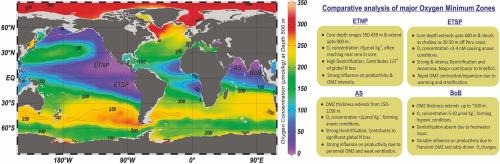
Oxygen minimum zones (OMZ) are represented by sharply depleted oxygen concentrations in the modern ocean basins. The expansion of these zones is documented since 1960. They have been expanding globally in the world's oceans with profound implications for marine ecosystems and biogeochemical cycles. Under this review, we synthesize and integrate the current knowledge on the factors, dynamics and consequences of OMZ expansion in the modern ocean basins. We have explored the interplay of physical, chemical and biological factors conducive to OMZ formation and intensification, highlighting the role of ocean circulation patterns, nutrient enrichment from anthropogenic activities and augmenting influence of climate change. The impact of OMZs on marine ecology are explored with the focus on physiological stress on marine organisms, habitat compression, shifts in community structure and potential loss of biodiversity. We have also investigated their contribution to greenhouse gas emissions and the biogeochemical significance of OMZs, particularly in the context of nitrogen and other nutrient cycles. Further, this work emphasizes on the complex feedback loops between OMZ expansion and climate change underscoring the urgent need for mitigation and adaptation strategies. At the outset, the study discusses the future research scopes and management approaches crucial for addressing the challenges posed by expanding OMZs thereby ensuring the health and sustainability of modern ocean basins.


 求助内容:
求助内容: 应助结果提醒方式:

 京公网安备 11010802042870号


