Fei Wang, Zhaosheng Luo, Ying Miao, Shuting Zhou, Lang Zheng
{"title":"基于认知诊断评价的高中英语阅读理解学习路径与学习进阶构建","authors":"Fei Wang, Zhaosheng Luo, Ying Miao, Shuting Zhou, Lang Zheng","doi":"10.3390/jintelligence13110140","DOIUrl":null,"url":null,"abstract":"<p><p>To meet the growing demands for competency-based and personalized instruction in high school English reading, this study investigates a quantitative approach to modeling learning pathways and progressions. Traditional assessments often fail to capture students' fine-grained cognitive differences and provide limited guidance for individualized teaching. Based on cognitive diagnostic theory, this study analyzes large-scale empirical data to construct a progression framework reflecting both the sequencing of cognitive skill development and the hierarchical structure of reading abilities. A Q-matrix was calibrated through expert consensus. A hybrid cognitive diagnostic model was used to infer students' knowledge states, followed by cluster analysis and item response theory to define progression levels, which were mapped to national curriculum standards. The findings reveal that students' mastery of cognitive attributes follows a stepwise developmental pattern, with dominant learning trajectories. The constructed learning progression aligns well with curriculum-based academic quality levels, while uncovering potential misalignments in the positioning of some skill levels. Students with identical scores also showed significant variation in cognitive structures. The proposed model provides a data-informed foundation for adaptive instruction and offers new tools for personalized learning in English reading comprehension.</p>","PeriodicalId":52279,"journal":{"name":"Journal of Intelligence","volume":"13 11","pages":""},"PeriodicalIF":3.4000,"publicationDate":"2025-11-04","publicationTypes":"Journal Article","fieldsOfStudy":null,"isOpenAccess":false,"openAccessPdf":"https://www.ncbi.nlm.nih.gov/pmc/articles/PMC12653377/pdf/","citationCount":"0","resultStr":"{\"title\":\"Construction of Learning Pathways and Learning Progressions for High School English Reading Comprehension Based on Cognitive Diagnostic Assessment.\",\"authors\":\"Fei Wang, Zhaosheng Luo, Ying Miao, Shuting Zhou, Lang Zheng\",\"doi\":\"10.3390/jintelligence13110140\",\"DOIUrl\":null,\"url\":null,\"abstract\":\"<p><p>To meet the growing demands for competency-based and personalized instruction in high school English reading, this study investigates a quantitative approach to modeling learning pathways and progressions. Traditional assessments often fail to capture students' fine-grained cognitive differences and provide limited guidance for individualized teaching. Based on cognitive diagnostic theory, this study analyzes large-scale empirical data to construct a progression framework reflecting both the sequencing of cognitive skill development and the hierarchical structure of reading abilities. A Q-matrix was calibrated through expert consensus. A hybrid cognitive diagnostic model was used to infer students' knowledge states, followed by cluster analysis and item response theory to define progression levels, which were mapped to national curriculum standards. The findings reveal that students' mastery of cognitive attributes follows a stepwise developmental pattern, with dominant learning trajectories. The constructed learning progression aligns well with curriculum-based academic quality levels, while uncovering potential misalignments in the positioning of some skill levels. Students with identical scores also showed significant variation in cognitive structures. The proposed model provides a data-informed foundation for adaptive instruction and offers new tools for personalized learning in English reading comprehension.</p>\",\"PeriodicalId\":52279,\"journal\":{\"name\":\"Journal of Intelligence\",\"volume\":\"13 11\",\"pages\":\"\"},\"PeriodicalIF\":3.4000,\"publicationDate\":\"2025-11-04\",\"publicationTypes\":\"Journal Article\",\"fieldsOfStudy\":null,\"isOpenAccess\":false,\"openAccessPdf\":\"https://www.ncbi.nlm.nih.gov/pmc/articles/PMC12653377/pdf/\",\"citationCount\":\"0\",\"resultStr\":null,\"platform\":\"Semanticscholar\",\"paperid\":null,\"PeriodicalName\":\"Journal of Intelligence\",\"FirstCategoryId\":\"102\",\"ListUrlMain\":\"https://doi.org/10.3390/jintelligence13110140\",\"RegionNum\":3,\"RegionCategory\":\"心理学\",\"ArticlePicture\":[],\"TitleCN\":null,\"AbstractTextCN\":null,\"PMCID\":null,\"EPubDate\":\"\",\"PubModel\":\"\",\"JCR\":\"Q1\",\"JCRName\":\"PSYCHOLOGY, MULTIDISCIPLINARY\",\"Score\":null,\"Total\":0}","platform":"Semanticscholar","paperid":null,"PeriodicalName":"Journal of Intelligence","FirstCategoryId":"102","ListUrlMain":"https://doi.org/10.3390/jintelligence13110140","RegionNum":3,"RegionCategory":"心理学","ArticlePicture":[],"TitleCN":null,"AbstractTextCN":null,"PMCID":null,"EPubDate":"","PubModel":"","JCR":"Q1","JCRName":"PSYCHOLOGY, MULTIDISCIPLINARY","Score":null,"Total":0}
Construction of Learning Pathways and Learning Progressions for High School English Reading Comprehension Based on Cognitive Diagnostic Assessment.
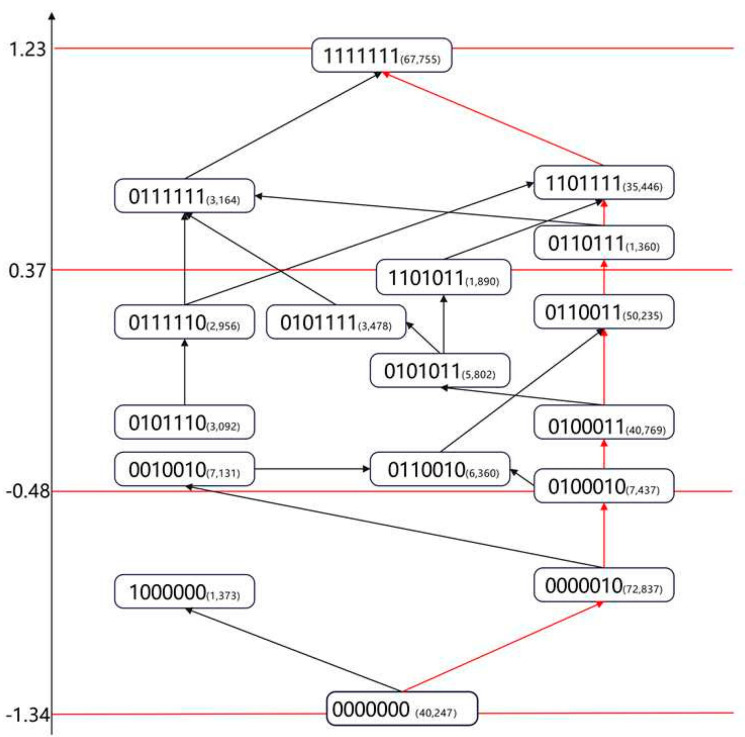
To meet the growing demands for competency-based and personalized instruction in high school English reading, this study investigates a quantitative approach to modeling learning pathways and progressions. Traditional assessments often fail to capture students' fine-grained cognitive differences and provide limited guidance for individualized teaching. Based on cognitive diagnostic theory, this study analyzes large-scale empirical data to construct a progression framework reflecting both the sequencing of cognitive skill development and the hierarchical structure of reading abilities. A Q-matrix was calibrated through expert consensus. A hybrid cognitive diagnostic model was used to infer students' knowledge states, followed by cluster analysis and item response theory to define progression levels, which were mapped to national curriculum standards. The findings reveal that students' mastery of cognitive attributes follows a stepwise developmental pattern, with dominant learning trajectories. The constructed learning progression aligns well with curriculum-based academic quality levels, while uncovering potential misalignments in the positioning of some skill levels. Students with identical scores also showed significant variation in cognitive structures. The proposed model provides a data-informed foundation for adaptive instruction and offers new tools for personalized learning in English reading comprehension.



 求助内容:
求助内容: 应助结果提醒方式:

 京公网安备 11010802042870号


