Yang Zhang, Xiao Liang, Shuai Luo, Zhizhe Zhang, Pinglang Zhou, Zhiyang Zhou, Yihan Yang
{"title":"COPD患者饮食多不饱和脂肪酸摄入与全因死亡率和心血管死亡率的关系","authors":"Yang Zhang, Xiao Liang, Shuai Luo, Zhizhe Zhang, Pinglang Zhou, Zhiyang Zhou, Yihan Yang","doi":"10.1186/s12986-025-01006-y","DOIUrl":null,"url":null,"abstract":"<p><strong>Background: </strong>Chronic obstructive pulmonary disease (COPD) patients face increased mortality risk, particularly from cardiovascular causes. While polyunsaturated fatty acids (PUFAs) have shown cardiovascular benefits in general populations, their impact on COPD mortality remains unexplored.</p><p><strong>Methods: </strong>This prospective cohort study analyzed 2,102 COPD patients from NHANES (1999-2018). PUFA intake was assessed through 24-hour dietary recalls and categorized into tertiles. Associations with all-cause and cardiovascular mortality were evaluated using Cox regression models, restricted cubic splines (RCS), and weighted quantile sum (WQS) regression. Comprehensive subgroup and sensitivity analyses confirmed result robustness.</p><p><strong>Results: </strong>During 9.08 years of follow-up, 603 deaths (28.7%) occurred, including 190 (9.0%) from cardiovascular disease. Compared to the lowest tertile, the highest tertile of total PUFA (HR: 0.70, 95% CI: 0.53-0.91), N-3 PUFA (HR: 0.67, 95% CI: 0.52-0.87), and N-6 PUFA (HR: 0.74, 95% CI: 0.57-0.97) intake was associated with lower all-cause mortality. For cardiovascular mortality, higher intake of total PUFA (HR: 0.55, 95% CI: 0.33-0.90), N-3 PUFA (HR: 0.56, 95% CI: 0.36-0.89), and N-6 PUFA (HR: 0.57, 95% CI: 0.34-0.93) showed significant protective effects. RCS analyses revealed non-linear associations with significant threshold effects. WQS analysis identified two plant-derived PUFA-α-linolenic acid (ALA) and linoleic acid (LA) as the primary contributors to mortality reduction. All sensitivity analyses confirmed the stability and consistency of our main findings.</p><p><strong>Conclusions: </strong>Higher dietary PUFA intake is associated with lower all-cause and cardiovascular mortality among COPD patients, suggesting that increasing dietary PUFA, particularly from plant sources, may help reduce COPD-related mortality risk.</p>","PeriodicalId":19196,"journal":{"name":"Nutrition & Metabolism","volume":"22 1","pages":"108"},"PeriodicalIF":4.1000,"publicationDate":"2025-09-30","publicationTypes":"Journal Article","fieldsOfStudy":null,"isOpenAccess":false,"openAccessPdf":"https://www.ncbi.nlm.nih.gov/pmc/articles/PMC12487311/pdf/","citationCount":"0","resultStr":"{\"title\":\"Dietary polyunsaturated fatty acid intake and all-cause and cardiovascular mortality in patients with COPD.\",\"authors\":\"Yang Zhang, Xiao Liang, Shuai Luo, Zhizhe Zhang, Pinglang Zhou, Zhiyang Zhou, Yihan Yang\",\"doi\":\"10.1186/s12986-025-01006-y\",\"DOIUrl\":null,\"url\":null,\"abstract\":\"<p><strong>Background: </strong>Chronic obstructive pulmonary disease (COPD) patients face increased mortality risk, particularly from cardiovascular causes. While polyunsaturated fatty acids (PUFAs) have shown cardiovascular benefits in general populations, their impact on COPD mortality remains unexplored.</p><p><strong>Methods: </strong>This prospective cohort study analyzed 2,102 COPD patients from NHANES (1999-2018). PUFA intake was assessed through 24-hour dietary recalls and categorized into tertiles. Associations with all-cause and cardiovascular mortality were evaluated using Cox regression models, restricted cubic splines (RCS), and weighted quantile sum (WQS) regression. Comprehensive subgroup and sensitivity analyses confirmed result robustness.</p><p><strong>Results: </strong>During 9.08 years of follow-up, 603 deaths (28.7%) occurred, including 190 (9.0%) from cardiovascular disease. Compared to the lowest tertile, the highest tertile of total PUFA (HR: 0.70, 95% CI: 0.53-0.91), N-3 PUFA (HR: 0.67, 95% CI: 0.52-0.87), and N-6 PUFA (HR: 0.74, 95% CI: 0.57-0.97) intake was associated with lower all-cause mortality. For cardiovascular mortality, higher intake of total PUFA (HR: 0.55, 95% CI: 0.33-0.90), N-3 PUFA (HR: 0.56, 95% CI: 0.36-0.89), and N-6 PUFA (HR: 0.57, 95% CI: 0.34-0.93) showed significant protective effects. RCS analyses revealed non-linear associations with significant threshold effects. WQS analysis identified two plant-derived PUFA-α-linolenic acid (ALA) and linoleic acid (LA) as the primary contributors to mortality reduction. All sensitivity analyses confirmed the stability and consistency of our main findings.</p><p><strong>Conclusions: </strong>Higher dietary PUFA intake is associated with lower all-cause and cardiovascular mortality among COPD patients, suggesting that increasing dietary PUFA, particularly from plant sources, may help reduce COPD-related mortality risk.</p>\",\"PeriodicalId\":19196,\"journal\":{\"name\":\"Nutrition & Metabolism\",\"volume\":\"22 1\",\"pages\":\"108\"},\"PeriodicalIF\":4.1000,\"publicationDate\":\"2025-09-30\",\"publicationTypes\":\"Journal Article\",\"fieldsOfStudy\":null,\"isOpenAccess\":false,\"openAccessPdf\":\"https://www.ncbi.nlm.nih.gov/pmc/articles/PMC12487311/pdf/\",\"citationCount\":\"0\",\"resultStr\":null,\"platform\":\"Semanticscholar\",\"paperid\":null,\"PeriodicalName\":\"Nutrition & Metabolism\",\"FirstCategoryId\":\"3\",\"ListUrlMain\":\"https://doi.org/10.1186/s12986-025-01006-y\",\"RegionNum\":2,\"RegionCategory\":\"医学\",\"ArticlePicture\":[],\"TitleCN\":null,\"AbstractTextCN\":null,\"PMCID\":null,\"EPubDate\":\"\",\"PubModel\":\"\",\"JCR\":\"Q2\",\"JCRName\":\"NUTRITION & DIETETICS\",\"Score\":null,\"Total\":0}","platform":"Semanticscholar","paperid":null,"PeriodicalName":"Nutrition & Metabolism","FirstCategoryId":"3","ListUrlMain":"https://doi.org/10.1186/s12986-025-01006-y","RegionNum":2,"RegionCategory":"医学","ArticlePicture":[],"TitleCN":null,"AbstractTextCN":null,"PMCID":null,"EPubDate":"","PubModel":"","JCR":"Q2","JCRName":"NUTRITION & DIETETICS","Score":null,"Total":0}
Dietary polyunsaturated fatty acid intake and all-cause and cardiovascular mortality in patients with COPD.
Background: Chronic obstructive pulmonary disease (COPD) patients face increased mortality risk, particularly from cardiovascular causes. While polyunsaturated fatty acids (PUFAs) have shown cardiovascular benefits in general populations, their impact on COPD mortality remains unexplored.
Methods: This prospective cohort study analyzed 2,102 COPD patients from NHANES (1999-2018). PUFA intake was assessed through 24-hour dietary recalls and categorized into tertiles. Associations with all-cause and cardiovascular mortality were evaluated using Cox regression models, restricted cubic splines (RCS), and weighted quantile sum (WQS) regression. Comprehensive subgroup and sensitivity analyses confirmed result robustness.
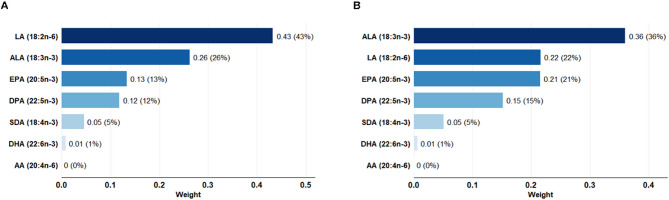
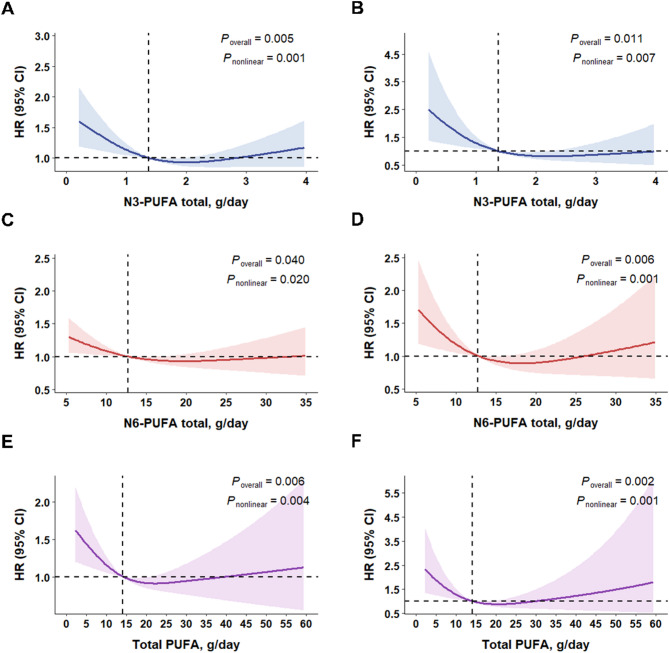
Results: During 9.08 years of follow-up, 603 deaths (28.7%) occurred, including 190 (9.0%) from cardiovascular disease. Compared to the lowest tertile, the highest tertile of total PUFA (HR: 0.70, 95% CI: 0.53-0.91), N-3 PUFA (HR: 0.67, 95% CI: 0.52-0.87), and N-6 PUFA (HR: 0.74, 95% CI: 0.57-0.97) intake was associated with lower all-cause mortality. For cardiovascular mortality, higher intake of total PUFA (HR: 0.55, 95% CI: 0.33-0.90), N-3 PUFA (HR: 0.56, 95% CI: 0.36-0.89), and N-6 PUFA (HR: 0.57, 95% CI: 0.34-0.93) showed significant protective effects. RCS analyses revealed non-linear associations with significant threshold effects. WQS analysis identified two plant-derived PUFA-α-linolenic acid (ALA) and linoleic acid (LA) as the primary contributors to mortality reduction. All sensitivity analyses confirmed the stability and consistency of our main findings.
Conclusions: Higher dietary PUFA intake is associated with lower all-cause and cardiovascular mortality among COPD patients, suggesting that increasing dietary PUFA, particularly from plant sources, may help reduce COPD-related mortality risk.
期刊介绍:
Nutrition & Metabolism publishes studies with a clear focus on nutrition and metabolism with applications ranging from nutrition needs, exercise physiology, clinical and population studies, as well as the underlying mechanisms in these aspects.
The areas of interest for Nutrition & Metabolism encompass studies in molecular nutrition in the context of obesity, diabetes, lipedemias, metabolic syndrome and exercise physiology. Manuscripts related to molecular, cellular and human metabolism, nutrient sensing and nutrient–gene interactions are also in interest, as are submissions that have employed new and innovative strategies like metabolomics/lipidomics or other omic-based biomarkers to predict nutritional status and metabolic diseases.
Key areas we wish to encourage submissions from include:
-how diet and specific nutrients interact with genes, proteins or metabolites to influence metabolic phenotypes and disease outcomes;
-the role of epigenetic factors and the microbiome in the pathogenesis of metabolic diseases and their influence on metabolic responses to diet and food components;
-how diet and other environmental factors affect epigenetics and microbiota; the extent to which genetic and nongenetic factors modify personal metabolic responses to diet and food compositions and the mechanisms involved;
-how specific biologic networks and nutrient sensing mechanisms attribute to metabolic variability.


 求助内容:
求助内容: 应助结果提醒方式:

 京公网安备 11010802042870号

