{"title":"肾细胞癌的细胞外囊泡进展到什么程度?诊断和治疗前沿。","authors":"Mingcan Zhou, Lanfeng Wang, Bingqing Yu, Jiahui He, Jingyu Zhang, Zhanyu Liu, Puwen Chen, Chen Ouyang, Zhiping Chen","doi":"10.2147/IJN.S545749","DOIUrl":null,"url":null,"abstract":"<p><p>Renal cell carcinoma (RCC), a prevalent malignant tumor of the urinary system, presents significant challenges in early diagnosis and treatment. The invasiveness of traditional tissue biopsies and the limitations of imaging techniques necessitate the exploration of novel biomarkers through liquid biopsy. Extracellular vesicles (EVs), functioning as natural nanoscale carriers, encapsulate a variety of tumor-derived molecules and exhibit distinctive potential in non-invasive diagnosis, regulation of the tumor microenvironment (TME), and resistance to treatment in RCC. Serum- and urine-derived EVs can effectively differentiate RCC patients from healthy individuals by utilizing specific biomarkers, such as miRNAs, proteins, and snoRNAs. They can predict tumor staging, metastasis, and prognosis. TME is reshaped by EVs through the transmission of immunosuppressive factors and pro-angiogenic molecules, facilitating immune escape and the formation of pre-metastatic niches. Furthermore, the drug resistance mechanisms mediated by EVs provide new insights for targeted therapy, and their application as drug carriers demonstrates therapeutic potential. Nonetheless, the clinical translation of EVs faces several technical challenges, including the standardization of isolation techniques, inadequate validation of biomarkers, and the lack of large-scale clinical studies. Future efforts are focused on integrating multi-omics analysis, AI-assisted diagnosis, and novel isolation techniques to facilitate the transition of EVs from the laboratory to clinical application. Overall, EVs hold significant promise for the precision diagnosis and treatment of RCC; however, their widespread application necessitates systematic validation and technological innovation.</p>","PeriodicalId":14084,"journal":{"name":"International Journal of Nanomedicine","volume":"20 ","pages":"10963-10976"},"PeriodicalIF":6.5000,"publicationDate":"2025-09-06","publicationTypes":"Journal Article","fieldsOfStudy":null,"isOpenAccess":false,"openAccessPdf":"https://www.ncbi.nlm.nih.gov/pmc/articles/PMC12423443/pdf/","citationCount":"0","resultStr":"{\"title\":\"How Advanced Are Extracellular Vesicles in Renal Cell Carcinoma? For Diagnostic and Therapeutic Frontiers.\",\"authors\":\"Mingcan Zhou, Lanfeng Wang, Bingqing Yu, Jiahui He, Jingyu Zhang, Zhanyu Liu, Puwen Chen, Chen Ouyang, Zhiping Chen\",\"doi\":\"10.2147/IJN.S545749\",\"DOIUrl\":null,\"url\":null,\"abstract\":\"<p><p>Renal cell carcinoma (RCC), a prevalent malignant tumor of the urinary system, presents significant challenges in early diagnosis and treatment. The invasiveness of traditional tissue biopsies and the limitations of imaging techniques necessitate the exploration of novel biomarkers through liquid biopsy. Extracellular vesicles (EVs), functioning as natural nanoscale carriers, encapsulate a variety of tumor-derived molecules and exhibit distinctive potential in non-invasive diagnosis, regulation of the tumor microenvironment (TME), and resistance to treatment in RCC. Serum- and urine-derived EVs can effectively differentiate RCC patients from healthy individuals by utilizing specific biomarkers, such as miRNAs, proteins, and snoRNAs. They can predict tumor staging, metastasis, and prognosis. TME is reshaped by EVs through the transmission of immunosuppressive factors and pro-angiogenic molecules, facilitating immune escape and the formation of pre-metastatic niches. Furthermore, the drug resistance mechanisms mediated by EVs provide new insights for targeted therapy, and their application as drug carriers demonstrates therapeutic potential. Nonetheless, the clinical translation of EVs faces several technical challenges, including the standardization of isolation techniques, inadequate validation of biomarkers, and the lack of large-scale clinical studies. Future efforts are focused on integrating multi-omics analysis, AI-assisted diagnosis, and novel isolation techniques to facilitate the transition of EVs from the laboratory to clinical application. Overall, EVs hold significant promise for the precision diagnosis and treatment of RCC; however, their widespread application necessitates systematic validation and technological innovation.</p>\",\"PeriodicalId\":14084,\"journal\":{\"name\":\"International Journal of Nanomedicine\",\"volume\":\"20 \",\"pages\":\"10963-10976\"},\"PeriodicalIF\":6.5000,\"publicationDate\":\"2025-09-06\",\"publicationTypes\":\"Journal Article\",\"fieldsOfStudy\":null,\"isOpenAccess\":false,\"openAccessPdf\":\"https://www.ncbi.nlm.nih.gov/pmc/articles/PMC12423443/pdf/\",\"citationCount\":\"0\",\"resultStr\":null,\"platform\":\"Semanticscholar\",\"paperid\":null,\"PeriodicalName\":\"International Journal of Nanomedicine\",\"FirstCategoryId\":\"3\",\"ListUrlMain\":\"https://doi.org/10.2147/IJN.S545749\",\"RegionNum\":2,\"RegionCategory\":\"医学\",\"ArticlePicture\":[],\"TitleCN\":null,\"AbstractTextCN\":null,\"PMCID\":null,\"EPubDate\":\"2025/1/1 0:00:00\",\"PubModel\":\"eCollection\",\"JCR\":\"Q1\",\"JCRName\":\"NANOSCIENCE & NANOTECHNOLOGY\",\"Score\":null,\"Total\":0}","platform":"Semanticscholar","paperid":null,"PeriodicalName":"International Journal of Nanomedicine","FirstCategoryId":"3","ListUrlMain":"https://doi.org/10.2147/IJN.S545749","RegionNum":2,"RegionCategory":"医学","ArticlePicture":[],"TitleCN":null,"AbstractTextCN":null,"PMCID":null,"EPubDate":"2025/1/1 0:00:00","PubModel":"eCollection","JCR":"Q1","JCRName":"NANOSCIENCE & NANOTECHNOLOGY","Score":null,"Total":0}
How Advanced Are Extracellular Vesicles in Renal Cell Carcinoma? For Diagnostic and Therapeutic Frontiers.
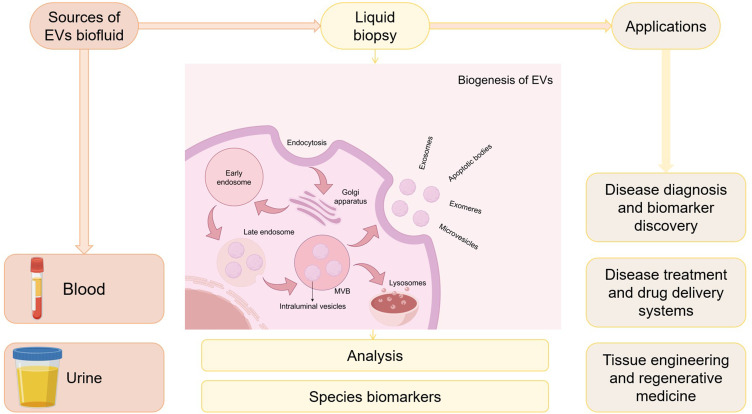
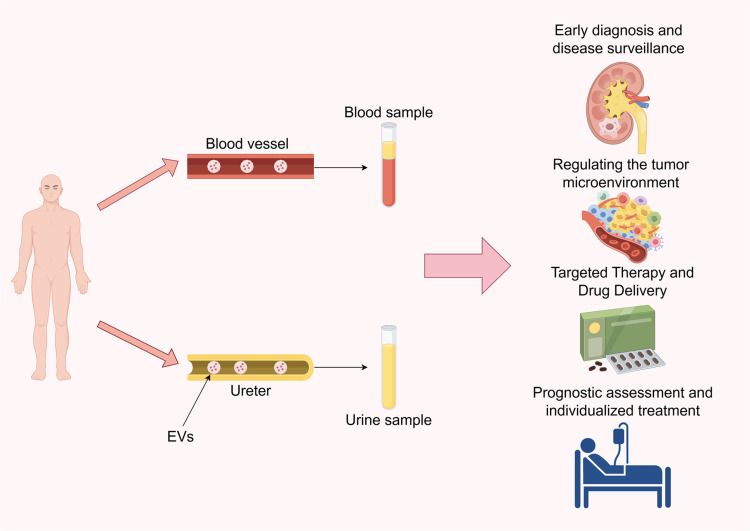
Renal cell carcinoma (RCC), a prevalent malignant tumor of the urinary system, presents significant challenges in early diagnosis and treatment. The invasiveness of traditional tissue biopsies and the limitations of imaging techniques necessitate the exploration of novel biomarkers through liquid biopsy. Extracellular vesicles (EVs), functioning as natural nanoscale carriers, encapsulate a variety of tumor-derived molecules and exhibit distinctive potential in non-invasive diagnosis, regulation of the tumor microenvironment (TME), and resistance to treatment in RCC. Serum- and urine-derived EVs can effectively differentiate RCC patients from healthy individuals by utilizing specific biomarkers, such as miRNAs, proteins, and snoRNAs. They can predict tumor staging, metastasis, and prognosis. TME is reshaped by EVs through the transmission of immunosuppressive factors and pro-angiogenic molecules, facilitating immune escape and the formation of pre-metastatic niches. Furthermore, the drug resistance mechanisms mediated by EVs provide new insights for targeted therapy, and their application as drug carriers demonstrates therapeutic potential. Nonetheless, the clinical translation of EVs faces several technical challenges, including the standardization of isolation techniques, inadequate validation of biomarkers, and the lack of large-scale clinical studies. Future efforts are focused on integrating multi-omics analysis, AI-assisted diagnosis, and novel isolation techniques to facilitate the transition of EVs from the laboratory to clinical application. Overall, EVs hold significant promise for the precision diagnosis and treatment of RCC; however, their widespread application necessitates systematic validation and technological innovation.
期刊介绍:
The International Journal of Nanomedicine is a globally recognized journal that focuses on the applications of nanotechnology in the biomedical field. It is a peer-reviewed and open-access publication that covers diverse aspects of this rapidly evolving research area.
With its strong emphasis on the clinical potential of nanoparticles in disease diagnostics, prevention, and treatment, the journal aims to showcase cutting-edge research and development in the field.
Starting from now, the International Journal of Nanomedicine will not accept meta-analyses for publication.

 求助内容:
求助内容: 应助结果提醒方式:

 京公网安备 11010802042870号

