Seung Beom Seo , Jina Lee , Sangsoo Choi , Dongmin Shin , Soojin Jang , Yeonwoo Jeong , Seong Uk Son , Taejoon Kang , Juyeon Jung , Kyujung Kim , Jungho Hwang , Eun-Kyung Lim
{"title":"Cas9镍酶触发扩增反应现场检测空气中耐药细菌","authors":"Seung Beom Seo , Jina Lee , Sangsoo Choi , Dongmin Shin , Soojin Jang , Yeonwoo Jeong , Seong Uk Son , Taejoon Kang , Juyeon Jung , Kyujung Kim , Jungho Hwang , Eun-Kyung Lim","doi":"10.1016/j.jhazmat.2025.138850","DOIUrl":null,"url":null,"abstract":"<div><div>Antibiotic resistance is a critical global health issue, with methicillin-resistant <em>Staphylococcus aureus</em> (MRSA) and vancomycin-resistant <em>Enterococcus</em> (VRE) being major pathogens causing pneumonia and sepsis. In this study, we introduce the Cas9 nickase-triggered amplification reaction (CN-TAR) assay - onsite, real-time detection method designed to help prevent airborne transmission of these pathogens. The assay utilizes Cas9 nickase to specifically cleave target DNA, followed by rolling circle amplification for single-step detection. To enhance filed applicability, a portable isothermal PCR device was integrated into the system. The CN-TAR assay was validated using synthetic nucleic acids, cultured bacteria, and airborne samples, achieving detection limits of 1.40 copies/μL for MRSA and 1.13 copies/μL for VRE. It demonstrated high sensitivity and rapid turnaround time. Furthermore, its performance was comparable to that of conventional reverse transcription PCR (RT-PCR), confirming its reliability for airborne antibiotic-resistant bacteria monitoring. This study presents a practical on-site detection platform, and the results highlight the CN-TAR assay as a promising tool for real-time surveillance and detection, contributing to effective infection control and public health safety.</div></div>","PeriodicalId":361,"journal":{"name":"Journal of Hazardous Materials","volume":"495 ","pages":"Article 138850"},"PeriodicalIF":11.3000,"publicationDate":"2025-09-05","publicationTypes":"Journal Article","fieldsOfStudy":null,"isOpenAccess":false,"openAccessPdf":"","citationCount":"0","resultStr":"{\"title\":\"Onsite detection of airborne antibiotic-resistant bacteria via Cas9 nickase-triggered amplification reactions\",\"authors\":\"Seung Beom Seo , Jina Lee , Sangsoo Choi , Dongmin Shin , Soojin Jang , Yeonwoo Jeong , Seong Uk Son , Taejoon Kang , Juyeon Jung , Kyujung Kim , Jungho Hwang , Eun-Kyung Lim\",\"doi\":\"10.1016/j.jhazmat.2025.138850\",\"DOIUrl\":null,\"url\":null,\"abstract\":\"<div><div>Antibiotic resistance is a critical global health issue, with methicillin-resistant <em>Staphylococcus aureus</em> (MRSA) and vancomycin-resistant <em>Enterococcus</em> (VRE) being major pathogens causing pneumonia and sepsis. In this study, we introduce the Cas9 nickase-triggered amplification reaction (CN-TAR) assay - onsite, real-time detection method designed to help prevent airborne transmission of these pathogens. The assay utilizes Cas9 nickase to specifically cleave target DNA, followed by rolling circle amplification for single-step detection. To enhance filed applicability, a portable isothermal PCR device was integrated into the system. The CN-TAR assay was validated using synthetic nucleic acids, cultured bacteria, and airborne samples, achieving detection limits of 1.40 copies/μL for MRSA and 1.13 copies/μL for VRE. It demonstrated high sensitivity and rapid turnaround time. Furthermore, its performance was comparable to that of conventional reverse transcription PCR (RT-PCR), confirming its reliability for airborne antibiotic-resistant bacteria monitoring. This study presents a practical on-site detection platform, and the results highlight the CN-TAR assay as a promising tool for real-time surveillance and detection, contributing to effective infection control and public health safety.</div></div>\",\"PeriodicalId\":361,\"journal\":{\"name\":\"Journal of Hazardous Materials\",\"volume\":\"495 \",\"pages\":\"Article 138850\"},\"PeriodicalIF\":11.3000,\"publicationDate\":\"2025-09-05\",\"publicationTypes\":\"Journal Article\",\"fieldsOfStudy\":null,\"isOpenAccess\":false,\"openAccessPdf\":\"\",\"citationCount\":\"0\",\"resultStr\":null,\"platform\":\"Semanticscholar\",\"paperid\":null,\"PeriodicalName\":\"Journal of Hazardous Materials\",\"FirstCategoryId\":\"93\",\"ListUrlMain\":\"https://www.sciencedirect.com/science/article/pii/S0304389425017662\",\"RegionNum\":1,\"RegionCategory\":\"环境科学与生态学\",\"ArticlePicture\":[],\"TitleCN\":null,\"AbstractTextCN\":null,\"PMCID\":null,\"EPubDate\":\"2025/6/6 0:00:00\",\"PubModel\":\"Epub\",\"JCR\":\"Q1\",\"JCRName\":\"ENGINEERING, ENVIRONMENTAL\",\"Score\":null,\"Total\":0}","platform":"Semanticscholar","paperid":null,"PeriodicalName":"Journal of Hazardous Materials","FirstCategoryId":"93","ListUrlMain":"https://www.sciencedirect.com/science/article/pii/S0304389425017662","RegionNum":1,"RegionCategory":"环境科学与生态学","ArticlePicture":[],"TitleCN":null,"AbstractTextCN":null,"PMCID":null,"EPubDate":"2025/6/6 0:00:00","PubModel":"Epub","JCR":"Q1","JCRName":"ENGINEERING, ENVIRONMENTAL","Score":null,"Total":0}
Onsite detection of airborne antibiotic-resistant bacteria via Cas9 nickase-triggered amplification reactions
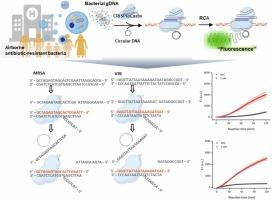
Antibiotic resistance is a critical global health issue, with methicillin-resistant Staphylococcus aureus (MRSA) and vancomycin-resistant Enterococcus (VRE) being major pathogens causing pneumonia and sepsis. In this study, we introduce the Cas9 nickase-triggered amplification reaction (CN-TAR) assay - onsite, real-time detection method designed to help prevent airborne transmission of these pathogens. The assay utilizes Cas9 nickase to specifically cleave target DNA, followed by rolling circle amplification for single-step detection. To enhance filed applicability, a portable isothermal PCR device was integrated into the system. The CN-TAR assay was validated using synthetic nucleic acids, cultured bacteria, and airborne samples, achieving detection limits of 1.40 copies/μL for MRSA and 1.13 copies/μL for VRE. It demonstrated high sensitivity and rapid turnaround time. Furthermore, its performance was comparable to that of conventional reverse transcription PCR (RT-PCR), confirming its reliability for airborne antibiotic-resistant bacteria monitoring. This study presents a practical on-site detection platform, and the results highlight the CN-TAR assay as a promising tool for real-time surveillance and detection, contributing to effective infection control and public health safety.
期刊介绍:
The Journal of Hazardous Materials serves as a global platform for promoting cutting-edge research in the field of Environmental Science and Engineering. Our publication features a wide range of articles, including full-length research papers, review articles, and perspectives, with the aim of enhancing our understanding of the dangers and risks associated with various materials concerning public health and the environment. It is important to note that the term "environmental contaminants" refers specifically to substances that pose hazardous effects through contamination, while excluding those that do not have such impacts on the environment or human health. Moreover, we emphasize the distinction between wastes and hazardous materials in order to provide further clarity on the scope of the journal. We have a keen interest in exploring specific compounds and microbial agents that have adverse effects on the environment.