Yinhai Chen, Tong Zhou, Lin Su, Youpeng Guo, Xiong Ke
{"title":"护士主导的电话干预对2型糖尿病患者HbA1c水平的影响:基于随访方案的meta分析评估","authors":"Yinhai Chen, Tong Zhou, Lin Su, Youpeng Guo, Xiong Ke","doi":"10.1186/s12912-025-02782-x","DOIUrl":null,"url":null,"abstract":"<p><strong>Background: </strong>Telephone interventions are promising for managing glycated hemoglobin A1c (HbA1c) levels in patients with type 2 diabetes mellitus (T2DM). However, optimal follow-up parameters, such as frequency, duration, content, and intervals, are yet to be standardized. This meta-analysis assesses the effectiveness of nurse-led telephone interventions in controlling HbA1c levels, with subgroup analyses based on these variables to provide evidence-based recommendations.</p><p><strong>Methods: </strong>Searches were conducted across PubMed, Web of Science, Cochrane Library, Embase, Chinese Biomedical Literature Database (CBM), China National Knowledge Infrastructure (CNKI), Wanfang, and China Science and Technology Journal Database (VIP) until February 2024. Study quality was evaluated using Cochrane risk of bias criteria, and data were analyzed with RevMan 5.4.</p><p><strong>Results: </strong>Thirteen studies, including 2,294 T2DM patients, showed that nurse-led telephone interventions significantly reduced HbA1c levels [MD = -0.59, 95% CI (-0.85, -0.34), P < 0.00001, Tau² = 0.15, I² = 87%]. Subgroup analyses indicated that protocols comprising 16 follow-ups [MD = -0.92, 95% CI (-1.71, -0.12), P = 0.02], each lasting 20-25 min [MD = -1.23, 95% CI (-1.63, -0.83), P < 0.001] with half a month intervals [MD = -1.29, 95% CI (-2.43, -0.15), P = 0.03] covering medication, diet, exercise, and glucose monitoring, were the most effective. Protocols involving 12 follow-ups [MD = -0.87, 95% CI (-1.28, -0.46), P < 0.001], each lasting 10-15 min [MD = -0.54, 95% CI (-1.02, -0.06), P = 0.03] at weekly intervals [MD = -0.93, 95% CI (-1.68, -0.17), P = 0.02], also demonstrated significant improvement. Publication bias was assessed using a funnel plot, Egger's Test (P = 0.108), and Begg's Test (P = 0.199), which indicated no significant bias.</p><p><strong>Conclusions: </strong>Nurse-led telephone follow-ups effectively enhance HbA1c control in T2DM patients. While subgroup findings suggest optimal protocols, individual needs should guide intervention customization. Further high-quality RCTs are needed to validate these results.</p><p><strong>Registration number: </strong>PROSPERO: CRD42024578866.</p>","PeriodicalId":48580,"journal":{"name":"BMC Nursing","volume":"24 1","pages":"284"},"PeriodicalIF":3.9000,"publicationDate":"2025-03-13","publicationTypes":"Journal Article","fieldsOfStudy":null,"isOpenAccess":false,"openAccessPdf":"https://www.ncbi.nlm.nih.gov/pmc/articles/PMC11907934/pdf/","citationCount":"0","resultStr":"{\"title\":\"Effects of nurse-led telephone interventions on HbA1c levels in patients with type 2 diabetes: a Meta-analysis-based evaluation of follow-up protocols.\",\"authors\":\"Yinhai Chen, Tong Zhou, Lin Su, Youpeng Guo, Xiong Ke\",\"doi\":\"10.1186/s12912-025-02782-x\",\"DOIUrl\":null,\"url\":null,\"abstract\":\"<p><strong>Background: </strong>Telephone interventions are promising for managing glycated hemoglobin A1c (HbA1c) levels in patients with type 2 diabetes mellitus (T2DM). However, optimal follow-up parameters, such as frequency, duration, content, and intervals, are yet to be standardized. This meta-analysis assesses the effectiveness of nurse-led telephone interventions in controlling HbA1c levels, with subgroup analyses based on these variables to provide evidence-based recommendations.</p><p><strong>Methods: </strong>Searches were conducted across PubMed, Web of Science, Cochrane Library, Embase, Chinese Biomedical Literature Database (CBM), China National Knowledge Infrastructure (CNKI), Wanfang, and China Science and Technology Journal Database (VIP) until February 2024. Study quality was evaluated using Cochrane risk of bias criteria, and data were analyzed with RevMan 5.4.</p><p><strong>Results: </strong>Thirteen studies, including 2,294 T2DM patients, showed that nurse-led telephone interventions significantly reduced HbA1c levels [MD = -0.59, 95% CI (-0.85, -0.34), P < 0.00001, Tau² = 0.15, I² = 87%]. Subgroup analyses indicated that protocols comprising 16 follow-ups [MD = -0.92, 95% CI (-1.71, -0.12), P = 0.02], each lasting 20-25 min [MD = -1.23, 95% CI (-1.63, -0.83), P < 0.001] with half a month intervals [MD = -1.29, 95% CI (-2.43, -0.15), P = 0.03] covering medication, diet, exercise, and glucose monitoring, were the most effective. Protocols involving 12 follow-ups [MD = -0.87, 95% CI (-1.28, -0.46), P < 0.001], each lasting 10-15 min [MD = -0.54, 95% CI (-1.02, -0.06), P = 0.03] at weekly intervals [MD = -0.93, 95% CI (-1.68, -0.17), P = 0.02], also demonstrated significant improvement. Publication bias was assessed using a funnel plot, Egger's Test (P = 0.108), and Begg's Test (P = 0.199), which indicated no significant bias.</p><p><strong>Conclusions: </strong>Nurse-led telephone follow-ups effectively enhance HbA1c control in T2DM patients. While subgroup findings suggest optimal protocols, individual needs should guide intervention customization. Further high-quality RCTs are needed to validate these results.</p><p><strong>Registration number: </strong>PROSPERO: CRD42024578866.</p>\",\"PeriodicalId\":48580,\"journal\":{\"name\":\"BMC Nursing\",\"volume\":\"24 1\",\"pages\":\"284\"},\"PeriodicalIF\":3.9000,\"publicationDate\":\"2025-03-13\",\"publicationTypes\":\"Journal Article\",\"fieldsOfStudy\":null,\"isOpenAccess\":false,\"openAccessPdf\":\"https://www.ncbi.nlm.nih.gov/pmc/articles/PMC11907934/pdf/\",\"citationCount\":\"0\",\"resultStr\":null,\"platform\":\"Semanticscholar\",\"paperid\":null,\"PeriodicalName\":\"BMC Nursing\",\"FirstCategoryId\":\"3\",\"ListUrlMain\":\"https://doi.org/10.1186/s12912-025-02782-x\",\"RegionNum\":2,\"RegionCategory\":\"医学\",\"ArticlePicture\":[],\"TitleCN\":null,\"AbstractTextCN\":null,\"PMCID\":null,\"EPubDate\":\"\",\"PubModel\":\"\",\"JCR\":\"Q1\",\"JCRName\":\"NURSING\",\"Score\":null,\"Total\":0}","platform":"Semanticscholar","paperid":null,"PeriodicalName":"BMC Nursing","FirstCategoryId":"3","ListUrlMain":"https://doi.org/10.1186/s12912-025-02782-x","RegionNum":2,"RegionCategory":"医学","ArticlePicture":[],"TitleCN":null,"AbstractTextCN":null,"PMCID":null,"EPubDate":"","PubModel":"","JCR":"Q1","JCRName":"NURSING","Score":null,"Total":0}
引用次数: 0
摘要
背景:电话干预有望控制2型糖尿病(T2DM)患者糖化血红蛋白A1c (HbA1c)水平。然而,最佳的随访参数,如频率、持续时间、内容、间隔时间等,还有待规范。本荟萃分析评估了护士主导的电话干预在控制HbA1c水平方面的有效性,并基于这些变量进行亚组分析,以提供基于证据的建议。方法:检索PubMed、Web of Science、Cochrane Library、Embase、中国生物医学文献数据库(CBM)、中国知网(CNKI)、万方、中国科技期刊库(VIP),检索截止至2024年2月。采用Cochrane偏倚风险标准评价研究质量,使用RevMan 5.4对数据进行分析。结果:13项研究,包括2294例T2DM患者,显示护士主导的电话干预可显著降低HbA1c水平[MD = -0.59, 95% CI (-0.85, -0.34), P]。结论:护士主导的电话随访可有效增强T2DM患者的HbA1c控制。虽然亚组研究结果提出了最佳方案,但个体需求应指导干预定制。需要进一步的高质量随机对照试验来验证这些结果。注册号:普洛斯彼罗:CRD42024578866。
Effects of nurse-led telephone interventions on HbA1c levels in patients with type 2 diabetes: a Meta-analysis-based evaluation of follow-up protocols.
Background: Telephone interventions are promising for managing glycated hemoglobin A1c (HbA1c) levels in patients with type 2 diabetes mellitus (T2DM). However, optimal follow-up parameters, such as frequency, duration, content, and intervals, are yet to be standardized. This meta-analysis assesses the effectiveness of nurse-led telephone interventions in controlling HbA1c levels, with subgroup analyses based on these variables to provide evidence-based recommendations.
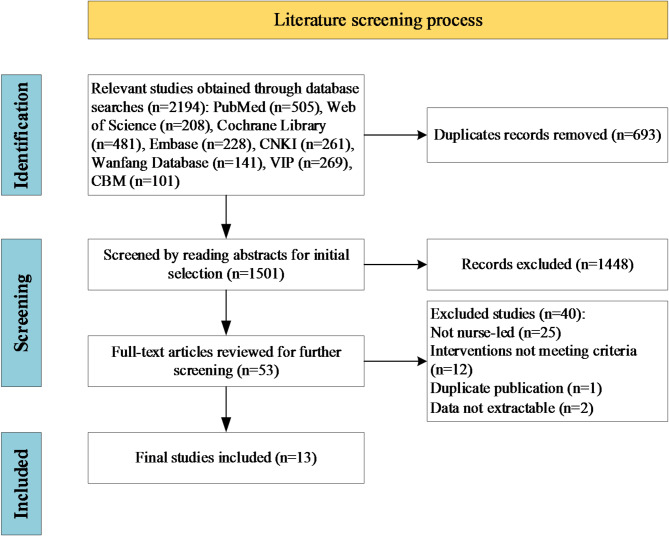
Methods: Searches were conducted across PubMed, Web of Science, Cochrane Library, Embase, Chinese Biomedical Literature Database (CBM), China National Knowledge Infrastructure (CNKI), Wanfang, and China Science and Technology Journal Database (VIP) until February 2024. Study quality was evaluated using Cochrane risk of bias criteria, and data were analyzed with RevMan 5.4.
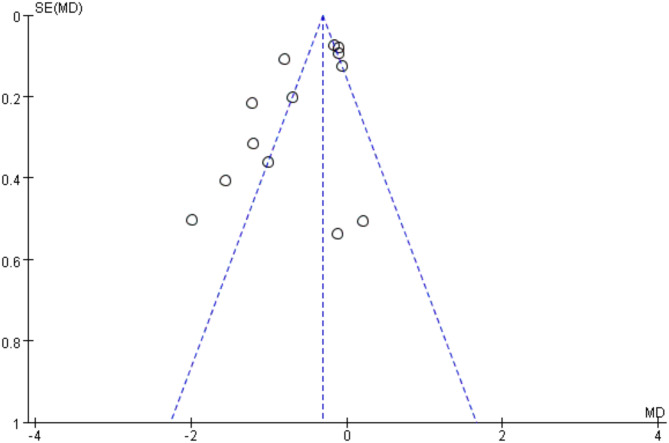
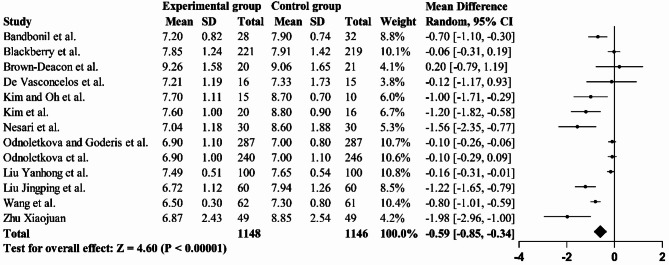
Results: Thirteen studies, including 2,294 T2DM patients, showed that nurse-led telephone interventions significantly reduced HbA1c levels [MD = -0.59, 95% CI (-0.85, -0.34), P < 0.00001, Tau² = 0.15, I² = 87%]. Subgroup analyses indicated that protocols comprising 16 follow-ups [MD = -0.92, 95% CI (-1.71, -0.12), P = 0.02], each lasting 20-25 min [MD = -1.23, 95% CI (-1.63, -0.83), P < 0.001] with half a month intervals [MD = -1.29, 95% CI (-2.43, -0.15), P = 0.03] covering medication, diet, exercise, and glucose monitoring, were the most effective. Protocols involving 12 follow-ups [MD = -0.87, 95% CI (-1.28, -0.46), P < 0.001], each lasting 10-15 min [MD = -0.54, 95% CI (-1.02, -0.06), P = 0.03] at weekly intervals [MD = -0.93, 95% CI (-1.68, -0.17), P = 0.02], also demonstrated significant improvement. Publication bias was assessed using a funnel plot, Egger's Test (P = 0.108), and Begg's Test (P = 0.199), which indicated no significant bias.
Conclusions: Nurse-led telephone follow-ups effectively enhance HbA1c control in T2DM patients. While subgroup findings suggest optimal protocols, individual needs should guide intervention customization. Further high-quality RCTs are needed to validate these results.
期刊介绍:
BMC Nursing is an open access, peer-reviewed journal that considers articles on all aspects of nursing research, training, education and practice.

 求助内容:
求助内容: 应助结果提醒方式:

 京公网安备 11010802042870号


