Eva Laura Siegel, Matt Lamb, Jeff Goldsmith, Andrew Rundle, Andreas Neophytou, Matitiahu Berkovitch, Barbara Cohn, Pam Factor-Litvak
{"title":"使用模拟探索在何种条件下可检测到环境暴露的“真实”剂量-反应关系:多氯联苯(pcb)和出生体重:一个案例研究。","authors":"Eva Laura Siegel, Matt Lamb, Jeff Goldsmith, Andrew Rundle, Andreas Neophytou, Matitiahu Berkovitch, Barbara Cohn, Pam Factor-Litvak","doi":"10.1093/aje/kwaf020","DOIUrl":null,"url":null,"abstract":"<p><p>In environmental epidemiology, we use systematic reviews to evaluate the evidence of exposure-outcome relationships with an eye towards regulation. Conflicting results across studies thwart consensus on toxicity. In humans, only observational data is available from studies of environmental exposures, complicating the construction of dose-response relationships across the full range of exposure levels. Individual studies often lack the complete range of exposure levels because environmental exposure levels are tied to study settings. Pooling data across populations seems a natural solution, but strong population-dependent confounding may bias dose-response curves. Using the oft-debated association of polychlorinated bi-phenyls and birthweight as a case study, we describe simulations used to investigate the relative impacts of exposure range-dependent power limitations and confounding on our ability to correctly identify an assumed linear dose-response curve across a representative exposure range. While varying levels of confounding minimally biased estimates in our pooled and meta-analyses, we report very low confidence to ascertain a set underlying dose-response relationship in low-exposure cohorts with a narrow exposure distribution, but high ability in high-exposure cohorts with wide exposure distributions. Our simulations suggest that pooling and meta-analysis should be prioritized despite possible differences in confounding structures, particularly when exposure distributions in individual cohorts are limited. This article is part of a Special Collection on Environmental Epidemiology.</p>","PeriodicalId":7472,"journal":{"name":"American journal of epidemiology","volume":" ","pages":"205-213"},"PeriodicalIF":4.8000,"publicationDate":"2026-01-08","publicationTypes":"Journal Article","fieldsOfStudy":null,"isOpenAccess":false,"openAccessPdf":"","citationCount":"0","resultStr":"{\"title\":\"Using simulations to explore the conditions under which \\\"true\\\" dose-response relationships are detectable for environmental exposures: polychlorinated biphenyls and birthweight: a case study.\",\"authors\":\"Eva Laura Siegel, Matt Lamb, Jeff Goldsmith, Andrew Rundle, Andreas Neophytou, Matitiahu Berkovitch, Barbara Cohn, Pam Factor-Litvak\",\"doi\":\"10.1093/aje/kwaf020\",\"DOIUrl\":null,\"url\":null,\"abstract\":\"<p><p>In environmental epidemiology, we use systematic reviews to evaluate the evidence of exposure-outcome relationships with an eye towards regulation. Conflicting results across studies thwart consensus on toxicity. In humans, only observational data is available from studies of environmental exposures, complicating the construction of dose-response relationships across the full range of exposure levels. Individual studies often lack the complete range of exposure levels because environmental exposure levels are tied to study settings. Pooling data across populations seems a natural solution, but strong population-dependent confounding may bias dose-response curves. Using the oft-debated association of polychlorinated bi-phenyls and birthweight as a case study, we describe simulations used to investigate the relative impacts of exposure range-dependent power limitations and confounding on our ability to correctly identify an assumed linear dose-response curve across a representative exposure range. While varying levels of confounding minimally biased estimates in our pooled and meta-analyses, we report very low confidence to ascertain a set underlying dose-response relationship in low-exposure cohorts with a narrow exposure distribution, but high ability in high-exposure cohorts with wide exposure distributions. Our simulations suggest that pooling and meta-analysis should be prioritized despite possible differences in confounding structures, particularly when exposure distributions in individual cohorts are limited. This article is part of a Special Collection on Environmental Epidemiology.</p>\",\"PeriodicalId\":7472,\"journal\":{\"name\":\"American journal of epidemiology\",\"volume\":\" \",\"pages\":\"205-213\"},\"PeriodicalIF\":4.8000,\"publicationDate\":\"2026-01-08\",\"publicationTypes\":\"Journal Article\",\"fieldsOfStudy\":null,\"isOpenAccess\":false,\"openAccessPdf\":\"\",\"citationCount\":\"0\",\"resultStr\":null,\"platform\":\"Semanticscholar\",\"paperid\":null,\"PeriodicalName\":\"American journal of epidemiology\",\"FirstCategoryId\":\"3\",\"ListUrlMain\":\"https://doi.org/10.1093/aje/kwaf020\",\"RegionNum\":2,\"RegionCategory\":\"医学\",\"ArticlePicture\":[],\"TitleCN\":null,\"AbstractTextCN\":null,\"PMCID\":null,\"EPubDate\":\"\",\"PubModel\":\"\",\"JCR\":\"Q1\",\"JCRName\":\"PUBLIC, ENVIRONMENTAL & OCCUPATIONAL HEALTH\",\"Score\":null,\"Total\":0}","platform":"Semanticscholar","paperid":null,"PeriodicalName":"American journal of epidemiology","FirstCategoryId":"3","ListUrlMain":"https://doi.org/10.1093/aje/kwaf020","RegionNum":2,"RegionCategory":"医学","ArticlePicture":[],"TitleCN":null,"AbstractTextCN":null,"PMCID":null,"EPubDate":"","PubModel":"","JCR":"Q1","JCRName":"PUBLIC, ENVIRONMENTAL & OCCUPATIONAL HEALTH","Score":null,"Total":0}
Using simulations to explore the conditions under which "true" dose-response relationships are detectable for environmental exposures: polychlorinated biphenyls and birthweight: a case study.
In environmental epidemiology, we use systematic reviews to evaluate the evidence of exposure-outcome relationships with an eye towards regulation. Conflicting results across studies thwart consensus on toxicity. In humans, only observational data is available from studies of environmental exposures, complicating the construction of dose-response relationships across the full range of exposure levels. Individual studies often lack the complete range of exposure levels because environmental exposure levels are tied to study settings. Pooling data across populations seems a natural solution, but strong population-dependent confounding may bias dose-response curves. Using the oft-debated association of polychlorinated bi-phenyls and birthweight as a case study, we describe simulations used to investigate the relative impacts of exposure range-dependent power limitations and confounding on our ability to correctly identify an assumed linear dose-response curve across a representative exposure range. While varying levels of confounding minimally biased estimates in our pooled and meta-analyses, we report very low confidence to ascertain a set underlying dose-response relationship in low-exposure cohorts with a narrow exposure distribution, but high ability in high-exposure cohorts with wide exposure distributions. Our simulations suggest that pooling and meta-analysis should be prioritized despite possible differences in confounding structures, particularly when exposure distributions in individual cohorts are limited. This article is part of a Special Collection on Environmental Epidemiology.
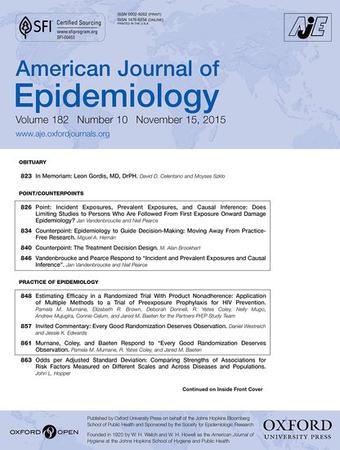
期刊介绍:
The American Journal of Epidemiology is the oldest and one of the premier epidemiologic journals devoted to the publication of empirical research findings, opinion pieces, and methodological developments in the field of epidemiologic research.
It is a peer-reviewed journal aimed at both fellow epidemiologists and those who use epidemiologic data, including public health workers and clinicians.

 求助内容:
求助内容: 应助结果提醒方式:

 京公网安备 11010802042870号


