{"title":"自闭症和非自闭症人群的更年期经历:一项定性研究。","authors":"Martha A Piper, Rebecca A Charlton","doi":"10.1177/13591053251316500","DOIUrl":null,"url":null,"abstract":"<p><p>Autistic people face both similar challenges to non-autistic people as they navigate menopause and additional unique challenges. Semi-structured interviews with 15 autistic and 14 non-autistic adults (assigned female at birth), explored experiences of menopause. Thematic analysis was carried out for the autistic and non-autistic groups separately. Analysis yielded four overarching themes: information about menopause, experiences of menopause, medical support for menopause and backdrop to the menopause. Each of these contained subthemes which indicated both shared and unique experiences between the groups. Both groups reported a lack of information about menopause, endured negative psychological changes during menopause and experienced menopause alongside other important life events. Autistic people faced unique challenges during menopause, including medical professionals not accommodating autistic differences, uncertainty-induced anxiety and the lifelong impact of living without an autism diagnosis. This study highlights the need for tailored care for this group during the menopause transition.</p>","PeriodicalId":51355,"journal":{"name":"Journal of Health Psychology","volume":" ","pages":"801-816"},"PeriodicalIF":2.2000,"publicationDate":"2026-02-01","publicationTypes":"Journal Article","fieldsOfStudy":null,"isOpenAccess":false,"openAccessPdf":"https://www.ncbi.nlm.nih.gov/pmc/articles/PMC12886563/pdf/","citationCount":"0","resultStr":"{\"title\":\"Common and unique menopause experiences among autistic and non-autistic people: A qualitative study.\",\"authors\":\"Martha A Piper, Rebecca A Charlton\",\"doi\":\"10.1177/13591053251316500\",\"DOIUrl\":null,\"url\":null,\"abstract\":\"<p><p>Autistic people face both similar challenges to non-autistic people as they navigate menopause and additional unique challenges. Semi-structured interviews with 15 autistic and 14 non-autistic adults (assigned female at birth), explored experiences of menopause. Thematic analysis was carried out for the autistic and non-autistic groups separately. Analysis yielded four overarching themes: information about menopause, experiences of menopause, medical support for menopause and backdrop to the menopause. Each of these contained subthemes which indicated both shared and unique experiences between the groups. Both groups reported a lack of information about menopause, endured negative psychological changes during menopause and experienced menopause alongside other important life events. Autistic people faced unique challenges during menopause, including medical professionals not accommodating autistic differences, uncertainty-induced anxiety and the lifelong impact of living without an autism diagnosis. This study highlights the need for tailored care for this group during the menopause transition.</p>\",\"PeriodicalId\":51355,\"journal\":{\"name\":\"Journal of Health Psychology\",\"volume\":\" \",\"pages\":\"801-816\"},\"PeriodicalIF\":2.2000,\"publicationDate\":\"2026-02-01\",\"publicationTypes\":\"Journal Article\",\"fieldsOfStudy\":null,\"isOpenAccess\":false,\"openAccessPdf\":\"https://www.ncbi.nlm.nih.gov/pmc/articles/PMC12886563/pdf/\",\"citationCount\":\"0\",\"resultStr\":null,\"platform\":\"Semanticscholar\",\"paperid\":null,\"PeriodicalName\":\"Journal of Health Psychology\",\"FirstCategoryId\":\"102\",\"ListUrlMain\":\"https://doi.org/10.1177/13591053251316500\",\"RegionNum\":3,\"RegionCategory\":\"心理学\",\"ArticlePicture\":[],\"TitleCN\":null,\"AbstractTextCN\":null,\"PMCID\":null,\"EPubDate\":\"2025/2/15 0:00:00\",\"PubModel\":\"Epub\",\"JCR\":\"Q2\",\"JCRName\":\"PSYCHOLOGY, CLINICAL\",\"Score\":null,\"Total\":0}","platform":"Semanticscholar","paperid":null,"PeriodicalName":"Journal of Health Psychology","FirstCategoryId":"102","ListUrlMain":"https://doi.org/10.1177/13591053251316500","RegionNum":3,"RegionCategory":"心理学","ArticlePicture":[],"TitleCN":null,"AbstractTextCN":null,"PMCID":null,"EPubDate":"2025/2/15 0:00:00","PubModel":"Epub","JCR":"Q2","JCRName":"PSYCHOLOGY, CLINICAL","Score":null,"Total":0}
Common and unique menopause experiences among autistic and non-autistic people: A qualitative study.
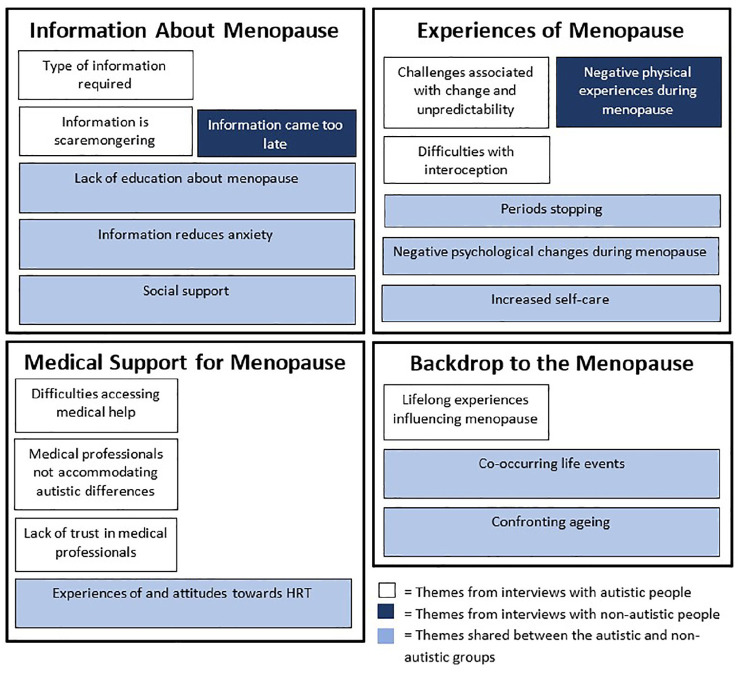
Autistic people face both similar challenges to non-autistic people as they navigate menopause and additional unique challenges. Semi-structured interviews with 15 autistic and 14 non-autistic adults (assigned female at birth), explored experiences of menopause. Thematic analysis was carried out for the autistic and non-autistic groups separately. Analysis yielded four overarching themes: information about menopause, experiences of menopause, medical support for menopause and backdrop to the menopause. Each of these contained subthemes which indicated both shared and unique experiences between the groups. Both groups reported a lack of information about menopause, endured negative psychological changes during menopause and experienced menopause alongside other important life events. Autistic people faced unique challenges during menopause, including medical professionals not accommodating autistic differences, uncertainty-induced anxiety and the lifelong impact of living without an autism diagnosis. This study highlights the need for tailored care for this group during the menopause transition.
期刊介绍:
ournal of Health Psychology is an international peer-reviewed journal that aims to support and help shape research in health psychology from around the world. It provides a platform for traditional empirical analyses as well as more qualitative and/or critically oriented approaches. It also addresses the social contexts in which psychological and health processes are embedded. Studies published in this journal are required to obtain ethical approval from an Institutional Review Board. Such approval must include informed, signed consent by all research participants. Any manuscript not containing an explicit statement concerning ethical approval and informed consent will not be considered.




 求助内容:
求助内容: 应助结果提醒方式:

 京公网安备 11010802042870号


