双酚F对F1代雄性小鼠生殖功能的影响及其可能机制

IF 7.3 2区 环境科学与生态学 Q1 ENVIRONMENTAL SCIENCES
Environmental Pollution Pub Date : 2025-02-15 Epub Date: 2024-12-20 DOI:10.1016/j.envpol.2024.125546
Bo Li, Siming Huo, Jiayu Du, Xuliang Zhang, Jian Zhang, Miao Song, Yanfei Li
{"title":"双酚F对F1代雄性小鼠生殖功能的影响及其可能机制","authors":"Bo Li,&nbsp;Siming Huo,&nbsp;Jiayu Du,&nbsp;Xuliang Zhang,&nbsp;Jian Zhang,&nbsp;Miao Song,&nbsp;Yanfei Li","doi":"10.1016/j.envpol.2024.125546","DOIUrl":null,"url":null,"abstract":"<div><div>Bisphenol F (BPF) is an environmental endocrine disruptor capable of crossing the placental barrier and affecting the growth and development of offspring. Despite its potential impact, systematic research about effects of BPF on the reproductive function of male offspring remains limited. In this study, pregnant female mice were exposed to BPF at doses of 40, 400, and 4000 μg/kg during gestation and lactation, respectively, to evaluate its impact on testicular damage, testosterone levels, and spermatogenesis of male offspring (F1 generation), and further explore the mechanisms using transcriptomics. First, the study demonstrated that BPF induces testicular damage in F1 generation mice, leading to decreased testosterone levels and sperm quality. Second, transcriptomic analysis revealed that BPF affected spermatogenesis in F1 generation mice by disrupting retinol metabolism. Third, transcriptomic analysis revealed that BPF reduce the capacity for testosterone synthesis in F1 generation mice by diverting the testosterone precursor dehydroepiandrosterone (DHEA) towards the synthesis of 16α-hydroxydehydroepiandrosterone rather than testosterone. Finally, it was confirmed that BPF hinder cholesterol transport to mitochondria by inhibiting the cAMP signaling pathway, thereby impacting testosterone synthesis. In summary, the results of this study suggest that gestational exposure to BPF can lead to reproductive dysfunction in F1 generation male mice.</div></div>","PeriodicalId":311,"journal":{"name":"Environmental Pollution","volume":"367 ","pages":"Article 125546"},"PeriodicalIF":7.3000,"publicationDate":"2025-02-15","publicationTypes":"Journal Article","fieldsOfStudy":null,"isOpenAccess":false,"openAccessPdf":"","citationCount":"0","resultStr":"{\"title\":\"Effect of bisphenol F on reproductive function in F1 generation male mice and its potential mechanisms\",\"authors\":\"Bo Li,&nbsp;Siming Huo,&nbsp;Jiayu Du,&nbsp;Xuliang Zhang,&nbsp;Jian Zhang,&nbsp;Miao Song,&nbsp;Yanfei Li\",\"doi\":\"10.1016/j.envpol.2024.125546\",\"DOIUrl\":null,\"url\":null,\"abstract\":\"<div><div>Bisphenol F (BPF) is an environmental endocrine disruptor capable of crossing the placental barrier and affecting the growth and development of offspring. Despite its potential impact, systematic research about effects of BPF on the reproductive function of male offspring remains limited. In this study, pregnant female mice were exposed to BPF at doses of 40, 400, and 4000 μg/kg during gestation and lactation, respectively, to evaluate its impact on testicular damage, testosterone levels, and spermatogenesis of male offspring (F1 generation), and further explore the mechanisms using transcriptomics. First, the study demonstrated that BPF induces testicular damage in F1 generation mice, leading to decreased testosterone levels and sperm quality. Second, transcriptomic analysis revealed that BPF affected spermatogenesis in F1 generation mice by disrupting retinol metabolism. Third, transcriptomic analysis revealed that BPF reduce the capacity for testosterone synthesis in F1 generation mice by diverting the testosterone precursor dehydroepiandrosterone (DHEA) towards the synthesis of 16α-hydroxydehydroepiandrosterone rather than testosterone. Finally, it was confirmed that BPF hinder cholesterol transport to mitochondria by inhibiting the cAMP signaling pathway, thereby impacting testosterone synthesis. In summary, the results of this study suggest that gestational exposure to BPF can lead to reproductive dysfunction in F1 generation male mice.</div></div>\",\"PeriodicalId\":311,\"journal\":{\"name\":\"Environmental Pollution\",\"volume\":\"367 \",\"pages\":\"Article 125546\"},\"PeriodicalIF\":7.3000,\"publicationDate\":\"2025-02-15\",\"publicationTypes\":\"Journal Article\",\"fieldsOfStudy\":null,\"isOpenAccess\":false,\"openAccessPdf\":\"\",\"citationCount\":\"0\",\"resultStr\":null,\"platform\":\"Semanticscholar\",\"paperid\":null,\"PeriodicalName\":\"Environmental Pollution\",\"FirstCategoryId\":\"93\",\"ListUrlMain\":\"https://www.sciencedirect.com/science/article/pii/S0269749124022632\",\"RegionNum\":2,\"RegionCategory\":\"环境科学与生态学\",\"ArticlePicture\":[],\"TitleCN\":null,\"AbstractTextCN\":null,\"PMCID\":null,\"EPubDate\":\"2024/12/20 0:00:00\",\"PubModel\":\"Epub\",\"JCR\":\"Q1\",\"JCRName\":\"ENVIRONMENTAL SCIENCES\",\"Score\":null,\"Total\":0}","platform":"Semanticscholar","paperid":null,"PeriodicalName":"Environmental Pollution","FirstCategoryId":"93","ListUrlMain":"https://www.sciencedirect.com/science/article/pii/S0269749124022632","RegionNum":2,"RegionCategory":"环境科学与生态学","ArticlePicture":[],"TitleCN":null,"AbstractTextCN":null,"PMCID":null,"EPubDate":"2024/12/20 0:00:00","PubModel":"Epub","JCR":"Q1","JCRName":"ENVIRONMENTAL SCIENCES","Score":null,"Total":0}
引用次数: 0

摘要

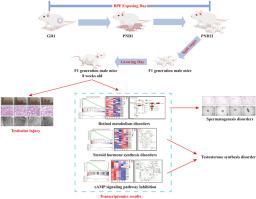
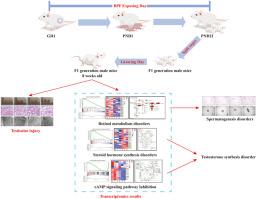
双酚F (BPF)是一种环境内分泌干扰物,能够穿过胎盘屏障,影响后代的生长发育。尽管存在潜在的影响,但关于BPF对雄性后代生殖功能影响的系统研究仍然有限。本研究在妊娠期和哺乳期分别以40,400和4000 μg/kg剂量暴露于BPF对雄性后代(F1代)睾丸损伤、睾酮水平和精子发生的影响,并利用转录组学进一步探讨其作用机制。首先,该研究表明,BPF在F1代小鼠中引起睾丸损伤,导致睾丸激素水平和精子质量下降。其次,转录组学分析显示,BPF通过破坏视黄醇代谢影响F1代小鼠的精子发生。第三,转录组学分析显示,BPF通过将睾酮前体脱氢表雄酮(DHEA)转向合成16α-羟基脱氢表雄酮而不是睾酮,降低了F1代小鼠的睾酮合成能力。最后,证实BPF通过抑制cAMP信号通路阻碍胆固醇转运到线粒体,从而影响睾酮合成。综上所述,本研究结果提示妊娠期暴露于BPF可导致F1代雄性小鼠生殖功能障碍。
本文章由计算机程序翻译,如有差异,请以英文原文为准。

Effect of bisphenol F on reproductive function in F1 generation male mice and its potential mechanisms

Effect of bisphenol F on reproductive function in F1 generation male mice and its potential mechanisms

Effect of bisphenol F on reproductive function in F1 generation male mice and its potential mechanisms
Bisphenol F (BPF) is an environmental endocrine disruptor capable of crossing the placental barrier and affecting the growth and development of offspring. Despite its potential impact, systematic research about effects of BPF on the reproductive function of male offspring remains limited. In this study, pregnant female mice were exposed to BPF at doses of 40, 400, and 4000 μg/kg during gestation and lactation, respectively, to evaluate its impact on testicular damage, testosterone levels, and spermatogenesis of male offspring (F1 generation), and further explore the mechanisms using transcriptomics. First, the study demonstrated that BPF induces testicular damage in F1 generation mice, leading to decreased testosterone levels and sperm quality. Second, transcriptomic analysis revealed that BPF affected spermatogenesis in F1 generation mice by disrupting retinol metabolism. Third, transcriptomic analysis revealed that BPF reduce the capacity for testosterone synthesis in F1 generation mice by diverting the testosterone precursor dehydroepiandrosterone (DHEA) towards the synthesis of 16α-hydroxydehydroepiandrosterone rather than testosterone. Finally, it was confirmed that BPF hinder cholesterol transport to mitochondria by inhibiting the cAMP signaling pathway, thereby impacting testosterone synthesis. In summary, the results of this study suggest that gestational exposure to BPF can lead to reproductive dysfunction in F1 generation male mice.
求助全文
通过发布文献求助,成功后即可免费获取论文全文。 去求助
来源期刊
Environmental Pollution
Environmental Pollution 环境科学-环境科学
CiteScore
16.00
自引率
6.70%
发文量
2082
审稿时长
2.9 months
期刊介绍: Environmental Pollution is an international peer-reviewed journal that publishes high-quality research papers and review articles covering all aspects of environmental pollution and its impacts on ecosystems and human health. Subject areas include, but are not limited to: • Sources and occurrences of pollutants that are clearly defined and measured in environmental compartments, food and food-related items, and human bodies; • Interlinks between contaminant exposure and biological, ecological, and human health effects, including those of climate change; • Contaminants of emerging concerns (including but not limited to antibiotic resistant microorganisms or genes, microplastics/nanoplastics, electronic wastes, light, and noise) and/or their biological, ecological, or human health effects; • Laboratory and field studies on the remediation/mitigation of environmental pollution via new techniques and with clear links to biological, ecological, or human health effects; • Modeling of pollution processes, patterns, or trends that is of clear environmental and/or human health interest; • New techniques that measure and examine environmental occurrences, transport, behavior, and effects of pollutants within the environment or the laboratory, provided that they can be clearly used to address problems within regional or global environmental compartments.

×
引用
GB/T 7714-2015
复制
MLA
复制
APA
复制
导出至
BibTeX EndNote RefMan NoteFirst NoteExpress
×
提示
您的信息不完整,为了账户安全,请先补充。
现在去补充
×
提示
您因"违规操作"
具体请查看互助需知
我知道了
×
提示
确定
请完成安全验证×
copy
已复制链接
快去分享给好友吧!
我知道了
右上角分享
点击右上角分享
0
联系我们:info@booksci.cn Book学术提供免费学术资源搜索服务,方便国内外学者检索中英文文献。致力于提供最便捷和优质的服务体验。 Copyright © 2023 布克学术 All rights reserved.
京ICP备2023020795号-1
ghs 京公网安备 11010802042870号
Book学术文献互助
Book学术文献互助群
群 号:604180095
Book学术官方微信
小红书