Xiuzhu Weng, Xing Luo, Xinyu Dai, Ying Lv, Shan Zhang, Xiaoxuan Bai, Xiaoyi Bao, Ying Wang, Chen Zhao, Ming Zeng, Sining Hu, Ji Li, Haibo Jia, Bo Yu
{"title":"Apigenin inhibits macrophage pyroptosis through regulation of oxidative stress and the NF-κB pathway and ameliorates atherosclerosis.","authors":"Xiuzhu Weng, Xing Luo, Xinyu Dai, Ying Lv, Shan Zhang, Xiaoxuan Bai, Xiaoyi Bao, Ying Wang, Chen Zhao, Ming Zeng, Sining Hu, Ji Li, Haibo Jia, Bo Yu","doi":"10.1002/ptr.7962","DOIUrl":null,"url":null,"abstract":"<p><p>Pyroptosis plays an important role in inflammatory diseases such as viral hepatitis and atherosclerosis. Apigenin exhibits various bioactivities, particularly anti-inflammation, but its effect on pyroptosis remains unclear. The aim of this study is to investigate the effect of apigenin on pyroptosis and explore its potential against inflammatory diseases. THP-1 macrophages treated by lipopolysaccharides/adenosine 5'-triphosphate were used as the in vitro pyroptosis model. Western blot was used to detect the expression of NLRP3 inflammasome components and key regulators. Immunofluorescence was used to observe ROS production and intracellular location of p65. The potential of apigenin against inflammatory diseases was evaluated using atherosclerotic mice. Plaque progression was observed by pathological staining. Immunofluorescence was used to observe the expression of NLRP3 inflammasome components in plaques. The results showed that apigenin inhibited NLRP3 inflammasome activation. Apigenin reduced ROS overproduction and inhibited p65 nuclear translocation. Additionally, apigenin decreased the expression of NLRP3 inflammasome components in the plaque. Plaque progression was inhibited by apigenin. In conclusion, apigenin exhibited a preventive effect on macrophage pyroptosis by reducing oxidative stress and inhibiting the NF-κB pathway. Apigenin may alleviate atherosclerosis at least partially by inhibiting macrophage pyroptosis. These findings suggest apigenin to be a promising therapeutic agent for inflammatory diseases.</p>","PeriodicalId":20110,"journal":{"name":"Phytotherapy Research","volume":" ","pages":"5300-5314"},"PeriodicalIF":8.1000,"publicationDate":"2023-11-01","publicationTypes":"Journal Article","fieldsOfStudy":null,"isOpenAccess":false,"openAccessPdf":"","citationCount":"0","resultStr":null,"platform":"Semanticscholar","paperid":null,"PeriodicalName":"Phytotherapy Research","FirstCategoryId":"3","ListUrlMain":"https://doi.org/10.1002/ptr.7962","RegionNum":2,"RegionCategory":"医学","ArticlePicture":[],"TitleCN":null,"AbstractTextCN":null,"PMCID":null,"EPubDate":"2023/8/1 0:00:00","PubModel":"Epub","JCR":"Q1","JCRName":"CHEMISTRY, MEDICINAL","Score":null,"Total":0}
引用次数: 0
Abstract
Pyroptosis plays an important role in inflammatory diseases such as viral hepatitis and atherosclerosis. Apigenin exhibits various bioactivities, particularly anti-inflammation, but its effect on pyroptosis remains unclear. The aim of this study is to investigate the effect of apigenin on pyroptosis and explore its potential against inflammatory diseases. THP-1 macrophages treated by lipopolysaccharides/adenosine 5'-triphosphate were used as the in vitro pyroptosis model. Western blot was used to detect the expression of NLRP3 inflammasome components and key regulators. Immunofluorescence was used to observe ROS production and intracellular location of p65. The potential of apigenin against inflammatory diseases was evaluated using atherosclerotic mice. Plaque progression was observed by pathological staining. Immunofluorescence was used to observe the expression of NLRP3 inflammasome components in plaques. The results showed that apigenin inhibited NLRP3 inflammasome activation. Apigenin reduced ROS overproduction and inhibited p65 nuclear translocation. Additionally, apigenin decreased the expression of NLRP3 inflammasome components in the plaque. Plaque progression was inhibited by apigenin. In conclusion, apigenin exhibited a preventive effect on macrophage pyroptosis by reducing oxidative stress and inhibiting the NF-κB pathway. Apigenin may alleviate atherosclerosis at least partially by inhibiting macrophage pyroptosis. These findings suggest apigenin to be a promising therapeutic agent for inflammatory diseases.
期刊介绍:
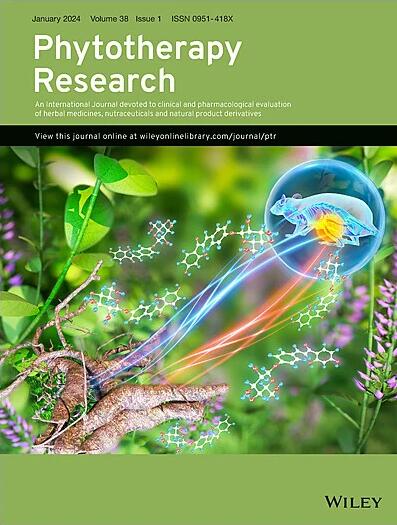
Phytotherapy Research is an internationally recognized pharmacological journal that serves as a trailblazing resource for biochemists, pharmacologists, and toxicologists. We strive to disseminate groundbreaking research on medicinal plants, pushing the boundaries of knowledge and understanding in this field.
Our primary focus areas encompass pharmacology, toxicology, and the clinical applications of herbs and natural products in medicine. We actively encourage submissions on the effects of commonly consumed food ingredients and standardized plant extracts. We welcome a range of contributions including original research papers, review articles, and letters.
By providing a platform for the latest developments and discoveries in phytotherapy, we aim to support the advancement of scientific knowledge and contribute to the improvement of modern medicine.

 求助内容:
 应助结果提醒方式:


 京公网安备 11010802042870号


