{"title":"Mechanisms of cold-induced immunity in plants.","authors":"Kentaro Sasaki, Ryozo Imai","doi":"10.1111/ppl.13846","DOIUrl":null,"url":null,"abstract":"<p><p>Overwintering plants acquire substantial levels of freezing tolerance through cold acclimation or winter hardening. This process is essential for the plants survival to harsh winter conditions. In the areas where persistent snow cover lasts several months, plants are protected from freezing but are, however, exposed to other harsh conditions, such as dark, cold, and high humidity. These conditions facilitate the infection of psychrophilic pathogens, which are termed \"snow molds.\" To fight against infection of snow molds, overwintering plants develop disease resistance via the process of cold acclimation. Compared with pathogen-induced disease resistance, the molecular mechanisms of cold-induced disease resistance have yet to be fully elucidated. In this review, we outline the recent progress in our understanding of disease resistance acquired through cold acclimation.</p>","PeriodicalId":20164,"journal":{"name":"Physiologia plantarum","volume":"175 1","pages":"e13846"},"PeriodicalIF":4.0000,"publicationDate":"2023-01-01","publicationTypes":"Journal Article","fieldsOfStudy":null,"isOpenAccess":false,"openAccessPdf":"","citationCount":"4","resultStr":null,"platform":"Semanticscholar","paperid":null,"PeriodicalName":"Physiologia plantarum","FirstCategoryId":"99","ListUrlMain":"https://doi.org/10.1111/ppl.13846","RegionNum":2,"RegionCategory":"生物学","ArticlePicture":[],"TitleCN":null,"AbstractTextCN":null,"PMCID":null,"EPubDate":"","PubModel":"","JCR":"Q1","JCRName":"PLANT SCIENCES","Score":null,"Total":0}
引用次数: 4
Abstract
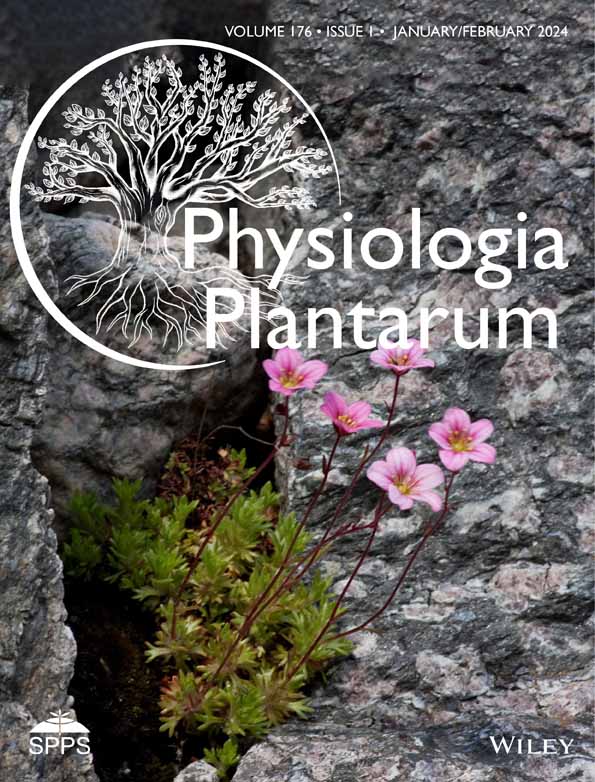
Overwintering plants acquire substantial levels of freezing tolerance through cold acclimation or winter hardening. This process is essential for the plants survival to harsh winter conditions. In the areas where persistent snow cover lasts several months, plants are protected from freezing but are, however, exposed to other harsh conditions, such as dark, cold, and high humidity. These conditions facilitate the infection of psychrophilic pathogens, which are termed "snow molds." To fight against infection of snow molds, overwintering plants develop disease resistance via the process of cold acclimation. Compared with pathogen-induced disease resistance, the molecular mechanisms of cold-induced disease resistance have yet to be fully elucidated. In this review, we outline the recent progress in our understanding of disease resistance acquired through cold acclimation.
期刊介绍:
Physiologia Plantarum is an international journal committed to publishing the best full-length original research papers that advance our understanding of primary mechanisms of plant development, growth and productivity as well as plant interactions with the biotic and abiotic environment. All organisational levels of experimental plant biology – from molecular and cell biology, biochemistry and biophysics to ecophysiology and global change biology – fall within the scope of the journal. The content is distributed between 5 main subject areas supervised by Subject Editors specialised in the respective domain: (1) biochemistry and metabolism, (2) ecophysiology, stress and adaptation, (3) uptake, transport and assimilation, (4) development, growth and differentiation, (5) photobiology and photosynthesis.

 求助内容:
 应助结果提醒方式:


 京公网安备 11010802042870号


