{"title":"Aerobic Degradation of the Antidiabetic Drug Metformin by Aminobacter sp. Strain NyZ550","authors":"Tao Li, Zhi-Jing Xu and Ning-Yi Zhou*, ","doi":"10.1021/acs.est.2c07669","DOIUrl":null,"url":null,"abstract":"<p >Metformin is becoming one of the most common emerging contaminants in surface and wastewater. Its biodegradation generally leads to the accumulation of guanylurea in the environment, but the microorganisms and mechanisms involved in this process remain elusive. Here, <i>Aminobacter</i> sp. strain NyZ550 was isolated and characterized for its ability to grow on metformin as a sole source of carbon, nitrogen, and energy under oxic conditions. This isolate also assimilated a variety of nitrogenous compounds, including dimethylamine. Hydrolysis of metformin by strain NyZ550 was accompanied by a stoichiometric accumulation of guanylurea as a dead-end product. Based on ion chromatography, gas chromatography–mass spectrometry, and comparative transcriptomic analyses, dimethylamine was identified as an additional hydrolytic product supporting the growth of the strain. Notably, a microbial mixture consisting of strain NyZ550 and an engineered <i>Pseudomonas putida</i> PaW340 expressing a guanylurea hydrolase was constructed for complete elimination of metformin and its persistent product guanylurea. Overall, our results not only provide new insights into the metformin biodegradation pathway, leading to the commonly observed accumulation of guanylurea in the environment, but also open doors for the complete degradation of the new pollutant metformin.</p>","PeriodicalId":36,"journal":{"name":"环境科学与技术","volume":"57 3","pages":"1510–1519"},"PeriodicalIF":12.2000,"publicationDate":"2023-01-09","publicationTypes":"Journal Article","fieldsOfStudy":null,"isOpenAccess":false,"openAccessPdf":"","citationCount":"3","resultStr":null,"platform":"Semanticscholar","paperid":null,"PeriodicalName":"环境科学与技术","FirstCategoryId":"1","ListUrlMain":"https://pubs.acs.org/doi/10.1021/acs.est.2c07669","RegionNum":1,"RegionCategory":"环境科学与生态学","ArticlePicture":[],"TitleCN":null,"AbstractTextCN":null,"PMCID":null,"EPubDate":"","PubModel":"","JCR":"Q1","JCRName":"ENGINEERING, ENVIRONMENTAL","Score":null,"Total":0}
引用次数: 3
Abstract
Metformin is becoming one of the most common emerging contaminants in surface and wastewater. Its biodegradation generally leads to the accumulation of guanylurea in the environment, but the microorganisms and mechanisms involved in this process remain elusive. Here, Aminobacter sp. strain NyZ550 was isolated and characterized for its ability to grow on metformin as a sole source of carbon, nitrogen, and energy under oxic conditions. This isolate also assimilated a variety of nitrogenous compounds, including dimethylamine. Hydrolysis of metformin by strain NyZ550 was accompanied by a stoichiometric accumulation of guanylurea as a dead-end product. Based on ion chromatography, gas chromatography–mass spectrometry, and comparative transcriptomic analyses, dimethylamine was identified as an additional hydrolytic product supporting the growth of the strain. Notably, a microbial mixture consisting of strain NyZ550 and an engineered Pseudomonas putida PaW340 expressing a guanylurea hydrolase was constructed for complete elimination of metformin and its persistent product guanylurea. Overall, our results not only provide new insights into the metformin biodegradation pathway, leading to the commonly observed accumulation of guanylurea in the environment, but also open doors for the complete degradation of the new pollutant metformin.
期刊介绍:
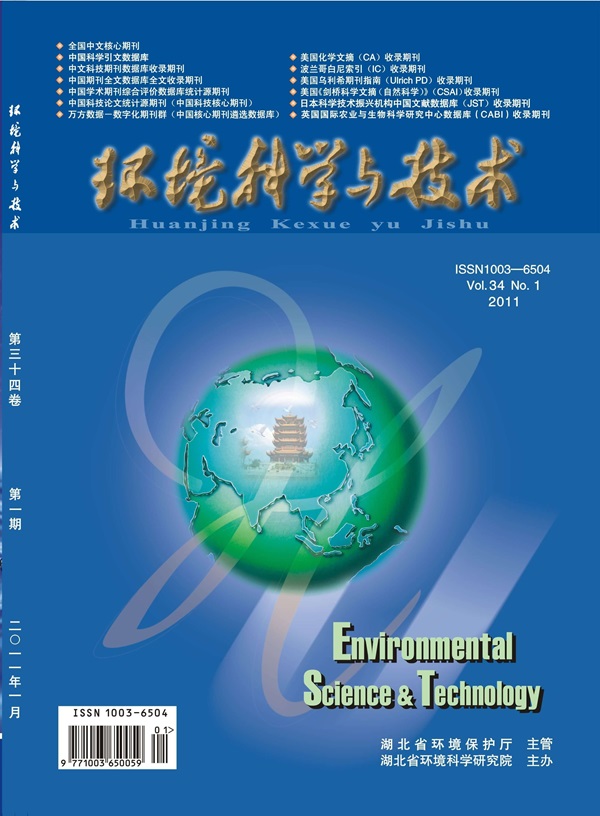
Environmental Science & Technology (ES&T) is a co-sponsored academic and technical magazine by the Hubei Provincial Environmental Protection Bureau and the Hubei Provincial Academy of Environmental Sciences.
Environmental Science & Technology (ES&T) holds the status of Chinese core journals, scientific papers source journals of China, Chinese Science Citation Database source journals, and Chinese Academic Journal Comprehensive Evaluation Database source journals. This publication focuses on the academic field of environmental protection, featuring articles related to environmental protection and technical advancements.


 求助内容:
 应助结果提醒方式:


 京公网安备 11010802042870号


