Yifei Qin, Zihan Guo, Haining Huang, Liting Zhu, Sijun Dong, Yong-Guan Zhu, Li Cui* and Qiansheng Huang*,
{"title":"Widespread of Potential Pathogen-Derived Extracellular Vesicles Carrying Antibiotic Resistance Genes in Indoor Dust","authors":"Yifei Qin, Zihan Guo, Haining Huang, Liting Zhu, Sijun Dong, Yong-Guan Zhu, Li Cui* and Qiansheng Huang*, ","doi":"10.1021/acs.est.1c08654","DOIUrl":null,"url":null,"abstract":"<p >Extracellular vesicles (EVs) are newly recognized as important vectors for carrying and spreading antibiotic resistance genes (ARGs). However, the ARGs harbored by EVs in ambient environments and the transfer potential are still unclear. In this study, the prevalence of ARGs and mobile genetic elements (MGEs) in EVs and their microbial origins were studied in indoor dust from restaurants, kindergarten, dormitories, and vehicles. The amount of EVs ranged from 3.40 × 10<sup>7</sup> to 1.09 × 10<sup>11</sup> particles/g dust. The length of EV-associated DNA fragments was between 21 bp and 9.7 kb. Metagenomic sequencing showed that a total of 241 antibiotic ARG subtypes encoding resistance to 16 common classes were detected in the EVs from all four fields. Multidrug, quinolone, and macrolide resistance genes were the dominant types. 15 ARG subtypes were exclusively carried and even enriched in EVs compared to the indoor microbiome. Moreover, several ARGs showed co-occurrence with MGEs. The EVs showed distinct taxonomic composition with their original dust microbiota. 30.23% of EV-associated DNA was predicted to originate from potential pathogens. Our results indicated the widespread of EVs carrying ARGs and virulence genes in daily life indoor dust, provided new insights into the status of extracellular DNA, and raised risk concerns on their gene transfer potential.</p>","PeriodicalId":36,"journal":{"name":"环境科学与技术","volume":"56 9","pages":"5653–5663"},"PeriodicalIF":12.2000,"publicationDate":"2022-04-19","publicationTypes":"Journal Article","fieldsOfStudy":null,"isOpenAccess":false,"openAccessPdf":"","citationCount":"8","resultStr":null,"platform":"Semanticscholar","paperid":null,"PeriodicalName":"环境科学与技术","FirstCategoryId":"1","ListUrlMain":"https://pubs.acs.org/doi/10.1021/acs.est.1c08654","RegionNum":1,"RegionCategory":"环境科学与生态学","ArticlePicture":[],"TitleCN":null,"AbstractTextCN":null,"PMCID":null,"EPubDate":"","PubModel":"","JCR":"Q1","JCRName":"ENGINEERING, ENVIRONMENTAL","Score":null,"Total":0}
引用次数: 8
Abstract
Extracellular vesicles (EVs) are newly recognized as important vectors for carrying and spreading antibiotic resistance genes (ARGs). However, the ARGs harbored by EVs in ambient environments and the transfer potential are still unclear. In this study, the prevalence of ARGs and mobile genetic elements (MGEs) in EVs and their microbial origins were studied in indoor dust from restaurants, kindergarten, dormitories, and vehicles. The amount of EVs ranged from 3.40 × 10⁷ to 1.09 × 10¹¹ particles/g dust. The length of EV-associated DNA fragments was between 21 bp and 9.7 kb. Metagenomic sequencing showed that a total of 241 antibiotic ARG subtypes encoding resistance to 16 common classes were detected in the EVs from all four fields. Multidrug, quinolone, and macrolide resistance genes were the dominant types. 15 ARG subtypes were exclusively carried and even enriched in EVs compared to the indoor microbiome. Moreover, several ARGs showed co-occurrence with MGEs. The EVs showed distinct taxonomic composition with their original dust microbiota. 30.23% of EV-associated DNA was predicted to originate from potential pathogens. Our results indicated the widespread of EVs carrying ARGs and virulence genes in daily life indoor dust, provided new insights into the status of extracellular DNA, and raised risk concerns on their gene transfer potential.
期刊介绍:
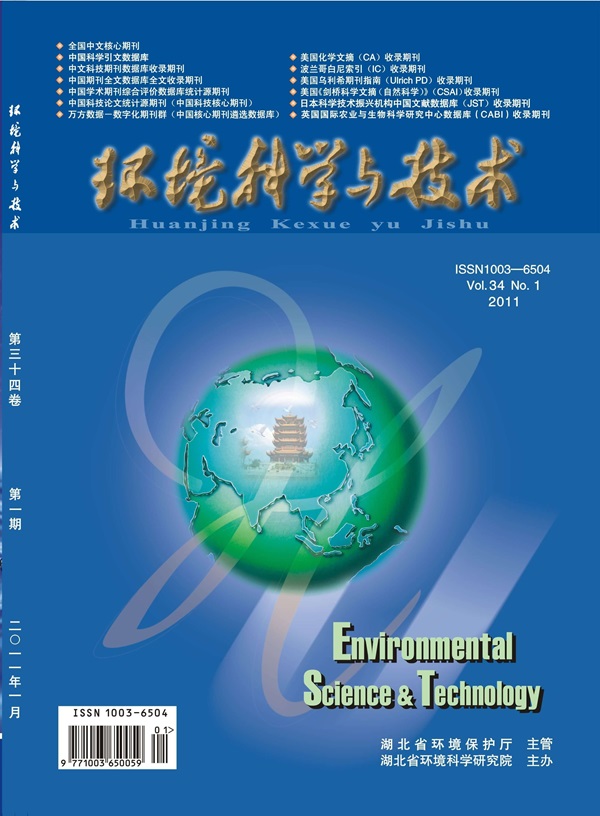
Environmental Science & Technology (ES&T) is a co-sponsored academic and technical magazine by the Hubei Provincial Environmental Protection Bureau and the Hubei Provincial Academy of Environmental Sciences.
Environmental Science & Technology (ES&T) holds the status of Chinese core journals, scientific papers source journals of China, Chinese Science Citation Database source journals, and Chinese Academic Journal Comprehensive Evaluation Database source journals. This publication focuses on the academic field of environmental protection, featuring articles related to environmental protection and technical advancements.


 求助内容:
 应助结果提醒方式:


 京公网安备 11010802042870号


