Bobo Xing, Nigel J. D. Graham, Binghao Zhao, Xian Li, Youneng Tang, Andreas Kappler, Hailiang Dong, Mari Winkler and Wenzheng Yu*,
{"title":"Goethite Formed in the Periplasmic Space of Pseudomonas sp. JM-7 during Fe Cycling Enhances Its Denitrification in Water","authors":"Bobo Xing, Nigel J. D. Graham, Binghao Zhao, Xian Li, Youneng Tang, Andreas Kappler, Hailiang Dong, Mari Winkler and Wenzheng Yu*, ","doi":"10.1021/acs.est.3c02303","DOIUrl":null,"url":null,"abstract":"<p >Denitrification-driven Fe(II) oxidation is an important microbial metabolism that connects iron and nitrogen cycling in the environment. The formation of Fe(III) minerals in the periplasmic space has a significant effect on microbial metabolism and electron transfer, but direct evidence of iron ions entering the periplasm and resulting in periplasmic mineral precipitation and electron conduction properties has yet to be conclusively determined. Here, we investigated the pathways and amounts of iron, with different valence states and morphologies, entering the periplasmic space of the denitrifier <i>Pseudomonas</i> sp. JM-7 (<i>P.</i> JM-7), and the possible effects on the electron transfer and the denitrifying ability. When consistently provided with Fe(II) ions (from siderite (FeCO<sub>3</sub>)), the dissolved Fe(II) ions entered the periplasmic space and were oxidized to Fe(III), leading to the formation of a 25 nm thick crystalline goethite crust, which functioned as a semiconductor, accelerating the transfer of electrons from the intracellular to the extracellular matrix. This consequently doubled the denitrification rate and increased the electron transport capacity by 4–30 times (0.015–0.04 μA). However, as the Fe(II) concentration further increased to above 4 mM, the Fe(II) ions tended to preferentially nucleate, oxidize, and crystallize on the outer surface of <i>P.</i> JM-7, leading to the formation of a densely crystallized goethite layer, which significantly slowed down the metabolism of <i>P.</i> JM-7. In contrast to the Fe(II) conditions, regardless of the initial concentration of Fe(III), it was challenging for Fe(III) ions to form goethite in the periplasmic space. This work has shed light on the likely effects of iron on environmental microorganisms, improved our understanding of globally significant iron and nitrogen geochemical cycles in water, and expanded our ability to study and control these important processes.</p>","PeriodicalId":36,"journal":{"name":"环境科学与技术","volume":"57 30","pages":"11096–11107"},"PeriodicalIF":12.2000,"publicationDate":"2023-07-19","publicationTypes":"Journal Article","fieldsOfStudy":null,"isOpenAccess":false,"openAccessPdf":"","citationCount":"0","resultStr":null,"platform":"Semanticscholar","paperid":null,"PeriodicalName":"环境科学与技术","FirstCategoryId":"1","ListUrlMain":"https://pubs.acs.org/doi/10.1021/acs.est.3c02303","RegionNum":1,"RegionCategory":"环境科学与生态学","ArticlePicture":[],"TitleCN":null,"AbstractTextCN":null,"PMCID":null,"EPubDate":"","PubModel":"","JCR":"Q1","JCRName":"ENGINEERING, ENVIRONMENTAL","Score":null,"Total":0}
引用次数: 0
Abstract
Denitrification-driven Fe(II) oxidation is an important microbial metabolism that connects iron and nitrogen cycling in the environment. The formation of Fe(III) minerals in the periplasmic space has a significant effect on microbial metabolism and electron transfer, but direct evidence of iron ions entering the periplasm and resulting in periplasmic mineral precipitation and electron conduction properties has yet to be conclusively determined. Here, we investigated the pathways and amounts of iron, with different valence states and morphologies, entering the periplasmic space of the denitrifier Pseudomonas sp. JM-7 (P. JM-7), and the possible effects on the electron transfer and the denitrifying ability. When consistently provided with Fe(II) ions (from siderite (FeCO3)), the dissolved Fe(II) ions entered the periplasmic space and were oxidized to Fe(III), leading to the formation of a 25 nm thick crystalline goethite crust, which functioned as a semiconductor, accelerating the transfer of electrons from the intracellular to the extracellular matrix. This consequently doubled the denitrification rate and increased the electron transport capacity by 4–30 times (0.015–0.04 μA). However, as the Fe(II) concentration further increased to above 4 mM, the Fe(II) ions tended to preferentially nucleate, oxidize, and crystallize on the outer surface of P. JM-7, leading to the formation of a densely crystallized goethite layer, which significantly slowed down the metabolism of P. JM-7. In contrast to the Fe(II) conditions, regardless of the initial concentration of Fe(III), it was challenging for Fe(III) ions to form goethite in the periplasmic space. This work has shed light on the likely effects of iron on environmental microorganisms, improved our understanding of globally significant iron and nitrogen geochemical cycles in water, and expanded our ability to study and control these important processes.
期刊介绍:
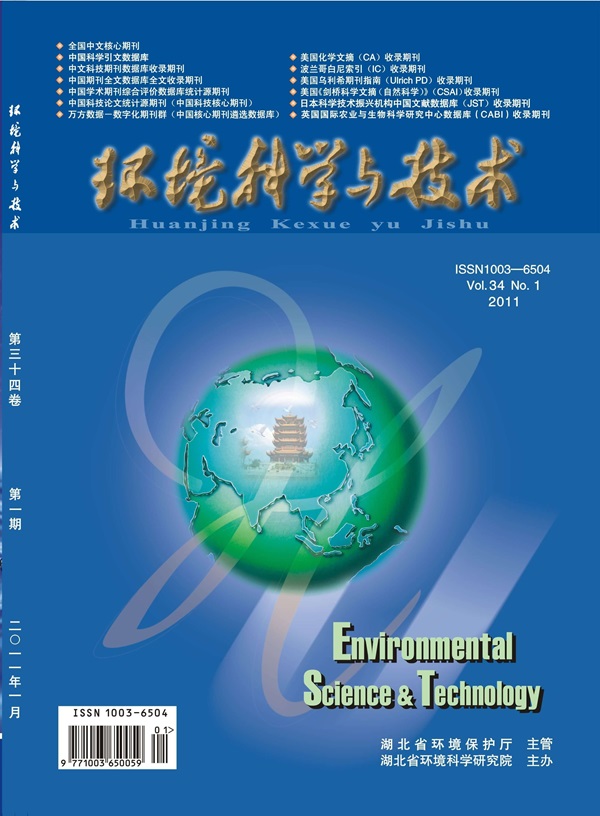
Environmental Science & Technology (ES&T) is a co-sponsored academic and technical magazine by the Hubei Provincial Environmental Protection Bureau and the Hubei Provincial Academy of Environmental Sciences.
Environmental Science & Technology (ES&T) holds the status of Chinese core journals, scientific papers source journals of China, Chinese Science Citation Database source journals, and Chinese Academic Journal Comprehensive Evaluation Database source journals. This publication focuses on the academic field of environmental protection, featuring articles related to environmental protection and technical advancements.


 求助内容:
 应助结果提醒方式:


 京公网安备 11010802042870号


