
Basalt Application Alters the Nitrogen Budget of Midwestern U.S. Agricultural Soils through Reduced Nitrous Oxide Fluxes and Increased Nitrogen Leaching
IF 12.2
1区 环境科学与生态学
Q1 ENGINEERING, ENVIRONMENTAL
引用次数: 0
Abstract
Land-based enhanced rock weathering (ERW)─applying ground silicate rock to soils─is being explored for sequestration of CO2 from the atmosphere, with impacts beyond carbon storage. Weathering of basalt releases base cations increasing alkalinity and soil pH, which we hypothesized would reduce N2O emissions. Repeated applications of basalt to a heavily fertilized annual Zea mays and Glycine max rotation (maize and soybean) and the low-fertilized perennial bioenergy grass Miscanthus x giganteus (miscanthus) in Illinois raised soil pH from 6.6 to 7.1 in maize/soybean and from 5.4 to 6.3 in miscanthus and consistently reduced annual N2O emissions by 16–40% over 7 growing seasons. Although not statistically significant for any given crop, our results indicate an emerging trend of increased N leaching (23% pooled across crops and years), suggesting a potential shift in N loss from the atmosphere to groundwater. Crop yields increased or remained unchanged, indicating enhanced weathering is compatible with conventional farming practices. Regional land model simulations show that ERW deployment across the US Corn Belt could reduce soil N2O emissions by 11% under a moderate deployment pathway and by 24% under a more intensive deployment pathway. The effects of enhanced weathering extend beyond CO2 sequestration and may benefit both greenhouse gas mitigation and bioenergy crop production, with a potential trade-off of increased N mobility in fertile, organic matter-rich US Midwestern soils.

玄武岩的施用通过减少一氧化二氮的通量和增加氮的淋溶而改变了美国中西部农业土壤的氮收支
人们正在探索陆基增强岩石风化(ERW)──将地面硅酸盐岩石应用于土壤──以封存大气中的二氧化碳,其影响超出了碳储存。玄武岩风化释放碱性阳离子,增加碱度和土壤pH值,我们假设这将减少N2O的排放。在伊利诺斯州的玉米和大豆轮作中反复施用玄武岩,使玉米/大豆的土壤pH值从6.6提高到7.1,芒草的土壤pH值从5.4提高到6.3,在7个生长季节中,每年的N2O排放量持续减少16-40%。尽管对任何一种作物来说都不具有统计学意义,但我们的研究结果表明,氮淋失呈增加趋势(作物和年份合计为23%),这表明氮流失可能从大气转移到地下水。作物产量增加或保持不变,表明增强的风化与传统的耕作方式是相容的。区域陆地模式模拟结果表明,在美国玉米带部署ERW,在适度部署路径下可减少11%的土壤N2O排放,在更密集的部署路径下可减少24%的土壤N2O排放。风化作用增强的影响不仅局限于二氧化碳封存,还可能有利于温室气体减排和生物能源作物生产,这可能会增加美国中西部肥沃、有机质丰富土壤中氮的流动性。
本文章由计算机程序翻译,如有差异,请以英文原文为准。
求助全文
约1分钟内获得全文
求助全文
来源期刊
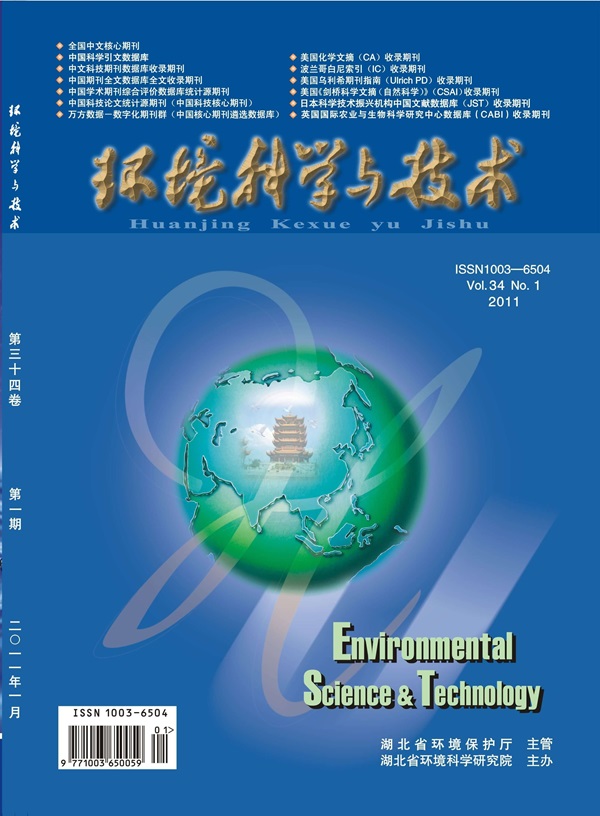
环境科学与技术
环境科学-工程:环境
CiteScore
17.50
自引率
9.60%
发文量
12359
审稿时长
2.8 months
期刊介绍:
Environmental Science & Technology (ES&T) is a co-sponsored academic and technical magazine by the Hubei Provincial Environmental Protection Bureau and the Hubei Provincial Academy of Environmental Sciences.
Environmental Science & Technology (ES&T) holds the status of Chinese core journals, scientific papers source journals of China, Chinese Science Citation Database source journals, and Chinese Academic Journal Comprehensive Evaluation Database source journals. This publication focuses on the academic field of environmental protection, featuring articles related to environmental protection and technical advancements.
 求助内容:
 应助结果提醒方式:


 京公网安备 11010802042870号


