
Small Modular Electrochemical Containers for Decarbonization of AI Data Centers
IF 12.2
1区 环境科学与生态学
Q1 ENGINEERING, ENVIRONMENTAL
引用次数: 0
Abstract
The rapid growth of artificial intelligence (AI) is increasing data-center electricity demand and reinforcing the near-term role of fossil-fuel power generation. Decarbonizing this infrastructure requires carbon capture systems that are efficient, compact, modular, and compatible with space-constrained data centers. Here, we evaluate Small Modular Electrochemical Containers (SMECs) as a deployment-oriented application of a two-stage, membraneless electrochemically mediated amine regeneration (EMAR) process. The design integrates CO2 absorption and electrochemical desorption within one gas-diffusion-electrode cell, eliminating absorber columns and ion-exchange membranes. Single-cell experiments were conducted under simulated natural-gas and coal-derived flue gas. Polarization mapping identified optimized operating conditions, which were then used in a 300-cycle, 50-h accelerated stability test with periodic polarity switching. The cell maintained repeatable voltage and CO2 absorption/desorption profiles, with absorption and desorption efficiencies of ∼90% under optimized conditions. The energetics ranged from 50–85 kJe/molCO2, and GC/IC analyses showed no detectable gaseous or liquid side products. The paper further includes theoretical modeling of SOx and NOx effects on the absorbent. In a case study for a 360 MW data-center power plant, the TEA showed that fewer than 20 SMEC units could achieve near-complete decarbonization, increasing the levelized electricity cost from about \$58/MWh to \$74/MWh.

用于人工智能数据中心脱碳的小型模块化电化学容器
人工智能(AI)的快速发展增加了数据中心的电力需求,并加强了化石燃料发电的短期作用。要使这种基础设施脱碳,就需要高效、紧凑、模块化的碳捕获系统,并与空间有限的数据中心兼容。在这里,我们评估了小型模块化电化学容器(smec)作为两阶段,无膜电化学介导的胺再生(EMAR)过程面向部署的应用。该设计集成了二氧化碳吸收和电化学脱附在一个气体扩散电极电池,消除了吸收塔和离子交换膜。在模拟天然气和煤衍生烟气下进行了单细胞实验。极化映射确定了优化的操作条件,然后将其用于300个循环、50小时的周期性极性切换加速稳定性测试。在优化条件下,电池保持了可重复的电压和CO2吸收/解吸曲线,吸收和解吸效率为90%。在50-85 kJe/molCO2范围内,GC/IC分析显示没有检测到气体或液体副产物。进一步建立了SOx和NOx对吸附剂影响的理论模型。在一个360兆瓦数据中心发电厂的案例研究中,TEA表明,不到20个SMEC单元就可以实现近乎完全的脱碳,将平均电力成本从约58美元/兆瓦时提高到74美元/兆瓦时。
本文章由计算机程序翻译,如有差异,请以英文原文为准。
求助全文
约1分钟内获得全文
求助全文
来源期刊
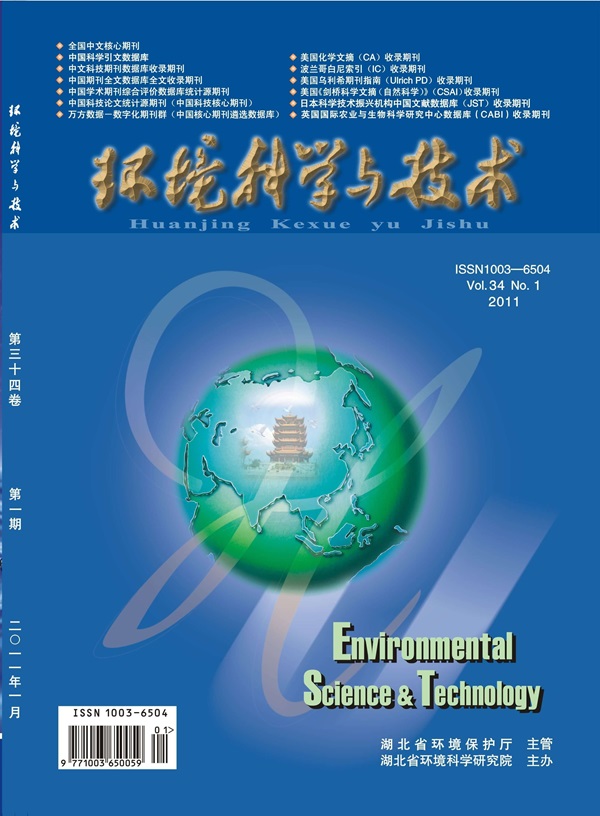
环境科学与技术
环境科学-工程:环境
CiteScore
17.50
自引率
9.60%
发文量
12359
审稿时长
2.8 months
期刊介绍:
Environmental Science & Technology (ES&T) is a co-sponsored academic and technical magazine by the Hubei Provincial Environmental Protection Bureau and the Hubei Provincial Academy of Environmental Sciences.
Environmental Science & Technology (ES&T) holds the status of Chinese core journals, scientific papers source journals of China, Chinese Science Citation Database source journals, and Chinese Academic Journal Comprehensive Evaluation Database source journals. This publication focuses on the academic field of environmental protection, featuring articles related to environmental protection and technical advancements.
 求助内容:
 应助结果提醒方式:


 京公网安备 11010802042870号


