
Two‐Dimensional Magnetic Materials From Ferromagnetism to Altermagnetism: Fabrication, Symmetry, Evidence, and Device Readiness

IF 19.9 1区 材料科学 Q1 CHEMISTRY, MULTIDISCIPLINARY
Guojian Zhao, Ziang Meng, Li Liu, Zhiyuan Duan, Jingyu Li, Sixu Jiang, Xiaoyang Tan, Shiheng Bu, Chen Liang, Xiaoning Wang, Peixin Qin, Zhiqi Liu
{"title":"Two‐Dimensional Magnetic Materials From Ferromagnetism to Altermagnetism: Fabrication, Symmetry, Evidence, and Device Readiness","authors":"Guojian Zhao, Ziang Meng, Li Liu, Zhiyuan Duan, Jingyu Li, Sixu Jiang, Xiaoyang Tan, Shiheng Bu, Chen Liang, Xiaoning Wang, Peixin Qin, Zhiqi Liu","doi":"10.1002/adfm.79184","DOIUrl":null,"url":null,"abstract":"Atomically thin magnets are governed by composition, thickness, stacking, strain, defects, substrates, ferroic order, and interfaces. This Review organizes two‐dimensional (2D) magnetism using net magnetization and momentum‐space spin splitting or spin‐polarization patterns as primary coordinates, supplemented by sublattice structure and the symmetry relations between opposite‐spin sublattices. Ferromagnets generally carry a net moment; ferrimagnets can be fully compensated. Conventional antiferromagnets may retain spin‐degenerate bands, while altermagnets permit nonrelativistic alternating spin splitting under dimension‐specific symmetry constraints. M1–M4 reporting classes introduced here distinguish layer‐resolved atomically thin forms, non‐layer‐resolved thin flakes or films, bulk benchmarks, and theoretical candidates or design routes; the evidence category and ordering‐temperature provenance are reported independently. Current experimental support for altermagnetism comes mainly from M2 thin‐film and M3 bulk benchmarks, leaving a fully verified atomically thin M1 altermagnetic phase as an open experimental goal. Most proposed monolayer and few‐layer systems therefore fall within M4, and contested cases clarify the measurements needed for phase assignment. Device readiness is compared qualitatively using operating temperature, readout, switching, domain control, stability, scalability, interface sensitivity, and integration difficulty. Reliable phase assignment and device assessment require complementary measurements from the same material form under matched conditions, ideally on the same specimen or in situ.","PeriodicalId":112,"journal":{"name":"Advanced Functional Materials","volume":"21 1","pages":""},"PeriodicalIF":19.9000,"publicationDate":"2026-10-28","publicationTypes":"Journal Article","fieldsOfStudy":null,"isOpenAccess":false,"openAccessPdf":"","citationCount":"0","resultStr":null,"platform":"Semanticscholar","paperid":null,"PeriodicalName":"Advanced Functional Materials","FirstCategoryId":"88","ListUrlMain":"https://doi.org/10.1002/adfm.79184","RegionNum":1,"RegionCategory":"材料科学","ArticlePicture":[],"TitleCN":null,"AbstractTextCN":null,"PMCID":null,"EPubDate":"","PubModel":"","JCR":"Q1","JCRName":"CHEMISTRY, MULTIDISCIPLINARY","Score":null,"Total":0}
引用次数: 0

Abstract

Atomically thin magnets are governed by composition, thickness, stacking, strain, defects, substrates, ferroic order, and interfaces. This Review organizes two‐dimensional (2D) magnetism using net magnetization and momentum‐space spin splitting or spin‐polarization patterns as primary coordinates, supplemented by sublattice structure and the symmetry relations between opposite‐spin sublattices. Ferromagnets generally carry a net moment; ferrimagnets can be fully compensated. Conventional antiferromagnets may retain spin‐degenerate bands, while altermagnets permit nonrelativistic alternating spin splitting under dimension‐specific symmetry constraints. M1–M4 reporting classes introduced here distinguish layer‐resolved atomically thin forms, non‐layer‐resolved thin flakes or films, bulk benchmarks, and theoretical candidates or design routes; the evidence category and ordering‐temperature provenance are reported independently. Current experimental support for altermagnetism comes mainly from M2 thin‐film and M3 bulk benchmarks, leaving a fully verified atomically thin M1 altermagnetic phase as an open experimental goal. Most proposed monolayer and few‐layer systems therefore fall within M4, and contested cases clarify the measurements needed for phase assignment. Device readiness is compared qualitatively using operating temperature, readout, switching, domain control, stability, scalability, interface sensitivity, and integration difficulty. Reliable phase assignment and device assessment require complementary measurements from the same material form under matched conditions, ideally on the same specimen or in situ.
从铁磁性到电磁性的二维磁性材料:制造、对称、证据和器件准备
原子薄磁体受组成、厚度、堆叠、应变、缺陷、衬底、铁序和界面等因素的制约。本综述使用净磁化和动量空间自旋分裂或自旋极化模式作为主要坐标,辅以亚晶格结构和反自旋亚晶格之间的对称关系来组织二维(2D)磁性。铁磁体通常带有净力矩;铁磁体可以完全补偿。传统的反铁磁体可以保留自旋简并带,而替代磁体允许在特定尺寸对称性约束下的非相对论性交替自旋分裂。这里介绍的M1-M4报告类区分了层分解的原子薄形式,非层分解的薄片或薄膜,批量基准和理论候选或设计路线;证据类别和序温来源是独立报告的。目前对电磁学的实验支持主要来自于M2薄膜和M3体基准,将完全验证的原子薄M1电磁学相作为一个开放的实验目标。因此,大多数提出的单层和多层体系都属于M4,有争议的案例阐明了相位分配所需的测量。使用工作温度、读出、开关、域控制、稳定性、可扩展性、接口灵敏度和集成难度定性地比较器件准备情况。可靠的相位分配和设备评估需要在匹配条件下对相同材料形式进行互补测量,理想情况下是在相同样品或原位上。
本文章由计算机程序翻译,如有差异,请以英文原文为准。
求助全文
约1分钟内获得全文 求助全文
来源期刊
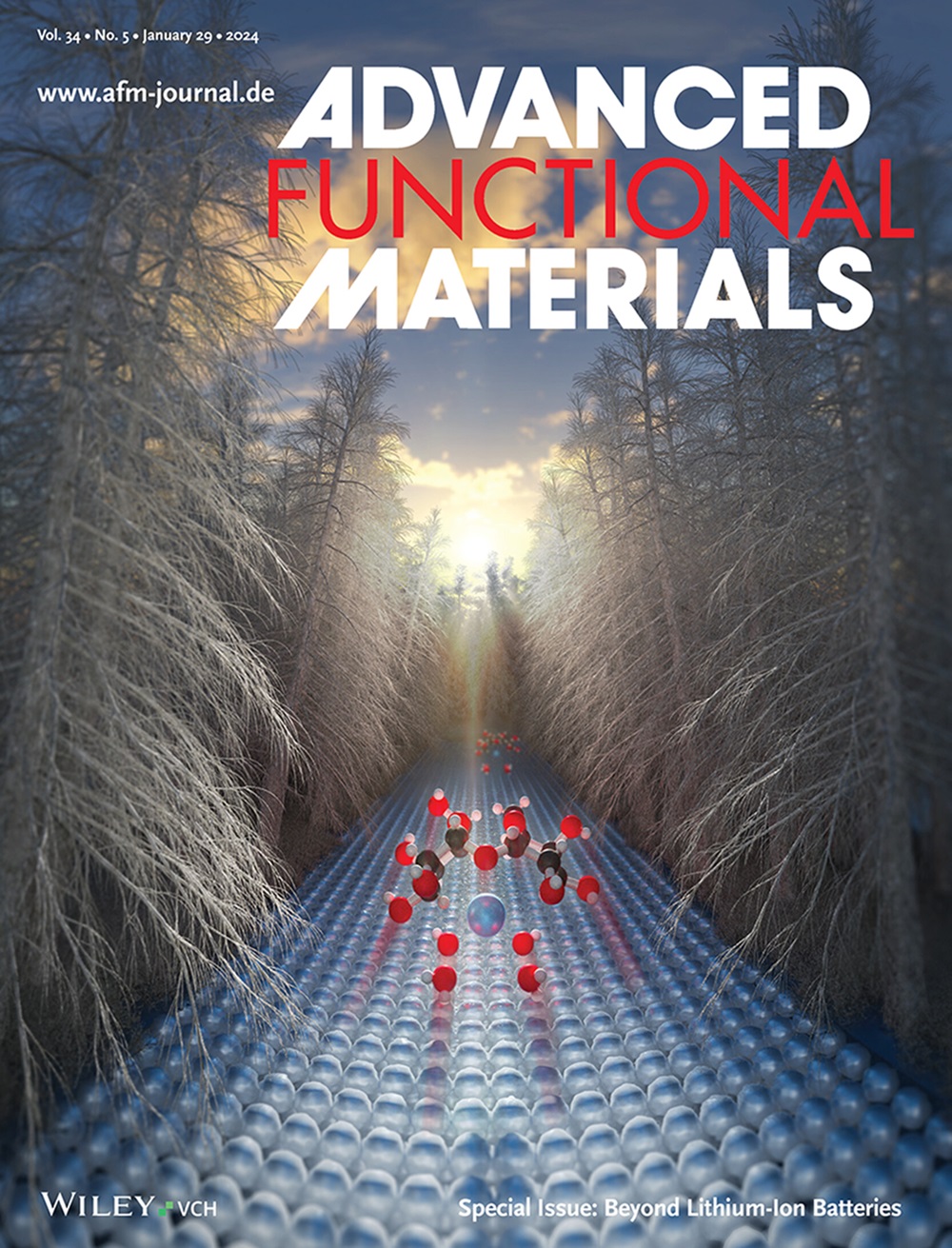
Advanced Functional Materials
Advanced Functional Materials 工程技术-材料科学:综合
CiteScore
29.50
自引率
4.20%
发文量
2086
审稿时长
2.1 months
期刊介绍: Firmly established as a top-tier materials science journal, Advanced Functional Materials reports breakthrough research in all aspects of materials science, including nanotechnology, chemistry, physics, and biology every week. Advanced Functional Materials is known for its rapid and fair peer review, quality content, and high impact, making it the first choice of the international materials science community.

×
引用
GB/T 7714-2015
复制
MLA
复制
APA
复制
导出至
BibTeX EndNote RefMan NoteFirst NoteExpress
×
提示
您的信息不完整,为了账户安全,请先补充。
现在去补充
×
提示
您因"违规操作"
具体请查看互助需知
我知道了
×
提示
确定
请完成安全验证×
copy
已复制链接
快去分享给好友吧!
我知道了
右上角分享
点击右上角分享
0
联系我们:info@booksci.cn Book学术提供免费学术资源搜索服务,方便国内外学者检索中英文文献。致力于提供最便捷和优质的服务体验。 Copyright © 2023 布克学术 All rights reserved.
京ICP备2023020795号-1
ghs 京公网安备 11010802042870号
Book学术文献互助
Book学术文献互助群
群 号:604180095
Book学术官方微信
小红书


