{"title":"Smart Electrospun Nanofibers for Controlled Oil-Water Separation","authors":"Aynaz Sedaghatnia, Milad Babazadeh-Mamaqani, Hossein Roghani-Mamaqani, Donya Razzaghi, Amin Babaie, Reza Lotfi-Mayan, Mostafa Rezaei","doi":"10.1002/admi.70673","DOIUrl":null,"url":null,"abstract":"<p>The use of smart polymer materials is rapidly expanding and has gradually become an essential need. This is particularly evident in separation applications, where smart separation is not only crucial and cost-effective but also offers high efficiency and performance. On the other hand, using fibrous membranes for separation has been widely recommended and is gaining increasing attention. The smart electrospun nanofibers, with a simple fabrication method, have a high surface-to-volume ratio and a large contact area, therefore provide a controlled contact area for the effective impact of stimuli. Numerous studies have been conducted on the use of smart polymer nanofibers, particularly for water and oil separation. This review mainly introduces stimuli-responsive electrospun polymer nanofibers for smart oil/water separation applications. Moreover, fundamental theories, separation mechanisms, and different stimuli, such as pH, gas, temperature, and light, that could be utilized to achieve intelligent oil/water separation are discussed. It is tried to provide a comprehensive guide for the development of smart polymeric surfaces for efficient oil/water filtration applications.</p>","PeriodicalId":115,"journal":{"name":"Advanced Materials Interfaces","volume":"13 20","pages":""},"PeriodicalIF":4.5000,"publicationDate":"2026-10-26","publicationTypes":"Journal Article","fieldsOfStudy":null,"isOpenAccess":false,"openAccessPdf":"https://onlinelibrary.wiley.com/doi/epdf/10.1002/admi.70673","citationCount":"0","resultStr":null,"platform":"Semanticscholar","paperid":null,"PeriodicalName":"Advanced Materials Interfaces","FirstCategoryId":"88","ListUrlMain":"https://onlinelibrary.wiley.com/doi/10.1002/admi.70673","RegionNum":3,"RegionCategory":"材料科学","ArticlePicture":[],"TitleCN":null,"AbstractTextCN":null,"PMCID":null,"EPubDate":"2026/9/22 0:00:00","PubModel":"Epub","JCR":"Q2","JCRName":"CHEMISTRY, MULTIDISCIPLINARY","Score":null,"Total":0}
引用次数: 0
Abstract
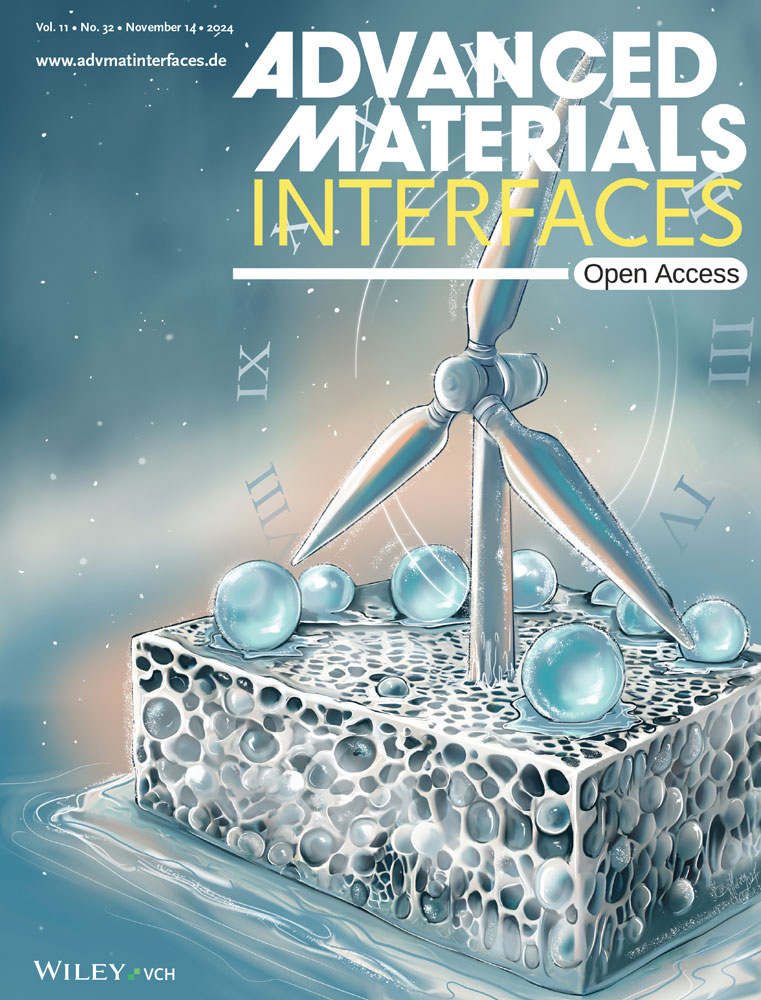
The use of smart polymer materials is rapidly expanding and has gradually become an essential need. This is particularly evident in separation applications, where smart separation is not only crucial and cost-effective but also offers high efficiency and performance. On the other hand, using fibrous membranes for separation has been widely recommended and is gaining increasing attention. The smart electrospun nanofibers, with a simple fabrication method, have a high surface-to-volume ratio and a large contact area, therefore provide a controlled contact area for the effective impact of stimuli. Numerous studies have been conducted on the use of smart polymer nanofibers, particularly for water and oil separation. This review mainly introduces stimuli-responsive electrospun polymer nanofibers for smart oil/water separation applications. Moreover, fundamental theories, separation mechanisms, and different stimuli, such as pH, gas, temperature, and light, that could be utilized to achieve intelligent oil/water separation are discussed. It is tried to provide a comprehensive guide for the development of smart polymeric surfaces for efficient oil/water filtration applications.
期刊介绍:
Advanced Materials Interfaces publishes top-level research on interface technologies and effects. Considering any interface formed between solids, liquids, and gases, the journal ensures an interdisciplinary blend of physics, chemistry, materials science, and life sciences. Advanced Materials Interfaces was launched in 2014 and received an Impact Factor of 4.834 in 2018.
The scope of Advanced Materials Interfaces is dedicated to interfaces and surfaces that play an essential role in virtually all materials and devices. Physics, chemistry, materials science and life sciences blend to encourage new, cross-pollinating ideas, which will drive forward our understanding of the processes at the interface.
Advanced Materials Interfaces covers all topics in interface-related research:
Oil / water separation,
Applications of nanostructured materials,
2D materials and heterostructures,
Surfaces and interfaces in organic electronic devices,
Catalysis and membranes,
Self-assembly and nanopatterned surfaces,
Composite and coating materials,
Biointerfaces for technical and medical applications.
Advanced Materials Interfaces provides a forum for topics on surface and interface science with a wide choice of formats: Reviews, Full Papers, and Communications, as well as Progress Reports and Research News.


 求助内容:
 应助结果提醒方式:


 京公网安备 11010802042870号


