[Construction of a prediction model for in-hospital major adverse cardiovascular events after emergency percutaneous coronary intervention in patients with ST-elevation myocardial infarction].
{"title":"[Construction of a prediction model for in-hospital major adverse cardiovascular events after emergency percutaneous coronary intervention in patients with ST-elevation myocardial infarction].","authors":"Z X Guo, Y H Mi, M K Xin, X N He","doi":"10.3760/cma.j.cn112148-20260825-00532","DOIUrl":null,"url":null,"abstract":"<p><p><b>Objective:</b> To construct a machine-learning-based prediction model for in-hospital major adverse cardiovascular events (MACE) among patients with ST-elevation myocardial infarction (STEMI) after emergency percutaneous coronary intervention (PCI). <b>Methods:</b> A total of 5829 patients with STEMI who underwent emergency PCI at the Emergency Critical Care Center of Beijing Anzhen Hospital, Capital Medical University, from January 1, 2015, to July 1, 2025, were enrolled. Patients were divided into the MACE group (524 cases) and the non-MACE group (5 305 cases) according to the occurrence of in-hospital MACE and were further divided into the training set (4 080 cases) and test set (1 749 cases) at a ratio of 7∶3. MACE included cardiogenic shock, severe heart failure, severe arrhythmia, acute stent thrombosis or recurrent acute myocardial infarction, non-fatal stroke, and cardiogenic death. Demographic data, lifestyle-related factors, past medical history, admission vital signs, laboratory test results within 24 hours after admission, echocardiographic parameters, Killip classification, and coronary interventional data were collected. Univariate analysis and Lasso regression were performed to select variables for model construction. Five machine-learning <i>algorithms,</i> including support vector machine (SVM), logistic regression, random forest, naive Bayes<i>,</i> and extreme gradient boosting (XGBoost)<i>,</i> were used to construct prediction models for in-hospital MACE. The optimal model was selected based on the area under the receiver-operating characteristic curve (<i>AUC-ROC</i>) and the area under the precision-recall curve (<i>AUPRC</i>). Calibration curve and decision curve analysis were used to assess the probability calibration and clinical net benefit of the model. SHapley Additive exPlanations (SHAP) analysis was used to interpret the contribution of each feature. <b>Results:</b> The patients were aged (58.1±12.3) years, and 4 875 (83.63%) were male. Fourteen variables were selected for model construction, including B-type natriuretic peptide, myoglobin, left ventricular ejection fraction, high-density lipoprotein cholesterol, high-sensitivity troponin I, triglycerides, triglyceride-glucose index, low-density lipoprotein cholesterol, glycated hemoglobin, creatine kinase-MB, smoking history, heart rate, Killip classification, and age. The XGBoost model yielded the best predictive performance, with an <i>AUC-ROC</i> of 0.992 and an <i>AUPRC</i> of 0.947, and exhibited favorable probability calibration and clinical net benefit. SHAP analysis demonstrated that the top five variables with the greatest contribution to model prediction were B-type natriuretic peptide, creatine kinase-MB, myoglobin, left ventricular ejection fraction, and triglyceride-glucose index. <b>Conclusions:</b> Machine-learning prediction models for in-hospital MACE after emergency PCI in patients with STEMI were successfully constructed and internally validated. The XGBoost model demonstrated good discriminative ability, probability calibration, and clinical net benefit and may serve as a reference for early in-hospital risk stratification and clinical decision-making in STEMI patients undergoing emergency PCI.</p>","PeriodicalId":38755,"journal":{"name":"中华心血管病杂志","volume":"54 10","pages":"1190-1197"},"PeriodicalIF":0.0000,"publicationDate":"2026-10-24","publicationTypes":"Journal Article","fieldsOfStudy":null,"isOpenAccess":false,"openAccessPdf":"","citationCount":"0","resultStr":null,"platform":"Semanticscholar","paperid":null,"PeriodicalName":"中华心血管病杂志","FirstCategoryId":"3","ListUrlMain":"https://doi.org/10.3760/cma.j.cn112148-20260825-00532","RegionNum":0,"RegionCategory":null,"ArticlePicture":[],"TitleCN":null,"AbstractTextCN":null,"PMCID":null,"EPubDate":"","PubModel":"","JCR":"Q3","JCRName":"Medicine","Score":null,"Total":0}
引用次数: 0
Abstract
Objective: To construct a machine-learning-based prediction model for in-hospital major adverse cardiovascular events (MACE) among patients with ST-elevation myocardial infarction (STEMI) after emergency percutaneous coronary intervention (PCI). Methods: A total of 5829 patients with STEMI who underwent emergency PCI at the Emergency Critical Care Center of Beijing Anzhen Hospital, Capital Medical University, from January 1, 2015, to July 1, 2025, were enrolled. Patients were divided into the MACE group (524 cases) and the non-MACE group (5 305 cases) according to the occurrence of in-hospital MACE and were further divided into the training set (4 080 cases) and test set (1 749 cases) at a ratio of 7∶3. MACE included cardiogenic shock, severe heart failure, severe arrhythmia, acute stent thrombosis or recurrent acute myocardial infarction, non-fatal stroke, and cardiogenic death. Demographic data, lifestyle-related factors, past medical history, admission vital signs, laboratory test results within 24 hours after admission, echocardiographic parameters, Killip classification, and coronary interventional data were collected. Univariate analysis and Lasso regression were performed to select variables for model construction. Five machine-learning algorithms, including support vector machine (SVM), logistic regression, random forest, naive Bayes, and extreme gradient boosting (XGBoost), were used to construct prediction models for in-hospital MACE. The optimal model was selected based on the area under the receiver-operating characteristic curve (AUC-ROC) and the area under the precision-recall curve (AUPRC). Calibration curve and decision curve analysis were used to assess the probability calibration and clinical net benefit of the model. SHapley Additive exPlanations (SHAP) analysis was used to interpret the contribution of each feature. Results: The patients were aged (58.1±12.3) years, and 4 875 (83.63%) were male. Fourteen variables were selected for model construction, including B-type natriuretic peptide, myoglobin, left ventricular ejection fraction, high-density lipoprotein cholesterol, high-sensitivity troponin I, triglycerides, triglyceride-glucose index, low-density lipoprotein cholesterol, glycated hemoglobin, creatine kinase-MB, smoking history, heart rate, Killip classification, and age. The XGBoost model yielded the best predictive performance, with an AUC-ROC of 0.992 and an AUPRC of 0.947, and exhibited favorable probability calibration and clinical net benefit. SHAP analysis demonstrated that the top five variables with the greatest contribution to model prediction were B-type natriuretic peptide, creatine kinase-MB, myoglobin, left ventricular ejection fraction, and triglyceride-glucose index. Conclusions: Machine-learning prediction models for in-hospital MACE after emergency PCI in patients with STEMI were successfully constructed and internally validated. The XGBoost model demonstrated good discriminative ability, probability calibration, and clinical net benefit and may serve as a reference for early in-hospital risk stratification and clinical decision-making in STEMI patients undergoing emergency PCI.
中华心血管病杂志Medicine-Cardiology and Cardiovascular Medicine
CiteScore
1.40
自引率
0.00%
发文量
10577
期刊介绍:
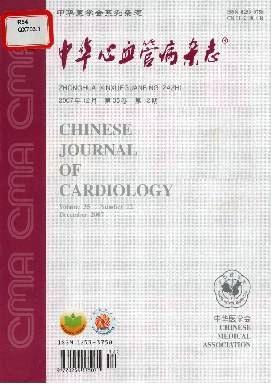
The Chinese Journal of Cardiology , established in February 1973, is one of the major academic medical journals sponsored by the Chinese Medical Association and a leading periodical in the field of cardiology in China. It specializes in cardiology and related disciplines with a readership of more than 25 000. The journal publishes editorials and guidelines as well as important original articles on clinical and experimental investigations, reflecting achievements made in China and promoting academic communication between domestic and foreign cardiologists. The journal includes the following columns: Editorials, Strategies, Comments, Clinical Investigations, Experimental Investigations, Epidemiology and Prevention, Lectures, Comprehensive Reviews, Continuing Medical Education, etc.

 求助内容:
 应助结果提醒方式:


 京公网安备 11010802042870号


