
Direct Evidence for Carbon Monoxide-to-Dioxin Conversion via Fly-Ash-Catalyzed Sequential Reactions in Incineration Flue Gas
IF 12.2
1区 环境科学与生态学
Q1 ENGINEERING, ENVIRONMENTAL
引用次数: 0
Abstract
The formation of polychlorinated dibenzo-p-dioxins and dibenzofurans (PCDD/Fs) in industrial thermal processes is traditionally attributed to solid carbon precursors via de novo synthesis. Carbon monoxide (CO), despite serving as an operational indicator of incomplete combustion, has not been directly implicated as a molecular carbon source for dioxin generation. Here, we provide definitive experimental and mechanistic evidence that CO can be catalytically converted into dioxins and dioxin-like compounds through a sequential reaction network mediated by fly ash. Using fixed-bed reactors packed with real fly ash, we isolate CO, H2O, and HCl as minimal reactants to reconstruct flue-gas chemistry. Transition metal species (Cu, Fe) in fly ash catalyze CO conversion via a coupled water–gas shift and Fischer–Tropsch-type process, generating a wide spectrum of aliphatic and aromatic hydrocarbons. Concurrently, fly ash mediates HCl oxidation to active Cl2, enabling chlorination of these intermediates into chlorobenzenes and chlorophenols, which subsequently evolve into polychlorinated biphenyls (PCBs), polychlorinated naphthalenes (PCNs), and ultimately PCDD/Fs. Notably, Cl4–8DD/F congeners account for >90% of the formed PCDD/Fs, consistent with de novo synthesis signatures. This work establishes a new mechanistic paradigm for dioxin generation and highlights CO emission control as a critical lever for mitigating toxic pollutant generation.

焚烧烟气中通过粉煤灰催化的顺序反应一氧化碳转化为二恶英的直接证据
工业热过程中多氯二苯并对二恶英和二苯并呋喃(PCDD/Fs)的形成传统上归因于通过从头合成的固体碳前体。一氧化碳(CO),尽管作为不完全燃烧的操作指标,并没有直接牵连为二恶英产生的分子碳源。在此,我们提供了明确的实验和机理证据,证明CO可以通过粉煤灰介导的顺序反应网络催化转化为二恶英和二恶英样化合物。使用固定床反应器填充真正的飞灰,我们分离CO, H2O和HCl作为最小的反应物来重建烟气化学。粉煤灰中的过渡金属(Cu, Fe)通过水气耦合变换和费托过程催化CO转化,生成广谱的脂肪烃和芳烃。同时,粉煤灰将HCl氧化为活性Cl2,使这些中间体氯化生成氯苯和氯酚,继而演变成多氯联苯(PCBs)、多氯萘(PCNs),最终形成PCDD/Fs。值得注意的是,Cl4-8DD /F同系物占形成的PCDD/F的90%,与从头合成特征一致。这项工作为二恶英的产生建立了一个新的机制范式,并强调了CO排放控制是减轻有毒污染物产生的关键杠杆。
本文章由计算机程序翻译,如有差异,请以英文原文为准。
求助全文
约1分钟内获得全文
求助全文
来源期刊
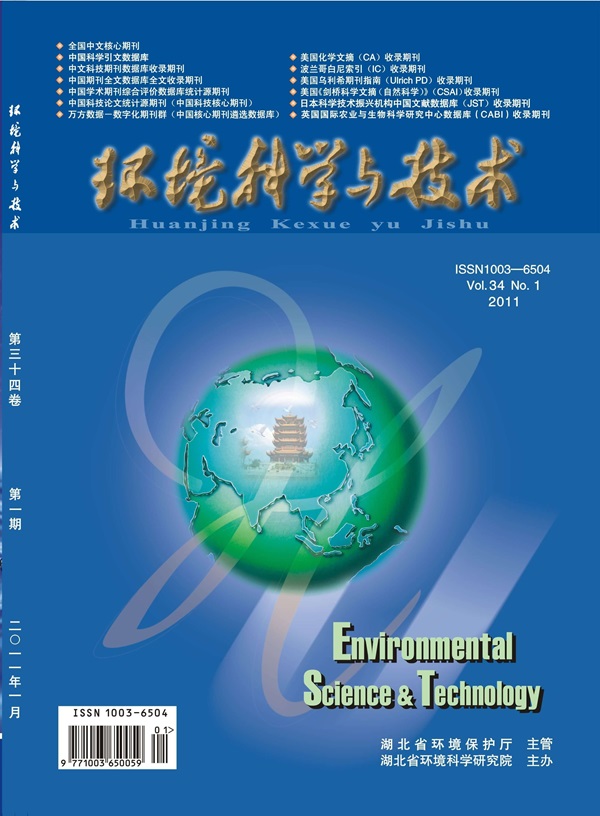
环境科学与技术
环境科学-工程:环境
CiteScore
17.50
自引率
9.60%
发文量
12359
审稿时长
2.8 months
期刊介绍:
Environmental Science & Technology (ES&T) is a co-sponsored academic and technical magazine by the Hubei Provincial Environmental Protection Bureau and the Hubei Provincial Academy of Environmental Sciences.
Environmental Science & Technology (ES&T) holds the status of Chinese core journals, scientific papers source journals of China, Chinese Science Citation Database source journals, and Chinese Academic Journal Comprehensive Evaluation Database source journals. This publication focuses on the academic field of environmental protection, featuring articles related to environmental protection and technical advancements.
 求助内容:
 应助结果提醒方式:


 京公网安备 11010802042870号


