
Establishing an Air Health Index for Predicting the Risk of Acute Myocardial Infarction Onset Associated with Air Pollution and Ambient Temperature
IF 12.2
1区 环境科学与生态学
Q1 ENGINEERING, ENVIRONMENTAL
引用次数: 0
Abstract
Air pollutants and ambient temperature are important cardiovascular disease determinants, and communicating their overall risk is important for cardiovascular patient management. We developed a composite Air Health Index (AHI) by linking high-resolution exposure data with 1,207,625 acute myocardial infarction (AMI) cases across 325 Chinese cities. The AHI for AMI aggregates excess morbidity risks from fine particulate matter, nitrogen dioxide, ozone, and ambient temperature into a normalized scale (0–10+). Compared with existing metrics, the AHI for AMI showed better predictive performance for AMI onset than the Air Quality Index (AQI) and Air Quality Health Index (AQHI). Each interquartile range increase in the AHI for AMI was associated with a 5.97% (95% confidence interval [CI]: 5.32%–6.63%) increase in AMI incidence, surpassing the AQHI (3.33%, 95% CI: 2.93%–3.72%) and AQI (2.04%, 95% CI: 1.73%–2.35%). The AHI for AMI showed a nearly linear exposure–response relationship with no evident threshold and accounted for 8,534 per 100,000 AMI cases nationally. These associations were consistently validated in an independent external data set, supporting the robustness and generalizability of the index. In conclusion, the AHI for AMI provides an integrative and practical framework for assessing environmental health risks, offering actionable guidance for cardiovascular patient management.

建立预测空气污染和环境温度与急性心肌梗死发病风险的空气健康指数
空气污染物和环境温度是心血管疾病的重要决定因素,传达它们的总体风险对心血管患者管理很重要。通过将高分辨率暴露数据与中国325个城市的1,207,625例急性心肌梗死(AMI)病例联系起来,我们开发了复合空气健康指数(AHI)。AMI的AHI将细颗粒物、二氧化氮、臭氧和环境温度的过度发病风险汇总到一个标准化的尺度(0-10 +)。与现有指标相比,AMI的AHI比空气质量指数(AQI)和空气质量健康指数(AQHI)对AMI发病的预测效果更好。AMI的AHI每增加一个四分位数范围,AMI发病率增加5.97%(95%可信区间[CI]: 5.32% ~ 6.63%),超过AQHI (3.33%, 95% CI: 2.93% ~ 3.72%)和AQI (2.04%, 95% CI: 1.73% ~ 2.35%)。AMI的AHI表现出接近线性的暴露-反应关系,没有明显的阈值,在全国AMI病例中占8,534 / 100,000。这些关联在独立的外部数据集中得到了一致的验证,支持了该指数的稳健性和普遍性。总之,AMI的AHI为评估环境健康风险提供了一个综合实用的框架,为心血管患者的管理提供了可操作的指导。
本文章由计算机程序翻译,如有差异,请以英文原文为准。
求助全文
约1分钟内获得全文
求助全文
来源期刊
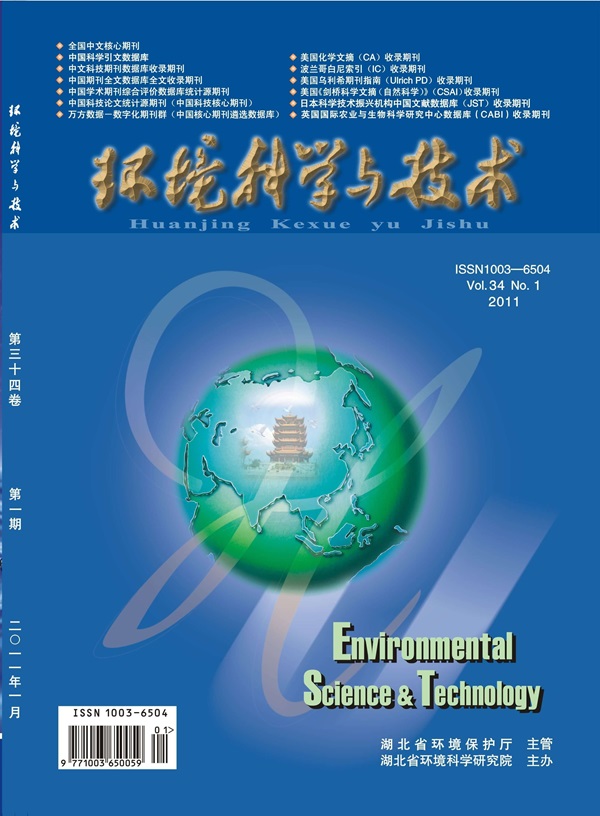
环境科学与技术
环境科学-工程:环境
CiteScore
17.50
自引率
9.60%
发文量
12359
审稿时长
2.8 months
期刊介绍:
Environmental Science & Technology (ES&T) is a co-sponsored academic and technical magazine by the Hubei Provincial Environmental Protection Bureau and the Hubei Provincial Academy of Environmental Sciences.
Environmental Science & Technology (ES&T) holds the status of Chinese core journals, scientific papers source journals of China, Chinese Science Citation Database source journals, and Chinese Academic Journal Comprehensive Evaluation Database source journals. This publication focuses on the academic field of environmental protection, featuring articles related to environmental protection and technical advancements.
 求助内容:
 应助结果提醒方式:


 京公网安备 11010802042870号


