Bevan S. Whitehead, Bittu Chandra, William W. Brennessel, Brandon R. Barnett
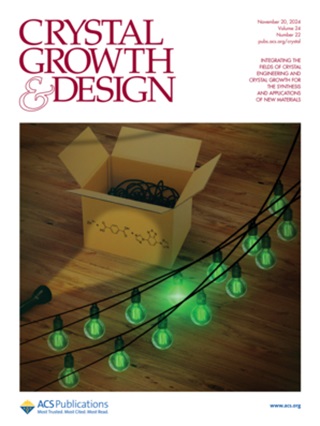
{"title":"Analyzing the Impact of Sorbent Fluorophilicity on the Adsorption of Tetrafluoromethane in a Metal−Organic Framework","authors":"Bevan S. Whitehead, Bittu Chandra, William W. Brennessel, Brandon R. Barnett","doi":"10.1021/acs.cgd.6c01097","DOIUrl":null,"url":null,"abstract":"<p>Perfluorinated and highly fluorinated organic molecules exhibit fluorophilic behavior, or a preference for partitioning with fluorinated phases over lipophilic or hydrophilic phases. Fluorophilic interactions leverage local charge separations that arise from polarized C−F bonds. For larger perfluorinated molecules, the cumulative strength of these interactions can drive selective partitioning with fluorophilic surfaces, such as those within a porous sorbent. However, it is presently unclear whether tetrafluoromethane (CF<sub>4</sub>), the smallest perfluorocarbon and a potent greenhouse gas, can engage appreciably in fluorophilic interactions with a highly fluorinated surface. Herein, we report a library of metal−organic frameworks (MOFs) that modulate the length of either fluorophilic or lipophilic alkyl chains tethered within mesoporous channels. Our approach relies on postsynthetic amine coordination, leaving the base framework constant across the series and allowing for comparisons that obviate large changes in pore shape or structure. We find that fluorophilic sorbent character is correlated to, at most, a modest increase in affinity for CF<sub>4</sub>. Very similar results are also observed for the non-fluorinated adsorbate methane (CH<sub>4</sub>). These findings have implications for the design of adsorptive separation schemes involving both fluorinated and non-fluorinated non-polar gases.</p>","PeriodicalId":34,"journal":{"name":"Crystal Growth & Design","volume":"26 20","pages":"8511–8521"},"PeriodicalIF":3.6000,"publicationDate":"2026-10-21","publicationTypes":"Journal Article","fieldsOfStudy":null,"isOpenAccess":false,"openAccessPdf":"","citationCount":"0","resultStr":null,"platform":"Semanticscholar","paperid":null,"PeriodicalName":"Crystal Growth & Design","FirstCategoryId":"92","ListUrlMain":"https://pubs.acs.org/doi/10.1021/acs.cgd.6c01097","RegionNum":2,"RegionCategory":"化学","ArticlePicture":[],"TitleCN":null,"AbstractTextCN":null,"PMCID":null,"EPubDate":"2026/10/2 0:00:00","PubModel":"Epub","JCR":"Q2","JCRName":"CHEMISTRY, MULTIDISCIPLINARY","Score":null,"Total":0}
引用次数: 0
Abstract
Perfluorinated and highly fluorinated organic molecules exhibit fluorophilic behavior, or a preference for partitioning with fluorinated phases over lipophilic or hydrophilic phases. Fluorophilic interactions leverage local charge separations that arise from polarized C−F bonds. For larger perfluorinated molecules, the cumulative strength of these interactions can drive selective partitioning with fluorophilic surfaces, such as those within a porous sorbent. However, it is presently unclear whether tetrafluoromethane (CF4), the smallest perfluorocarbon and a potent greenhouse gas, can engage appreciably in fluorophilic interactions with a highly fluorinated surface. Herein, we report a library of metal−organic frameworks (MOFs) that modulate the length of either fluorophilic or lipophilic alkyl chains tethered within mesoporous channels. Our approach relies on postsynthetic amine coordination, leaving the base framework constant across the series and allowing for comparisons that obviate large changes in pore shape or structure. We find that fluorophilic sorbent character is correlated to, at most, a modest increase in affinity for CF4. Very similar results are also observed for the non-fluorinated adsorbate methane (CH4). These findings have implications for the design of adsorptive separation schemes involving both fluorinated and non-fluorinated non-polar gases.
期刊介绍:
The aim of Crystal Growth & Design is to stimulate crossfertilization of knowledge among scientists and engineers working in the fields of crystal growth, crystal engineering, and the industrial application of crystalline materials.
Crystal Growth & Design publishes theoretical and experimental studies of the physical, chemical, and biological phenomena and processes related to the design, growth, and application of crystalline materials. Synergistic approaches originating from different disciplines and technologies and integrating the fields of crystal growth, crystal engineering, intermolecular interactions, and industrial application are encouraged.

 求助内容:
 应助结果提醒方式:


 京公网安备 11010802042870号


