
Toward a Universal Switch for Microbial Granulation: Photogranule Insights to Advance Granular Wastewater Treatment
IF 12.2
1区 环境科学与生态学
Q1 ENGINEERING, ENVIRONMENTAL
引用次数: 0
Abstract
Microbial granulation─the assembly of self-immobilized, spheroidal aggregates─is a transformative approach for high-density, energy-efficient wastewater treatment. By concentrating biomass and enhancing resilience to influent fluctuations, granular systems significantly reduce infrastructure footprints. Current granular technologies primarily leverage upflow continuous reactors or sequencing-batch reactors, where specific external selection pressures are imposed to drive granulation. However, granulation remains neither spontaneous nor reliably predictable, and its fundamental biological drivers are poorly understood. Recent advances in photogranules challenge selection-pressure models. Photogranules form from activated-sludge inocula in hydrostatic and hydrodynamic batches and even in CSTRs where classical selection conditions are weak or absent. Moreover, the recurring emergence of compact spheroidal granules across diverse natural and laboratory systems suggests shared, intrinsic biological drivers rather than purely engineered causes. In this Perspective, we propose that the bacterial second messenger c-di-GMP functions as a conserved, Goldilocks-like molecular switch that integrates diverse environmental cues into a coordinated granulation program. We synthesize transcriptomic, biochemical, and genetic evidence and advance three hypotheses linking c-di-GMP signaling and community physiology to granulation. If validated, targeted modulation of c-di-GMP─by genetic or chemical means─could enable predictable, resilient granulation across a wider range of systems, including the continuous horizontal-flow basins that dominate wastewater infrastructure.

迈向微生物颗粒化的通用开关:光颗粒洞察推进颗粒废水处理
微生物造粒──自我固定的球状聚集体──是一种高密度、节能废水处理的变革性方法。通过集中生物量和增强对来水波动的适应能力,颗粒系统显著减少了基础设施的足迹。目前的造粒技术主要利用上流式连续反应器或顺序批式反应器,在这些反应器中施加特定的外部选择压力来驱动造粒。然而,肉芽形成既不是自发的,也不是可靠的可预测的,其基本的生物学驱动因素也知之甚少。光颗粒挑战选择压力模型的最新进展。在流体静力和流体动力的批次中,甚至在经典选择条件弱或不存在的cstr中,接种活性污泥也能形成光颗粒。此外,在不同的自然和实验室系统中反复出现的致密球形颗粒表明,共享的、内在的生物驱动因素,而不是纯粹的工程原因。从这个角度来看,我们提出细菌的第二信使c-di-GMP作为一个保守的,像金发姑娘一样的分子开关,将不同的环境信号整合到一个协调的造粒程序中。我们综合了转录组学、生化和遗传证据,并提出了将c-二- gmp信号和社区生理与肉芽形成联系起来的三个假设。如果得到验证,通过遗传或化学手段对c-di-GMP进行有针对性的调节,可以在更广泛的系统中实现可预测的、有弹性的造粒,包括主导污水基础设施的连续水平流盆地。
本文章由计算机程序翻译,如有差异,请以英文原文为准。
求助全文
约1分钟内获得全文
求助全文
来源期刊
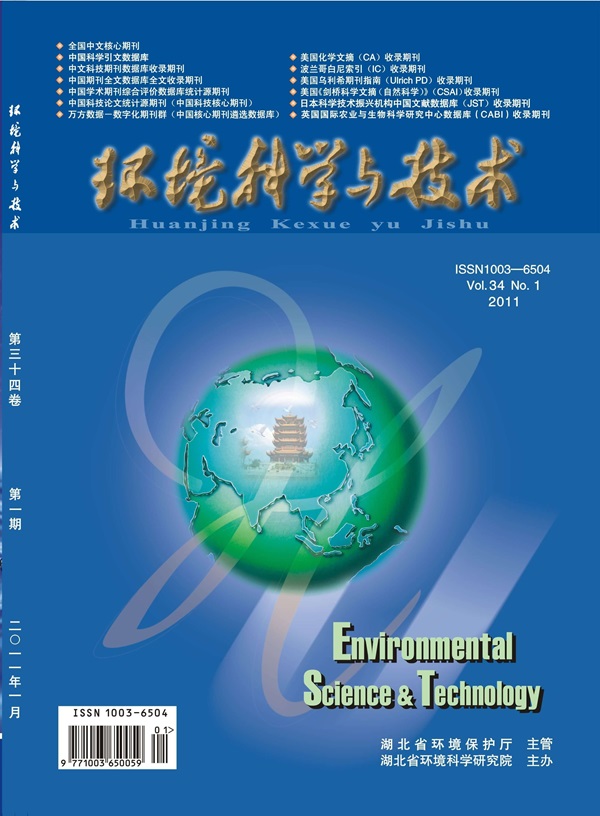
环境科学与技术
环境科学-工程:环境
CiteScore
17.50
自引率
9.60%
发文量
12359
审稿时长
2.8 months
期刊介绍:
Environmental Science & Technology (ES&T) is a co-sponsored academic and technical magazine by the Hubei Provincial Environmental Protection Bureau and the Hubei Provincial Academy of Environmental Sciences.
Environmental Science & Technology (ES&T) holds the status of Chinese core journals, scientific papers source journals of China, Chinese Science Citation Database source journals, and Chinese Academic Journal Comprehensive Evaluation Database source journals. This publication focuses on the academic field of environmental protection, featuring articles related to environmental protection and technical advancements.
 求助内容:
 应助结果提醒方式:


 京公网安备 11010802042870号


