
Role of Coordination Environment in the Oxidation of CrIII Aminocarboxylate Complexes by Hydrous Manganese Oxide
IF 12.2
1区 环境科学与生态学
Q1 ENGINEERING, ENVIRONMENTAL
引用次数: 0
Abstract
Oxidation of CrIII to CrVI by MnIII,IV (hydr)oxides plays an important role in controlling chromium mobility and toxicity in soils and sediments. Previous studies on CrIII oxidation by hydrous manganese oxide (HMO) reveals that reaction rates are highly sensitive to CrIII speciation, with aminocarboxylate complexes exhibiting reaction-induced Mn2+ accumulation at HMO surfaces, which progressively inhibits CrVI production. In this work, we compare initial CrVI production rates for well-defined, presynthesized CrIII–aminocarboxylate complexes with the chelating agents iminodiacetic acid (IDA), nitrilotriacetic acid (NTA), N-(2-hydroxyethyl)ethylenediaminetriacetic acid (HEDTA), and ethylenediaminetetraacetic acid (EDTA). Initial-rate measurements minimize the influence of secondary ligand oxidation, reaction-generated MnII, and associated changes in HMO reactivity, thereby providing a common basis for comparing the effects of CrIII coordination environment. Initial CrVI production rates spanned 8 orders of magnitude and generally decrease as aminocarboxylate ligands occupy a greater fraction of the CrIII coordination sphere and fewer coordination positions remain occupied by H2O and OH–. These results demonstrate that CrIII oxidation by Mn oxides is acutely sensitive to the CrIII coordination environment, with important implications for CrVI formation in natural and engineered systems. These findings demonstrate that meaningful prediction of CrVI formation requires explicit consideration of CrIII speciation.

配位环境在水氧化锰氧化CrIII氨基羧酸配合物中的作用
MnIII、IV(氢)氧化物将CrIII氧化为CrVI在控制铬在土壤和沉积物中的迁移和毒性方面起着重要作用。先前对水合氧化锰(HMO)氧化CrIII的研究表明,反应速率对CrIII的形成高度敏感,氨基羧酸配合物在HMO表面表现出反应诱导的Mn2+积累,从而逐渐抑制CrVI的产生。在这项工作中,我们比较了与螯合剂亚胺二乙酸(IDA)、硝基三乙酸(NTA)、N-(2-羟乙基)乙二胺三乙酸(HEDTA)和乙二胺四乙酸(EDTA)的明确预合成的criii -氨基羧酸配合物的初始CrVI产率。初始速率测量最大限度地减少了次级配体氧化、反应产生的MnII和相关的HMO反应性变化的影响,从而为比较第三期配位环境的影响提供了一个共同的基础。CrVI的初始生成速率跨越了8个数量级,并且随着氨基羧酸配体占据CrIII配位球的更大比例以及H2O和OH -占据的更少配位,CrVI的初始生成速率普遍降低。这些结果表明,锰氧化物氧化CrIII对CrIII配位环境非常敏感,这对自然和工程系统中CrVI的形成具有重要意义。这些发现表明,有意义的CrVI形成预测需要明确考虑中区填海第三期工程的物种形成。
本文章由计算机程序翻译,如有差异,请以英文原文为准。
求助全文
约1分钟内获得全文
求助全文
来源期刊
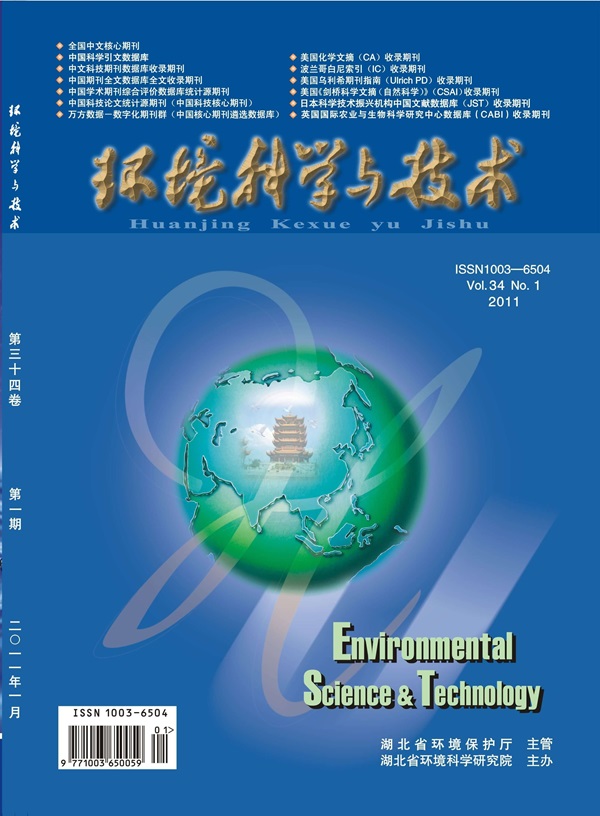
环境科学与技术
环境科学-工程:环境
CiteScore
17.50
自引率
9.60%
发文量
12359
审稿时长
2.8 months
期刊介绍:
Environmental Science & Technology (ES&T) is a co-sponsored academic and technical magazine by the Hubei Provincial Environmental Protection Bureau and the Hubei Provincial Academy of Environmental Sciences.
Environmental Science & Technology (ES&T) holds the status of Chinese core journals, scientific papers source journals of China, Chinese Science Citation Database source journals, and Chinese Academic Journal Comprehensive Evaluation Database source journals. This publication focuses on the academic field of environmental protection, featuring articles related to environmental protection and technical advancements.
 求助内容:
 应助结果提醒方式:


 京公网安备 11010802042870号


