
Analysis of the Potential Mediating Role of Plasma Proteins in the Association Between Air Pollution Exposure and Lung Cancer Risk Among Ever-Smokers
IF 12.2
1区 环境科学与生态学
Q1 ENGINEERING, ENVIRONMENTAL
引用次数: 0
Abstract
The biological mechanisms linking air pollution to lung carcinogenesis remain underexplored. This study aimed to identify key proteins and pathways involved in mediating the effects of air pollutants on lung cancer risk. We analyzed 95 matched lung cancer case–control pairs of ever-smokers with prediagnosis plasma protein profiles measured in the Cancer Prevention Study-II Nutrition Cohort. We assessed associations between protein levels and six individual air pollutants, air pollution mixture, and lung cancer risk, adjusting for confounders and multiple testing. We identified overlapping proteins and enriched pathways associated with both exposures and lung cancer risk, followed by an exploratory high-dimensional mediation analysis (HIMA) to investigate the potential mediating roles of proteins. Seventeen proteins were associated with both exposures and lung cancer, including CX3CL1, ADAM15, and CXCL17 (P < 0.05). HIMA identified six proteins, including CX3CL1 and CXCL17, as potential mediating proteins of individual pollutant-lung cancer associations (Bonferroni-corrected P < 0.05), while these findings did not remain significant when excluding cases diagnosed within one year of blood draw. The exploratory results suggest that proteins and pathways related to inflammatory chemokine signaling, immune modulation, and altered cell proliferation, migration, and survival may play significant roles in air pollution-lung cancer association among ever-smokers.

血浆蛋白在长期吸烟者空气污染暴露与肺癌风险之间的潜在中介作用分析
空气污染与肺癌发生之间的生物学机制仍未得到充分探讨。本研究旨在确定参与调节空气污染物对肺癌风险影响的关键蛋白质和途径。我们分析了95对匹配的肺癌病例对照,这些患者在癌症预防研究- ii营养队列中测量了诊断前血浆蛋白谱。我们评估了蛋白质水平与六种单独的空气污染物、空气污染混合物和肺癌风险之间的关系,并对混杂因素和多重测试进行了调整。我们确定了与暴露和肺癌风险相关的重叠蛋白和富集通路,随后进行了探索性高维中介分析(HIMA)来研究蛋白质的潜在中介作用。17种蛋白与暴露和肺癌均相关,包括CX3CL1、ADAM15和CXCL17 (P < 0.05)。HIMA鉴定出六种蛋白质,包括CX3CL1和CXCL17,作为个体污染物-肺癌关联的潜在介导蛋白(bonferroni校正P < 0.05),而当排除一年内抽血诊断的病例时,这些发现并不显着。探索性结果表明,与炎症趋化因子信号、免疫调节和细胞增殖、迁移和存活改变相关的蛋白质和途径可能在空气污染-肺癌与长期吸烟者之间的关联中发挥重要作用。
本文章由计算机程序翻译,如有差异,请以英文原文为准。
求助全文
约1分钟内获得全文
求助全文
来源期刊
环境科学与技术
环境科学-工程:环境
CiteScore
17.50
自引率
9.60%
发文量
12359
审稿时长
2.8 months
期刊介绍:
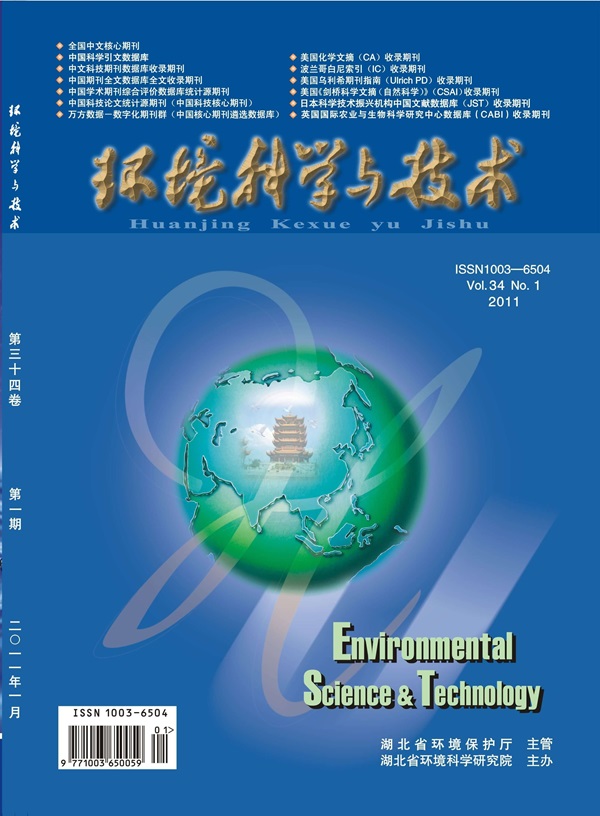
Environmental Science & Technology (ES&T) is a co-sponsored academic and technical magazine by the Hubei Provincial Environmental Protection Bureau and the Hubei Provincial Academy of Environmental Sciences.
Environmental Science & Technology (ES&T) holds the status of Chinese core journals, scientific papers source journals of China, Chinese Science Citation Database source journals, and Chinese Academic Journal Comprehensive Evaluation Database source journals. This publication focuses on the academic field of environmental protection, featuring articles related to environmental protection and technical advancements.
 求助内容:
 应助结果提醒方式:


 京公网安备 11010802042870号


