
Photoinduced Plasmon‐Polariton Mediated Energy Storage
IF 6.8
2区 物理与天体物理
Q1 MATERIALS SCIENCE, MULTIDISCIPLINARY
引用次数: 0
Abstract
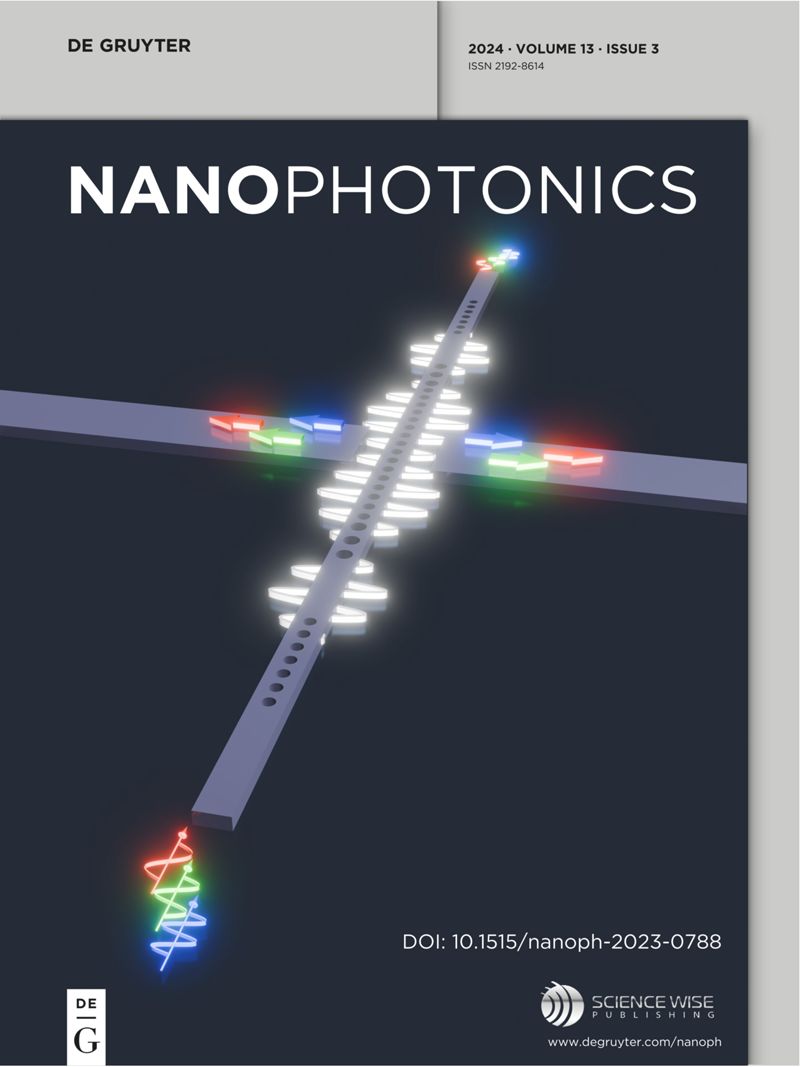
ABSTRACT Development of new means of remotely induced energy storage is important for varied applications, including minimization of energy loss and heat effects in computation devices, solar energy generation, and data transmission. Here, we demonstrate a new concept by which photoinduced energy storage is facilitated through plasmon‐polariton generation, propagation, and supercapacitor charging. Specifically, we designed a simple nano‐device, allowing conversion of photonic energy into plasmons, transmitting the plasmons over micrometer‐scale distances, and storing the energy in nano‐supercapacitors. The new platform may potentially minimize heat‐associated energy loss in computer circuitry and data processors, as energy is transmitted optically rather than electronically and thus it does not experience electrical resistivity. Moreover, the concept of photoinduced plasmonic mode that serves as an intermediary for electromagnetic energy transfer that charges supercapacitor, may theoretically be used to form the basis for a new “plasmonic solar cell” technology comprising simple and readily fabricated in‐plane modules which do not require expensive semiconductor materials or complex fabrication schemes encountered in photovoltaic cells.光致等离子体-极化子介导的能量存储
远程诱导能量存储的新手段的发展对于各种应用都很重要,包括最小化计算设备中的能量损失和热效应,太阳能发电和数据传输。在这里,我们展示了一个新的概念,通过等离子激元-极化子的产生,传播和超级电容器充电来促进光致能量存储。具体来说,我们设计了一个简单的纳米器件,可以将光子能量转换成等离子体,在微米尺度的距离上传输等离子体,并将能量存储在纳米超级电容器中。新平台可能会最大限度地减少计算机电路和数据处理器中与热相关的能量损失,因为能量是通过光学而不是电子传输的,因此它不会经历电阻率。此外,光致等离子体模式的概念作为给超级电容器充电的电磁能量转移的中介,理论上可以用来形成一种新的“等离子体太阳能电池”技术的基础,该技术包括简单且易于制造的平面内模块,不需要昂贵的半导体材料或光伏电池中遇到的复杂制造方案。
本文章由计算机程序翻译,如有差异,请以英文原文为准。
求助全文
约1分钟内获得全文
求助全文
来源期刊
Nanophotonics
NANOSCIENCE & NANOTECHNOLOGY-MATERIALS SCIENCE, MULTIDISCIPLINARY
CiteScore
13.50
自引率
6.70%
发文量
358
审稿时长
7 weeks
期刊介绍:
Nanophotonics, published in collaboration with Sciencewise, is a prestigious journal that showcases recent international research results, notable advancements in the field, and innovative applications. It is regarded as one of the leading publications in the realm of nanophotonics and encompasses a range of article types including research articles, selectively invited reviews, letters, and perspectives.
The journal specifically delves into the study of photon interaction with nano-structures, such as carbon nano-tubes, nano metal particles, nano crystals, semiconductor nano dots, photonic crystals, tissue, and DNA. It offers comprehensive coverage of the most up-to-date discoveries, making it an essential resource for physicists, engineers, and material scientists.
 求助内容:
 应助结果提醒方式:


 京公网安备 11010802042870号


