{"title":"ΔNp63α‑mediated regulation of tumor‑associated genes and pathways in hepatocellular carcinoma progression.","authors":"Xiaowen Lin, Anghui Peng, Min Zhang, Xinyang Yu","doi":"10.3892/mmr.2026.14040","DOIUrl":null,"url":null,"abstract":"<p><p>ΔNp63α is key in cellular development and epithelial tumors; however, its role in hepatocellular carcinoma (HCC) remains unclear. In the present study, the oncogenic role and molecular functions of ΔNp63α in HCC were investigated. Analysis of The Cancer Genome Atlas revealed an association between p63 expression and patient survival. ΔNp63α overexpression in SNU387 cells notably enhanced cell proliferation and migration, supporting its role in promoting aggressive HCC phenotypes. Transcriptome analysis revealed extensive ΔNp63α‑associated transcriptional changes, with differentially expressed genes enriched in tumor‑associated processes, including 'Wnt signaling pathway', 'Notch signaling pathway', 'cell adhesion molecules' and 'extracellular matrix organization'. Chromatin immunoprecipitation sequencing revealed widespread ΔNp63α binding in promoter‑proximal and ‑distal regulatory regions, suggesting potential involvement in transcriptional regulation through both proximal and distal genomic elements. ΔNp63α upregulation was also associated with increased CCCTC‑binding factor (CTCF) occupancy near the promoters of tumor‑associated genes and these gained CTCF sites were enriched for p63 motifs. Collectively, the present findings identified ΔNp63α as an oncogenic regulator of HCC and suggest that it may regulate tumor‑associated gene programs through coordinated proximal and distal chromatin regulatory mechanisms.</p>","PeriodicalId":18818,"journal":{"name":"Molecular medicine reports","volume":"34 6","pages":""},"PeriodicalIF":5.0000,"publicationDate":"2026-12-01","publicationTypes":"Journal Article","fieldsOfStudy":null,"isOpenAccess":false,"openAccessPdf":"https://www.ncbi.nlm.nih.gov/pmc/articles/PMC13691337/pdf/","citationCount":"0","resultStr":null,"platform":"Semanticscholar","paperid":null,"PeriodicalName":"Molecular medicine reports","FirstCategoryId":"3","ListUrlMain":"https://doi.org/10.3892/mmr.2026.14040","RegionNum":3,"RegionCategory":"医学","ArticlePicture":[],"TitleCN":null,"AbstractTextCN":null,"PMCID":null,"EPubDate":"2026/10/16 0:00:00","PubModel":"Epub","JCR":"Q2","JCRName":"MEDICINE, RESEARCH & EXPERIMENTAL","Score":null,"Total":0}
引用次数: 0
Abstract
ΔNp63α is key in cellular development and epithelial tumors; however, its role in hepatocellular carcinoma (HCC) remains unclear. In the present study, the oncogenic role and molecular functions of ΔNp63α in HCC were investigated. Analysis of The Cancer Genome Atlas revealed an association between p63 expression and patient survival. ΔNp63α overexpression in SNU387 cells notably enhanced cell proliferation and migration, supporting its role in promoting aggressive HCC phenotypes. Transcriptome analysis revealed extensive ΔNp63α‑associated transcriptional changes, with differentially expressed genes enriched in tumor‑associated processes, including 'Wnt signaling pathway', 'Notch signaling pathway', 'cell adhesion molecules' and 'extracellular matrix organization'. Chromatin immunoprecipitation sequencing revealed widespread ΔNp63α binding in promoter‑proximal and ‑distal regulatory regions, suggesting potential involvement in transcriptional regulation through both proximal and distal genomic elements. ΔNp63α upregulation was also associated with increased CCCTC‑binding factor (CTCF) occupancy near the promoters of tumor‑associated genes and these gained CTCF sites were enriched for p63 motifs. Collectively, the present findings identified ΔNp63α as an oncogenic regulator of HCC and suggest that it may regulate tumor‑associated gene programs through coordinated proximal and distal chromatin regulatory mechanisms.
期刊介绍:
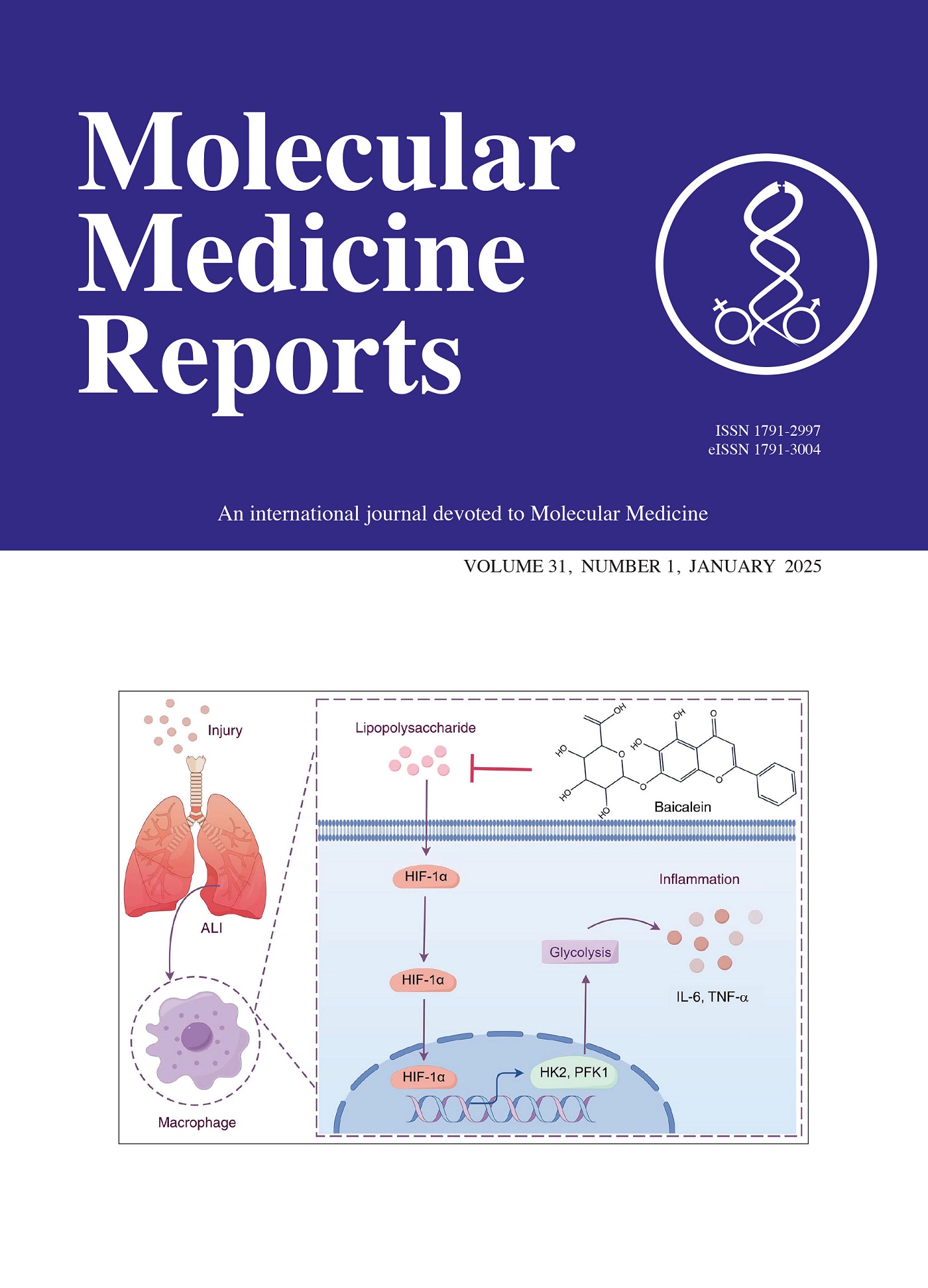
Molecular Medicine Reports is a monthly, peer-reviewed journal available in print and online, that includes studies devoted to molecular medicine, underscoring aspects including pharmacology, pathology, genetics, neurosciences, infectious diseases, molecular cardiology and molecular surgery. In vitro and in vivo studies of experimental model systems pertaining to the mechanisms of a variety of diseases offer researchers the necessary tools and knowledge with which to aid the diagnosis and treatment of human diseases.

 求助内容:
 应助结果提醒方式:


 京公网安备 11010802042870号


