Xiangdong Yu, Kihyun Kim, Beomseok Cha, Hyun-Uk Kim, Jinsoo Park, Thanh Mien Nguyen, Jaebum Choo
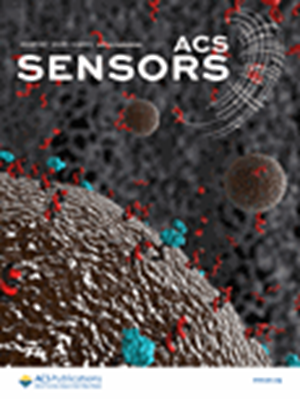
{"title":"Microfluidic Focusing of Heterogeneous Bacterial Immunocomplexes for Reproducible SERS Immunoassays.","authors":"Xiangdong Yu, Kihyun Kim, Beomseok Cha, Hyun-Uk Kim, Jinsoo Park, Thanh Mien Nguyen, Jaebum Choo","doi":"10.1021/acssensors.6c03516","DOIUrl":null,"url":null,"abstract":"<p><p>Magnetic bead-based surface-enhanced Raman scattering (SERS) immunoassays enable sensitive and multiplexed bacterial detection. However, bacterial targets form heterogeneous magnetic bead-bacterium-SERS nanotag immunocomplexes that vary in size, morphology, and nanotag loading. In static capillary-based measurements, different numbers of heterogeneous immunocomplexes are therefore located within the laser focal volume at each measurement position, resulting in large signal fluctuations and poor measurement reproducibility. In this study, we developed an elasto-inertial microfluidic platform that enables three-dimensional focusing of bacterial immunocomplexes for reproducible quantitative SERS measurements. Bacterial immunocomplexes suspended in 0.5% (w/v) poly(ethylene oxide) were focused near the center of a straight microchannel and continuously passed through a fixed Raman measurement region. High-speed imaging and cross-sectional Raman mapping confirmed central focusing of the immunocomplexes in both the lateral and vertical directions. Compared with static capillary-based measurements, the coefficient of variation decreased from 41.17% to 7.85% for Staphylococcus aureus and from 64.62% to 6.42% for Pseudomonas aeruginosa. The corresponding R2 values increased from 0.857 to 0.985 and from 0.680 to 0.971, respectively. The corresponding limits of detection were 2.32 × 10⁴ CFU/mL for Staphylococcus aureus and 8.50 × 10⁴ CFU/mL for Pseudomonas aeruginosa. The same focusing strategy was further applied to simultaneous detection of the two bacterial targets using spectrally distinguishable Raman reporters. These results demonstrate that three-dimensional elasto-inertial focusing provides an effective approach for improving the reproducibility of quantitative single- and multiplex bacterial SERS immunoassays.</p>","PeriodicalId":24,"journal":{"name":"ACS Sensors","volume":" ","pages":""},"PeriodicalIF":10.9000,"publicationDate":"2026-10-15","publicationTypes":"Journal Article","fieldsOfStudy":null,"isOpenAccess":false,"openAccessPdf":"","citationCount":"0","resultStr":null,"platform":"Semanticscholar","paperid":null,"PeriodicalName":"ACS Sensors","FirstCategoryId":"92","ListUrlMain":"https://doi.org/10.1021/acssensors.6c03516","RegionNum":1,"RegionCategory":"化学","ArticlePicture":[],"TitleCN":null,"AbstractTextCN":null,"PMCID":null,"EPubDate":"","PubModel":"","JCR":"Q1","JCRName":"CHEMISTRY, ANALYTICAL","Score":null,"Total":0}
引用次数: 0
Abstract
Magnetic bead-based surface-enhanced Raman scattering (SERS) immunoassays enable sensitive and multiplexed bacterial detection. However, bacterial targets form heterogeneous magnetic bead-bacterium-SERS nanotag immunocomplexes that vary in size, morphology, and nanotag loading. In static capillary-based measurements, different numbers of heterogeneous immunocomplexes are therefore located within the laser focal volume at each measurement position, resulting in large signal fluctuations and poor measurement reproducibility. In this study, we developed an elasto-inertial microfluidic platform that enables three-dimensional focusing of bacterial immunocomplexes for reproducible quantitative SERS measurements. Bacterial immunocomplexes suspended in 0.5% (w/v) poly(ethylene oxide) were focused near the center of a straight microchannel and continuously passed through a fixed Raman measurement region. High-speed imaging and cross-sectional Raman mapping confirmed central focusing of the immunocomplexes in both the lateral and vertical directions. Compared with static capillary-based measurements, the coefficient of variation decreased from 41.17% to 7.85% for Staphylococcus aureus and from 64.62% to 6.42% for Pseudomonas aeruginosa. The corresponding R2 values increased from 0.857 to 0.985 and from 0.680 to 0.971, respectively. The corresponding limits of detection were 2.32 × 10⁴ CFU/mL for Staphylococcus aureus and 8.50 × 10⁴ CFU/mL for Pseudomonas aeruginosa. The same focusing strategy was further applied to simultaneous detection of the two bacterial targets using spectrally distinguishable Raman reporters. These results demonstrate that three-dimensional elasto-inertial focusing provides an effective approach for improving the reproducibility of quantitative single- and multiplex bacterial SERS immunoassays.
期刊介绍:
ACS Sensors is a peer-reviewed research journal that focuses on the dissemination of new and original knowledge in the field of sensor science, particularly those that selectively sense chemical or biological species or processes. The journal covers a broad range of topics, including but not limited to biosensors, chemical sensors, gas sensors, intracellular sensors, single molecule sensors, cell chips, and microfluidic devices. It aims to publish articles that address conceptual advances in sensing technology applicable to various types of analytes or application papers that report on the use of existing sensing concepts in new ways or for new analytes.

 求助内容:
 应助结果提醒方式:


 京公网安备 11010802042870号


