Rafael Villamil Carreón, M. Meyyappan, Siva Kumar Krishnan
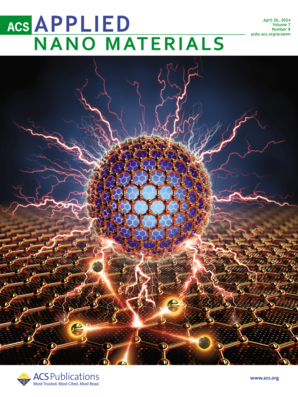
{"title":"Recent Advances in Printing of SERS Substrates","authors":"Rafael Villamil Carreón, M. Meyyappan, Siva Kumar Krishnan","doi":"10.1021/acsanm.6c03305","DOIUrl":null,"url":null,"abstract":"<p>Detection of trace chemicals, heavy metals, biomolecules, explosives, and threats such as nerve agents and narcotics is a challenging task. The selection criteria for candidate technology include sensitive detection capability with ultra-low limits of detection, unambiguous selectivity, and a portable, field-deployable platform. Surface enhanced Raman spectroscopy (SERS) has emerged as a highly useful and proven method to meet the detection requirements. The usually weak Raman signal due to small cross-sections of most analytes is amplified sufficiently in SERS for implementation in practical systems. This amplification is enabled by sufficiently close metallic nanostructures placed on a backup material, called a SERS substrate. The current bottleneck to widespread practical implementation of SERS is the lack of reliable substrates at reasonable prices, as elaborate schemes are needed to prepare the desired nanofeatures to achieve the SERS enhancement. An ideal SERS substrate must have a high density of hot spots over the active detection area, a high enhancement factor uniformly across the active area, and reproducible results with fabrication amenable to large-scale manufacturing that can result in low cost. Direct write printing of metallic nanoparticles on paper and other flexible substrates as well as rigid substrates such as silicon and glass has been emerging as a viable technique to meet the above requirements. This article presents a detailed review of printed SERS substrates and their applications, along with the operating principles.</p>","PeriodicalId":6,"journal":{"name":"ACS Applied Nano Materials","volume":"9 41","pages":"19113–19133"},"PeriodicalIF":5.8000,"publicationDate":"2026-10-16","publicationTypes":"Journal Article","fieldsOfStudy":null,"isOpenAccess":false,"openAccessPdf":"","citationCount":"0","resultStr":null,"platform":"Semanticscholar","paperid":null,"PeriodicalName":"ACS Applied Nano Materials","FirstCategoryId":"88","ListUrlMain":"https://pubs.acs.org/doi/10.1021/acsanm.6c03305","RegionNum":2,"RegionCategory":"材料科学","ArticlePicture":[],"TitleCN":null,"AbstractTextCN":null,"PMCID":null,"EPubDate":"2026/10/5 0:00:00","PubModel":"Epub","JCR":"Q2","JCRName":"MATERIALS SCIENCE, MULTIDISCIPLINARY","Score":null,"Total":0}
引用次数: 0
Abstract
Detection of trace chemicals, heavy metals, biomolecules, explosives, and threats such as nerve agents and narcotics is a challenging task. The selection criteria for candidate technology include sensitive detection capability with ultra-low limits of detection, unambiguous selectivity, and a portable, field-deployable platform. Surface enhanced Raman spectroscopy (SERS) has emerged as a highly useful and proven method to meet the detection requirements. The usually weak Raman signal due to small cross-sections of most analytes is amplified sufficiently in SERS for implementation in practical systems. This amplification is enabled by sufficiently close metallic nanostructures placed on a backup material, called a SERS substrate. The current bottleneck to widespread practical implementation of SERS is the lack of reliable substrates at reasonable prices, as elaborate schemes are needed to prepare the desired nanofeatures to achieve the SERS enhancement. An ideal SERS substrate must have a high density of hot spots over the active detection area, a high enhancement factor uniformly across the active area, and reproducible results with fabrication amenable to large-scale manufacturing that can result in low cost. Direct write printing of metallic nanoparticles on paper and other flexible substrates as well as rigid substrates such as silicon and glass has been emerging as a viable technique to meet the above requirements. This article presents a detailed review of printed SERS substrates and their applications, along with the operating principles.
期刊介绍:
ACS Applied Nano Materials is an interdisciplinary journal publishing original research covering all aspects of engineering, chemistry, physics and biology relevant to applications of nanomaterials. The journal is devoted to reports of new and original experimental and theoretical research of an applied nature that integrate knowledge in the areas of materials, engineering, physics, bioscience, and chemistry into important applications of nanomaterials.

 求助内容:
 应助结果提醒方式:


 京公网安备 11010802042870号


