{"title":"Influence of ligand denticity and molecular size on surface ligand packing of CdSe/CdS quantum dots: an FTIR-based comparative analysis.","authors":"Naoki Chihara, Kunisato Kuroi, Minkyo Jung, Fumihiko Fujii","doi":"10.1039/d6na00490c","DOIUrl":null,"url":null,"abstract":"<p><p>Semiconductor quantum dots (QDs) are fluorescent nanoparticles widely used in life science research and optoelectronic applications. For aqueous applications, QDs are commonly solubilized using hydrophilic thiol ligands, including bidentate dithiol compounds. The surface ligand packing density is a key parameter for their use in various applications, such as fluorescence imaging and biosensing, because it influences nanoparticle stability, self-assembly, and interactions with biological environments. However, ligand densities on the surfaces of water-solubilized QDs are difficult to quantify. In this study, we systematically investigated the effects of ligand size and denticity on surface packing using CdSe/CdS QDs functionalized with four hydrophilic thiol ligands: glutathione and an artificial heptapeptide as monodentate models, and dithiothreitol and dihydrolipoic acid as bidentate ligands. The surface ligand densities were comparatively evaluated using infrared (IR) spectroscopy. Although the absolute values of the ligand densities appeared to be overestimated, clear systematic trends were observed: larger or bidentate ligands exhibited lower packing densities. These trends are consistent with steric hindrance and restricted rotational freedom, as supported by geometrical analysis, indicating that bidentate ligands likely adopt extended conformations on the QD surface. These results demonstrate how molecular size and denticity govern ligand packing on aqueous QDs. Despite concerns over Cd toxicity, CdSe-based QDs remain valuable model systems for QD research. The present findings may also provide a useful framework for investigating ligand packing in more environmentally benign QD systems.</p>","PeriodicalId":18806,"journal":{"name":"Nanoscale Advances","volume":" ","pages":""},"PeriodicalIF":6.3000,"publicationDate":"2026-10-01","publicationTypes":"Journal Article","fieldsOfStudy":null,"isOpenAccess":false,"openAccessPdf":"https://www.ncbi.nlm.nih.gov/pmc/articles/PMC13659299/pdf/","citationCount":"0","resultStr":null,"platform":"Semanticscholar","paperid":null,"PeriodicalName":"Nanoscale Advances","FirstCategoryId":"88","ListUrlMain":"https://doi.org/10.1039/d6na00490c","RegionNum":3,"RegionCategory":"材料科学","ArticlePicture":[],"TitleCN":null,"AbstractTextCN":null,"PMCID":null,"EPubDate":"","PubModel":"","JCR":"Q2","JCRName":"CHEMISTRY, MULTIDISCIPLINARY","Score":null,"Total":0}
引用次数: 0
Abstract
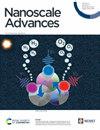
Semiconductor quantum dots (QDs) are fluorescent nanoparticles widely used in life science research and optoelectronic applications. For aqueous applications, QDs are commonly solubilized using hydrophilic thiol ligands, including bidentate dithiol compounds. The surface ligand packing density is a key parameter for their use in various applications, such as fluorescence imaging and biosensing, because it influences nanoparticle stability, self-assembly, and interactions with biological environments. However, ligand densities on the surfaces of water-solubilized QDs are difficult to quantify. In this study, we systematically investigated the effects of ligand size and denticity on surface packing using CdSe/CdS QDs functionalized with four hydrophilic thiol ligands: glutathione and an artificial heptapeptide as monodentate models, and dithiothreitol and dihydrolipoic acid as bidentate ligands. The surface ligand densities were comparatively evaluated using infrared (IR) spectroscopy. Although the absolute values of the ligand densities appeared to be overestimated, clear systematic trends were observed: larger or bidentate ligands exhibited lower packing densities. These trends are consistent with steric hindrance and restricted rotational freedom, as supported by geometrical analysis, indicating that bidentate ligands likely adopt extended conformations on the QD surface. These results demonstrate how molecular size and denticity govern ligand packing on aqueous QDs. Despite concerns over Cd toxicity, CdSe-based QDs remain valuable model systems for QD research. The present findings may also provide a useful framework for investigating ligand packing in more environmentally benign QD systems.

 求助内容:
 应助结果提醒方式:


 京公网安备 11010802042870号


