Yi Gao, Ziyan Zhang, Qiang Lu, Jinjuan Cheng, Chaoqiang Liu, Xueping Gan
{"title":"Effect of Yttrium on the Seawater Corrosion Resistance of Cu–15Ni–8Sn Alloy","authors":"Yi Gao, Ziyan Zhang, Qiang Lu, Jinjuan Cheng, Chaoqiang Liu, Xueping Gan","doi":"10.1007/s12540-025-02191-4","DOIUrl":null,"url":null,"abstract":"<div><p>The Cu–15Ni–8Sn alloy is widely utilized in marine applications due to its excellent mechanical strength, thermal conductivity, and resistance to seawater and microbiologically influenced corrosion. The addition of yttrium (Y) to the Cu–15Ni–8Sn alloy has been shown to refine the grain structure and enhance mechanical properties, however, its effects on corrosion resistance remain unclear. In this study, the corrosion behavior of a Cu–15Ni–8Sn–0.2Y alloy, fabricated via powder metallurgy, was systematically investigated to assess the influence of Y on seawater corrosion resistance. Multi-scale characterization techniques, including scanning electron microscopy (SEM), X-ray diffraction (XRD), X-ray photoelectron spectroscopy (XPS), and electrochemical testing, were employed. After 30 days of immersion in seawater, the measured corrosion rates for Cu–15Ni–8Sn–0.2Y and Cu–15Ni–8Sn alloys were 0.00416 and 0.00498 mm/year, respectively. The Cu–15Ni–8Sn–0.2Y alloy exhibited the lowest corrosion rate, indicating its superior corrosion resistance. Analysis of the corrosion products revealed the presence of metal oxides, including Cu<sub>2</sub>O, CuO, NiO, SnO<sub>2</sub>, and Y<sub>2</sub>O<sub>3</sub>. The incorporation of Y promoted the formation of Y<sub>2</sub>O<sub>3</sub>, which contributed to the development of a denser and more protective passivation film. This film effectively inhibited the adsorption of chloride ions (Cl<sup>−</sup>), thereby enhancing the overall corrosion resistance of the alloy.</p><h3>Graphical Abstract</h3><div><figure><div><div><picture><source><img></source></picture></div></div></figure></div></div>","PeriodicalId":703,"journal":{"name":"Metals and Materials International","volume":"32 11","pages":"3714 - 3728"},"PeriodicalIF":4.5000,"publicationDate":"2026-05-19","publicationTypes":"Journal Article","fieldsOfStudy":null,"isOpenAccess":false,"openAccessPdf":"","citationCount":"0","resultStr":null,"platform":"Semanticscholar","paperid":null,"PeriodicalName":"Metals and Materials International","FirstCategoryId":"88","ListUrlMain":"https://link.springer.com/article/10.1007/s12540-025-02191-4","RegionNum":3,"RegionCategory":"材料科学","ArticlePicture":[],"TitleCN":null,"AbstractTextCN":null,"PMCID":null,"EPubDate":"","PubModel":"","JCR":"Q2","JCRName":"MATERIALS SCIENCE, MULTIDISCIPLINARY","Score":null,"Total":0}
引用次数: 0
Abstract
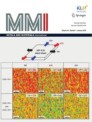
The Cu–15Ni–8Sn alloy is widely utilized in marine applications due to its excellent mechanical strength, thermal conductivity, and resistance to seawater and microbiologically influenced corrosion. The addition of yttrium (Y) to the Cu–15Ni–8Sn alloy has been shown to refine the grain structure and enhance mechanical properties, however, its effects on corrosion resistance remain unclear. In this study, the corrosion behavior of a Cu–15Ni–8Sn–0.2Y alloy, fabricated via powder metallurgy, was systematically investigated to assess the influence of Y on seawater corrosion resistance. Multi-scale characterization techniques, including scanning electron microscopy (SEM), X-ray diffraction (XRD), X-ray photoelectron spectroscopy (XPS), and electrochemical testing, were employed. After 30 days of immersion in seawater, the measured corrosion rates for Cu–15Ni–8Sn–0.2Y and Cu–15Ni–8Sn alloys were 0.00416 and 0.00498 mm/year, respectively. The Cu–15Ni–8Sn–0.2Y alloy exhibited the lowest corrosion rate, indicating its superior corrosion resistance. Analysis of the corrosion products revealed the presence of metal oxides, including Cu2O, CuO, NiO, SnO2, and Y2O3. The incorporation of Y promoted the formation of Y2O3, which contributed to the development of a denser and more protective passivation film. This film effectively inhibited the adsorption of chloride ions (Cl−), thereby enhancing the overall corrosion resistance of the alloy.
期刊介绍:
Metals and Materials International publishes original papers and occasional critical reviews on all aspects of research and technology in materials engineering: physical metallurgy, materials science, and processing of metals and other materials. Emphasis is placed on those aspects of the science of materials that are concerned with the relationships among the processing, structure and properties (mechanical, chemical, electrical, electrochemical, magnetic and optical) of materials. Aspects of processing include the melting, casting, and fabrication with the thermodynamics, kinetics and modeling.

 求助内容:
 应助结果提醒方式:


 京公网安备 11010802042870号


