Micro-nano composite structures resembling water strider legs constructed from polyoxometalates for efficient solar-driven interfacial evaporation and crude oil recovery
Sihang Cheng, Yanchun Liu, Yuhan Liu, Die Lu, Cuimei Liu, Xiuli Wang, Yangguang Li
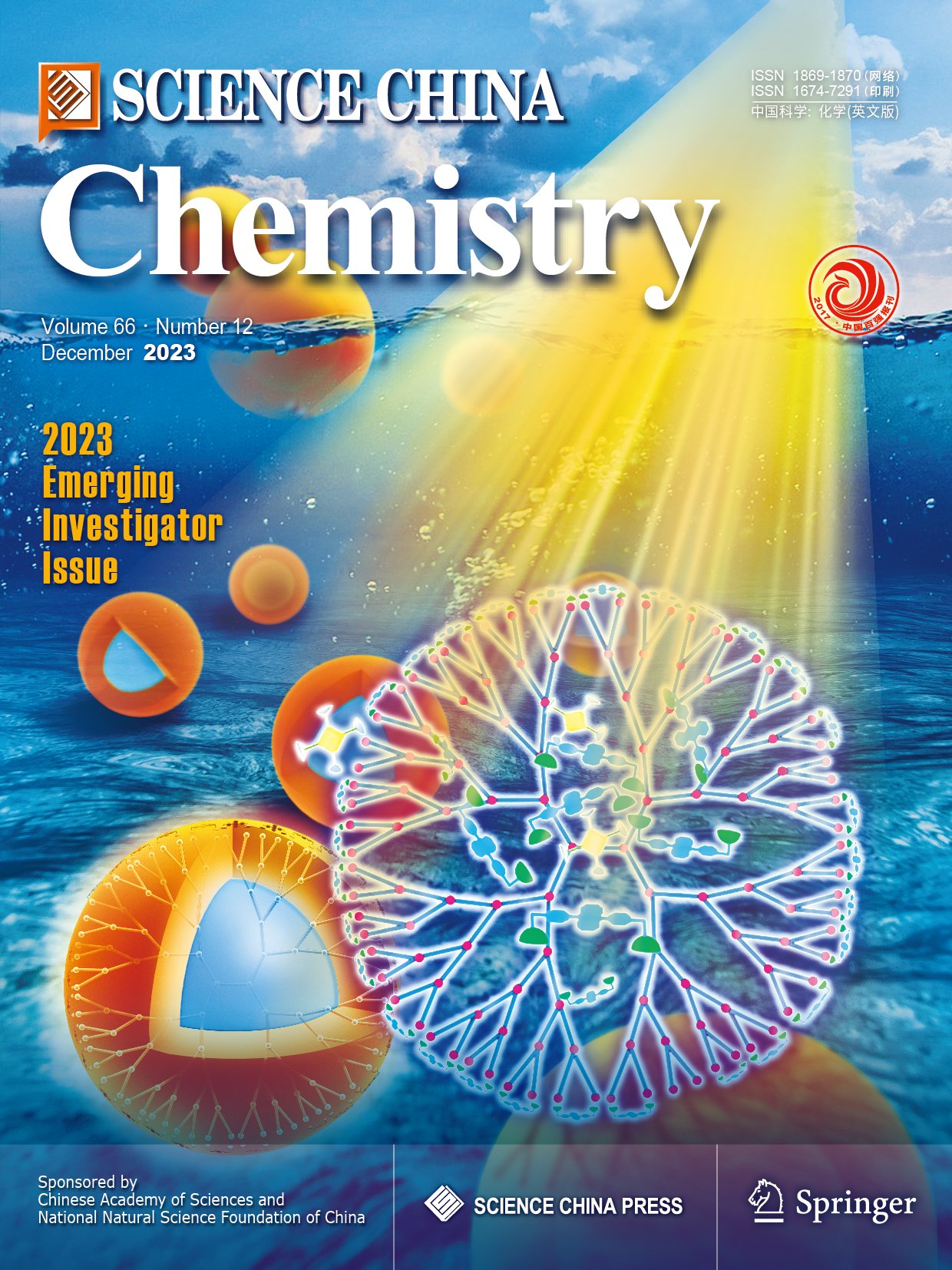
{"title":"Micro-nano composite structures resembling water strider legs constructed from polyoxometalates for efficient solar-driven interfacial evaporation and crude oil recovery","authors":"Sihang Cheng, Yanchun Liu, Yuhan Liu, Die Lu, Cuimei Liu, Xiuli Wang, Yangguang Li","doi":"10.1007/s11426-026-3739-0","DOIUrl":null,"url":null,"abstract":"<div><p>Emerging solar photothermal technologies demonstrate significant potential for addressing global freshwater and energy shortages, as well as for treating offshore oil spills. However, simultaneously optimizing hydrophilic and hydrophobic sites at material interfaces to balance the specific functions of efficient water evaporation, anti-saline fouling, and resistance to oily contaminants is a significant challenge. Herein, inspired by the dual properties of “hydrophobic gliding and hydrophilic moisture retention” observed in water strider legs, the competitive assembly of hydrophilic polyoxometalates and hydrophobic oleic acid anions with polyaniline cations is selected for fabricating an innovative heteropoly blue-polyaniline-oleic acid shell-encapsulated melamine foam evaporator (3D MF@HPB-PAn<sub><i>x</i></sub>-OA). Under electrostatic repulsion, hydrophilic HPB and hydrophobic OA respectively bind to the inner and outer sides of PAn, forming a unique spatially segregated structure. Hydrophilic HPB enhances evaporation performance by serving as an <i>in-situ</i> photothermal evaporation site. The hydrophobic armor layer enhances surface self-cleaning properties and the ability to treat oily substances. By leveraging its unique structural design and excellent mechanical stability, MF@HPB-PAn<sub>10</sub>-OA accomplished zero-liquid-discharge seawater treatment at an evaporation rate of 3.70 kg m<sup>−2</sup> h<sup>−1</sup> and achieved a recovery rate as high as 3.11 × 10<sup>4</sup> kg m<sup>−3</sup> h<sup>−1</sup> in highly challenging crude oil treatment scenarios.</p><div><figure><div><div><picture><source><img></source></picture></div></div></figure></div></div>","PeriodicalId":772,"journal":{"name":"Science China Chemistry","volume":"69 10","pages":"5714 - 5721"},"PeriodicalIF":9.8000,"publicationDate":"2026-09-03","publicationTypes":"Journal Article","fieldsOfStudy":null,"isOpenAccess":false,"openAccessPdf":"","citationCount":"0","resultStr":null,"platform":"Semanticscholar","paperid":null,"PeriodicalName":"Science China Chemistry","FirstCategoryId":"1","ListUrlMain":"https://link.springer.com/article/10.1007/s11426-026-3739-0","RegionNum":1,"RegionCategory":"化学","ArticlePicture":[],"TitleCN":null,"AbstractTextCN":null,"PMCID":null,"EPubDate":"","PubModel":"","JCR":"Q1","JCRName":"CHEMISTRY, MULTIDISCIPLINARY","Score":null,"Total":0}
引用次数: 0
Abstract
Emerging solar photothermal technologies demonstrate significant potential for addressing global freshwater and energy shortages, as well as for treating offshore oil spills. However, simultaneously optimizing hydrophilic and hydrophobic sites at material interfaces to balance the specific functions of efficient water evaporation, anti-saline fouling, and resistance to oily contaminants is a significant challenge. Herein, inspired by the dual properties of “hydrophobic gliding and hydrophilic moisture retention” observed in water strider legs, the competitive assembly of hydrophilic polyoxometalates and hydrophobic oleic acid anions with polyaniline cations is selected for fabricating an innovative heteropoly blue-polyaniline-oleic acid shell-encapsulated melamine foam evaporator (3D MF@HPB-PAnx-OA). Under electrostatic repulsion, hydrophilic HPB and hydrophobic OA respectively bind to the inner and outer sides of PAn, forming a unique spatially segregated structure. Hydrophilic HPB enhances evaporation performance by serving as an in-situ photothermal evaporation site. The hydrophobic armor layer enhances surface self-cleaning properties and the ability to treat oily substances. By leveraging its unique structural design and excellent mechanical stability, MF@HPB-PAn10-OA accomplished zero-liquid-discharge seawater treatment at an evaporation rate of 3.70 kg m−2 h−1 and achieved a recovery rate as high as 3.11 × 10⁴ kg m−3 h−1 in highly challenging crude oil treatment scenarios.
新兴的太阳能光热技术在解决全球淡水和能源短缺以及处理海上石油泄漏方面显示出巨大的潜力。然而,同时优化材料界面上的亲水和疏水位点,以平衡有效水分蒸发、抗盐垢和抗油性污染物的特定功能是一个重大挑战。在此,受在水跨腿中观察到的“疏水滑行和亲水保持”的双重特性的启发,选择亲水聚金属氧酸盐和疏水油酸阴离子与聚苯胺阳离子的竞争组装来制造创新的杂多蓝聚苯胺-油酸壳封装三聚氰胺泡沫蒸发器(3D MF@HPB-PAnx-OA)。在静电斥力作用下,亲水性HPB和疏水性OA分别与PAn的内外部结合,形成独特的空间分离结构。亲水性HPB作为原位光热蒸发场所,提高了蒸发性能。疏水护甲层提高了表面自清洁性能和处理油性物质的能力。凭借其独特的结构设计和优异的机械稳定性,MF@HPB-PAn10-OA在极具挑战性的原油处理场景中,以3.70 kg m−2 h−1的蒸发速率完成了零液体排放的海水处理,并实现了高达3.11 × 10⁴ kg m−3 h−1的回收率。
期刊介绍:
Science China Chemistry, co-sponsored by the Chinese Academy of Sciences and the National Natural Science Foundation of China and published by Science China Press, publishes high-quality original research in both basic and applied chemistry. Indexed by Science Citation Index, it is a premier academic journal in the field.
Categories of articles include:
Highlights. Brief summaries and scholarly comments on recent research achievements in any field of chemistry.
Perspectives. Concise reports on thelatest chemistry trends of interest to scientists worldwide, including discussions of research breakthroughs and interpretations of important science and funding policies.
Reviews. In-depth summaries of representative results and achievements of the past 5–10 years in selected topics based on or closely related to the research expertise of the authors, providing a thorough assessment of the significance, current status, and future research directions of the field.

 求助内容:
 应助结果提醒方式:


 京公网安备 11010802042870号


