{"title":"Unraveling the Hot Deformation Mechanisms and Dynamic Recrystallization Behavior of FeCoCrNiMn High-Entropy Alloy","authors":"Luhai Liao, Shengjie Zhou, Fengguang Li, Shang Dai, Muhammad Abubaker Khan","doi":"10.1007/s12540-025-02182-5","DOIUrl":null,"url":null,"abstract":"<div><p>The hot deformation behavior and dynamic recrystallization (DRX) mechanisms of an equiatomic FeCoCrNiMn high-entropy alloy (HEA) were thoroughly investigated via uniaxial hot compression tests conducted at temperatures ranging from 900 ℃ to 1200 °C and strain rates from 0.01 to 10 s<sup>−1</sup>. The flow stress behavior was accurately described by a constitutive model based on the Zener-Hollomon parameter, yielding an activation energy of 408 kJ/mol. Processing maps derived from the dynamic materials model (DMM) identified safe deformation domains (1000 ℃–1100 °C/0.01–0.1 s<sup>−1</sup> and 1200 °C/0.1 s<sup>−1</sup>) and instability regions characterized by low DRX fractions and strain localization. Microstructural analyses via EBSD and TEM revealed that discontinuous dynamic recrystallization (DDRX) dominated under most conditions, facilitated by twinning and necklace structure formation, while continuous dynamic recrystallization prevailed at high temperatures and low strain rates. A high density of annealing twin boundaries was observed, particularly under high-strain-rate conditions, which played a critical role in promoting DDRX nucleation. This work provides valuable insights into the DRX mechanisms and hot workability of FeCoCrNiMn HEA, serving as a guide for optimizing thermo-mechanical processing parameters to achieve superior mechanical properties and microstructural control.</p><h3>Graphical Abstract</h3><div><figure><div><div><picture><source><img></source></picture></div></div></figure></div></div>","PeriodicalId":703,"journal":{"name":"Metals and Materials International","volume":"32 11","pages":"3902 - 3920"},"PeriodicalIF":4.5000,"publicationDate":"2026-06-08","publicationTypes":"Journal Article","fieldsOfStudy":null,"isOpenAccess":false,"openAccessPdf":"","citationCount":"0","resultStr":null,"platform":"Semanticscholar","paperid":null,"PeriodicalName":"Metals and Materials International","FirstCategoryId":"88","ListUrlMain":"https://link.springer.com/article/10.1007/s12540-025-02182-5","RegionNum":3,"RegionCategory":"材料科学","ArticlePicture":[],"TitleCN":null,"AbstractTextCN":null,"PMCID":null,"EPubDate":"","PubModel":"","JCR":"Q2","JCRName":"MATERIALS SCIENCE, MULTIDISCIPLINARY","Score":null,"Total":0}
引用次数: 0
Abstract
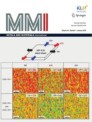
The hot deformation behavior and dynamic recrystallization (DRX) mechanisms of an equiatomic FeCoCrNiMn high-entropy alloy (HEA) were thoroughly investigated via uniaxial hot compression tests conducted at temperatures ranging from 900 ℃ to 1200 °C and strain rates from 0.01 to 10 s−1. The flow stress behavior was accurately described by a constitutive model based on the Zener-Hollomon parameter, yielding an activation energy of 408 kJ/mol. Processing maps derived from the dynamic materials model (DMM) identified safe deformation domains (1000 ℃–1100 °C/0.01–0.1 s−1 and 1200 °C/0.1 s−1) and instability regions characterized by low DRX fractions and strain localization. Microstructural analyses via EBSD and TEM revealed that discontinuous dynamic recrystallization (DDRX) dominated under most conditions, facilitated by twinning and necklace structure formation, while continuous dynamic recrystallization prevailed at high temperatures and low strain rates. A high density of annealing twin boundaries was observed, particularly under high-strain-rate conditions, which played a critical role in promoting DDRX nucleation. This work provides valuable insights into the DRX mechanisms and hot workability of FeCoCrNiMn HEA, serving as a guide for optimizing thermo-mechanical processing parameters to achieve superior mechanical properties and microstructural control.
期刊介绍:
Metals and Materials International publishes original papers and occasional critical reviews on all aspects of research and technology in materials engineering: physical metallurgy, materials science, and processing of metals and other materials. Emphasis is placed on those aspects of the science of materials that are concerned with the relationships among the processing, structure and properties (mechanical, chemical, electrical, electrochemical, magnetic and optical) of materials. Aspects of processing include the melting, casting, and fabrication with the thermodynamics, kinetics and modeling.

 求助内容:
 应助结果提醒方式:


 京公网安备 11010802042870号


