Jin-Bum Kim, Seon-Min Kim, In Gyeong Kim, Yong Bum Park, Se-Eun Shin
{"title":"Saccharin-Controlled Electrodeposition of Ultra-Thin Fe–Ni Foils for Low CTE","authors":"Jin-Bum Kim, Seon-Min Kim, In Gyeong Kim, Yong Bum Park, Se-Eun Shin","doi":"10.1007/s12540-025-02185-2","DOIUrl":null,"url":null,"abstract":"<div><p>The fine metal mask (FMM) used in OLED display manufacturing is a thin metallic sheet with precision holes that enable the deposition of diode materials exclusively onto sub-pixel areas. To prevent deformation and misalignment of the holes caused by heat generated during the RGB organic material deposition process, Invar sheets with a coefficient of thermal expansion (CTE) close to zero are employed. Currently, FMMs are fabricated by rolling to about 20 μm, but this top-down process cannot achieve thinner foils. Therefore, to realize next-generation UHD displays requiring FMMs below 10 μm, a bottom-up electrodeposition method is needed. Achieving both dimensional stability and a low CTE comparable to commercial Invar alloys in electrodeposited ultra-thin Invar sheets requires prolonged high-temperature heat treatment above 600 °C using thermomechanical processing. If the electrodeposited Invar alloy can achieve a homogeneous nanocrystalline microstructure in the as-deposited state, the required heat-treatment temperature and duration can be reduced, improving overall process efficiency. In this study, we investigated the effect of controlling saccharin, a key additive in the Fe–Ni electrolyte, on the microstructural evolution of ultra-thin electrodeposited Invar sheets. By regulating surface stress during electrodeposition, Fe and Ni ion diffusion was promoted, and the relationship between microstructural uniformity and CTE was systematically analyzed.</p><h3>Graphical Abstract</h3><div><figure><div><div><picture><source><img></source></picture></div></div></figure></div></div>","PeriodicalId":703,"journal":{"name":"Metals and Materials International","volume":"32 11","pages":"3776 - 3785"},"PeriodicalIF":4.5000,"publicationDate":"2026-06-08","publicationTypes":"Journal Article","fieldsOfStudy":null,"isOpenAccess":false,"openAccessPdf":"","citationCount":"0","resultStr":null,"platform":"Semanticscholar","paperid":null,"PeriodicalName":"Metals and Materials International","FirstCategoryId":"88","ListUrlMain":"https://link.springer.com/article/10.1007/s12540-025-02185-2","RegionNum":3,"RegionCategory":"材料科学","ArticlePicture":[],"TitleCN":null,"AbstractTextCN":null,"PMCID":null,"EPubDate":"","PubModel":"","JCR":"Q2","JCRName":"MATERIALS SCIENCE, MULTIDISCIPLINARY","Score":null,"Total":0}
引用次数: 0
Abstract
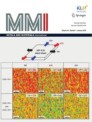
The fine metal mask (FMM) used in OLED display manufacturing is a thin metallic sheet with precision holes that enable the deposition of diode materials exclusively onto sub-pixel areas. To prevent deformation and misalignment of the holes caused by heat generated during the RGB organic material deposition process, Invar sheets with a coefficient of thermal expansion (CTE) close to zero are employed. Currently, FMMs are fabricated by rolling to about 20 μm, but this top-down process cannot achieve thinner foils. Therefore, to realize next-generation UHD displays requiring FMMs below 10 μm, a bottom-up electrodeposition method is needed. Achieving both dimensional stability and a low CTE comparable to commercial Invar alloys in electrodeposited ultra-thin Invar sheets requires prolonged high-temperature heat treatment above 600 °C using thermomechanical processing. If the electrodeposited Invar alloy can achieve a homogeneous nanocrystalline microstructure in the as-deposited state, the required heat-treatment temperature and duration can be reduced, improving overall process efficiency. In this study, we investigated the effect of controlling saccharin, a key additive in the Fe–Ni electrolyte, on the microstructural evolution of ultra-thin electrodeposited Invar sheets. By regulating surface stress during electrodeposition, Fe and Ni ion diffusion was promoted, and the relationship between microstructural uniformity and CTE was systematically analyzed.
期刊介绍:
Metals and Materials International publishes original papers and occasional critical reviews on all aspects of research and technology in materials engineering: physical metallurgy, materials science, and processing of metals and other materials. Emphasis is placed on those aspects of the science of materials that are concerned with the relationships among the processing, structure and properties (mechanical, chemical, electrical, electrochemical, magnetic and optical) of materials. Aspects of processing include the melting, casting, and fabrication with the thermodynamics, kinetics and modeling.

 求助内容:
 应助结果提醒方式:


 京公网安备 11010802042870号


