Sumaira Sadiq, Dain Choi, Tae-Yang Kwak, Tae-Jin Lee, Tea-Sung Jun
{"title":"Fundamentals and Applications of High Angular Resolution EBSD in Metallic Materials","authors":"Sumaira Sadiq, Dain Choi, Tae-Yang Kwak, Tae-Jin Lee, Tea-Sung Jun","doi":"10.1007/s12540-025-02187-0","DOIUrl":null,"url":null,"abstract":"<div><p>High angular resolution electron backscatter diffraction (HR-EBSD) represents a significant advancement over conventional EBSD, offering two orders of magnitude greater precision in measuring lattice strain and rotation. By replacing the Hough transform with a robust cross-correlation analysis of Kikuchi diffraction patterns, HR-EBSD achieves an angular resolution of approximately 0.0001 radians. This enhanced sensitivity enables the direct quantification of the elastic deformation gradient tensor, which can be decomposed to map residual stress fields with a precision of ~ 20 MPa and geometrically necessary dislocation (GND) densities with a noise floor as low as 10<sup>12</sup>/m<sup>2</sup>. This article reviews the fundamental principles of HR-EBSD, highlighting its key distinctions from conventional EBSD. It further explores its primary applications in metallic materials, including the detailed characterization of GND structures, the measurement of micro-scale residual stresses for fracture mechanics. Practical challenges and the theoretical underpinnings of strain and dislocation analysis are also discussed, establishing HR-EBSD as an indispensable tool for linking microstructural features to macroscopic mechanical behavior.</p><h3>Graphical Abstract</h3><div><figure><div><div><picture><source><img></source></picture></div></div></figure></div></div>","PeriodicalId":703,"journal":{"name":"Metals and Materials International","volume":"32 11","pages":"3639 - 3657"},"PeriodicalIF":4.5000,"publicationDate":"2026-06-05","publicationTypes":"Journal Article","fieldsOfStudy":null,"isOpenAccess":false,"openAccessPdf":"","citationCount":"0","resultStr":null,"platform":"Semanticscholar","paperid":null,"PeriodicalName":"Metals and Materials International","FirstCategoryId":"88","ListUrlMain":"https://link.springer.com/article/10.1007/s12540-025-02187-0","RegionNum":3,"RegionCategory":"材料科学","ArticlePicture":[],"TitleCN":null,"AbstractTextCN":null,"PMCID":null,"EPubDate":"","PubModel":"","JCR":"Q2","JCRName":"MATERIALS SCIENCE, MULTIDISCIPLINARY","Score":null,"Total":0}
引用次数: 0
Abstract
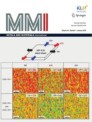
High angular resolution electron backscatter diffraction (HR-EBSD) represents a significant advancement over conventional EBSD, offering two orders of magnitude greater precision in measuring lattice strain and rotation. By replacing the Hough transform with a robust cross-correlation analysis of Kikuchi diffraction patterns, HR-EBSD achieves an angular resolution of approximately 0.0001 radians. This enhanced sensitivity enables the direct quantification of the elastic deformation gradient tensor, which can be decomposed to map residual stress fields with a precision of ~ 20 MPa and geometrically necessary dislocation (GND) densities with a noise floor as low as 1012/m2. This article reviews the fundamental principles of HR-EBSD, highlighting its key distinctions from conventional EBSD. It further explores its primary applications in metallic materials, including the detailed characterization of GND structures, the measurement of micro-scale residual stresses for fracture mechanics. Practical challenges and the theoretical underpinnings of strain and dislocation analysis are also discussed, establishing HR-EBSD as an indispensable tool for linking microstructural features to macroscopic mechanical behavior.
期刊介绍:
Metals and Materials International publishes original papers and occasional critical reviews on all aspects of research and technology in materials engineering: physical metallurgy, materials science, and processing of metals and other materials. Emphasis is placed on those aspects of the science of materials that are concerned with the relationships among the processing, structure and properties (mechanical, chemical, electrical, electrochemical, magnetic and optical) of materials. Aspects of processing include the melting, casting, and fabrication with the thermodynamics, kinetics and modeling.

 求助内容:
 应助结果提醒方式:


 京公网安备 11010802042870号


