Ahmad Ostovari Moghaddam, Seyedsaeed Mehrabi-Kalajahi, Ibrokhimi Ashurali Solizoda, Morteza Alizadeh, Alexei Vagov
{"title":"High Temperature Oxidation Resistance of Off-Stoichiometric (Ni39.6Co29.3Cr10Al15.8Ta3.3Nb2)98.5B1.5 Chemically Complex Intermetallic Alloy","authors":"Ahmad Ostovari Moghaddam, Seyedsaeed Mehrabi-Kalajahi, Ibrokhimi Ashurali Solizoda, Morteza Alizadeh, Alexei Vagov","doi":"10.1007/s12540-025-02184-3","DOIUrl":null,"url":null,"abstract":"<div><p>Off-stoichiometric boron-doped chemically complex intermetallic alloys (CCIMAs) have recently emerged as a new avenue for overcoming the low temperature brittleness of ordered superlattices. However, their behavior at high temperatures remains unexplored. In this study, a novel (Ni<sub>39.6</sub>Co<sub>29.3</sub>Cr<sub>10</sub>Al<sub>15.8</sub>Ta<sub>3.3</sub>Nb<sub>2</sub>)<sub>98.5</sub>B<sub>1.5</sub> CCIMA was prepared and its oxidation resistance over a wide temperature range (500 ℃ –950 °C) was studied. The sample exhibited a dual-phase microstructure consisting of ordered L1<sub>2</sub> grains and a disordered Cr-rich BCC phase at the grain boundaries. The CCIMA sample demonstrated outstanding oxidation resistance at 500 °C, 750 °C, and 950 °C, showing no signs of pest oxidation and exhibiting low mass gain rates of 8.05 × 10<sup>− 5</sup> mg<sup>2</sup>cm<sup>− 4</sup>h<sup>− 1</sup>, 8.97 × 10<sup>− 5</sup> mg<sup>2</sup>cm<sup>− 4</sup>h<sup>− 1</sup> and 5.39 × 10<sup>− 4</sup> mg<sup>2</sup>cm<sup>− 4</sup>h<sup>− 1</sup>, respectively. At temperatures above 700 °C, Al<sub>2</sub>O<sub>3</sub> and CrTaO<sub>4</sub> oxide layers formed on the surface, significantly hindering further oxidation of the sample. This study demonstrates how chemical composition can be exploited to synergistically develop protective oxide layers on the surface of CCIMAs.</p><h3>Graphical Abstract</h3><div><figure><div><div><picture><source><img></source></picture></div></div></figure></div></div>","PeriodicalId":703,"journal":{"name":"Metals and Materials International","volume":"32 11","pages":"3767 - 3775"},"PeriodicalIF":4.5000,"publicationDate":"2026-06-05","publicationTypes":"Journal Article","fieldsOfStudy":null,"isOpenAccess":false,"openAccessPdf":"","citationCount":"0","resultStr":null,"platform":"Semanticscholar","paperid":null,"PeriodicalName":"Metals and Materials International","FirstCategoryId":"88","ListUrlMain":"https://link.springer.com/article/10.1007/s12540-025-02184-3","RegionNum":3,"RegionCategory":"材料科学","ArticlePicture":[],"TitleCN":null,"AbstractTextCN":null,"PMCID":null,"EPubDate":"","PubModel":"","JCR":"Q2","JCRName":"MATERIALS SCIENCE, MULTIDISCIPLINARY","Score":null,"Total":0}
引用次数: 0
Abstract
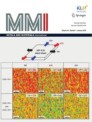
Off-stoichiometric boron-doped chemically complex intermetallic alloys (CCIMAs) have recently emerged as a new avenue for overcoming the low temperature brittleness of ordered superlattices. However, their behavior at high temperatures remains unexplored. In this study, a novel (Ni39.6Co29.3Cr10Al15.8Ta3.3Nb2)98.5B1.5 CCIMA was prepared and its oxidation resistance over a wide temperature range (500 ℃ –950 °C) was studied. The sample exhibited a dual-phase microstructure consisting of ordered L12 grains and a disordered Cr-rich BCC phase at the grain boundaries. The CCIMA sample demonstrated outstanding oxidation resistance at 500 °C, 750 °C, and 950 °C, showing no signs of pest oxidation and exhibiting low mass gain rates of 8.05 × 10− 5 mg2cm− 4h− 1, 8.97 × 10− 5 mg2cm− 4h− 1 and 5.39 × 10− 4 mg2cm− 4h− 1, respectively. At temperatures above 700 °C, Al2O3 and CrTaO4 oxide layers formed on the surface, significantly hindering further oxidation of the sample. This study demonstrates how chemical composition can be exploited to synergistically develop protective oxide layers on the surface of CCIMAs.
期刊介绍:
Metals and Materials International publishes original papers and occasional critical reviews on all aspects of research and technology in materials engineering: physical metallurgy, materials science, and processing of metals and other materials. Emphasis is placed on those aspects of the science of materials that are concerned with the relationships among the processing, structure and properties (mechanical, chemical, electrical, electrochemical, magnetic and optical) of materials. Aspects of processing include the melting, casting, and fabrication with the thermodynamics, kinetics and modeling.

 求助内容:
 应助结果提醒方式:


 京公网安备 11010802042870号


