{"title":"Antibacterial Cyclic Oligo(disulfide)s with Tunable Hydrophilicity Dictate Membrane Interactions and Distinct Metabolic Interference","authors":"Jia Guo, Siqi Zhang, Guangyuan Xu, Yaqi Tao, Zhibo Wang, Wei Zheng, Yingying Wang, Colin Bonduelle, Kun Chen, Xian Kong, Wen Tang","doi":"10.1021/acs.biomac.6c01277","DOIUrl":null,"url":null,"abstract":"<p>To combat drug-resistant bacteria, antimicrobial agents with tunable and multi-modal mechanisms are urgently needed. While membrane-disrupting polymers have been widely explored, precisely regulating their membrane interactions and downstream metabolic effects remains challenging. Here, using naturally occurring lipoic acid, we designed cationic cyclic oligo(disulfide)s <strong>(CCOs)</strong> that induce targeted membrane depolarization and trigger distinct downstream metabolic responses. <strong>CCOs</strong> exhibit species-specific killing mechanisms: membrane depolarization in <em>Staphylococcus aureus</em> and reactive oxygen species induction in <em>Escherichia coli</em>. The cationic-to-hydrophilic ratio governs both membrane interactions and metabolic regulation. Coarse-grained molecular dynamics simulations revealed that fully cationic <strong>CCO1</strong> adsorbs via electrostatic forces, whereas <strong>CCO2-64%</strong>, bearing partial hydrophilic groups, relies on a balance of electrostatic and van der Waals interactions, underlying its enhanced antibacterial selectivity. Transcriptomic analysis further showed that <strong>CCO1</strong> disrupts ribosome assembly and sulfur-containing amino acid metabolism, while <strong>CCO2-64%</strong> downregulates oxidoreductase activity and nitrogen metabolism. With favorable biosafety and potent efficacy against methicillin-resistant <em>S. aureus</em> in a murine cutaneous abscess model, <strong>CCOs</strong> represent a tunable antimicrobial system with considerable clinical translation potential.</p>","PeriodicalId":30,"journal":{"name":"Biomacromolecules","volume":"27 10","pages":"6682–6697"},"PeriodicalIF":5.9000,"publicationDate":"2026-10-12","publicationTypes":"Journal Article","fieldsOfStudy":null,"isOpenAccess":false,"openAccessPdf":"","citationCount":"0","resultStr":null,"platform":"Semanticscholar","paperid":null,"PeriodicalName":"Biomacromolecules","FirstCategoryId":"92","ListUrlMain":"https://pubs.acs.org/doi/10.1021/acs.biomac.6c01277","RegionNum":2,"RegionCategory":"化学","ArticlePicture":[],"TitleCN":null,"AbstractTextCN":null,"PMCID":null,"EPubDate":"2026/9/8 0:00:00","PubModel":"Epub","JCR":"Q1","JCRName":"BIOCHEMISTRY & MOLECULAR BIOLOGY","Score":null,"Total":0}
引用次数: 0
Abstract
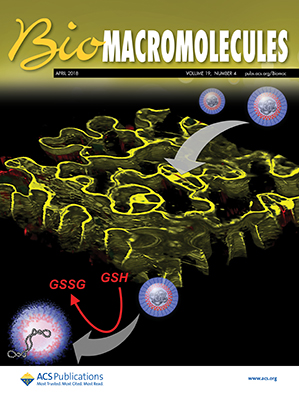
To combat drug-resistant bacteria, antimicrobial agents with tunable and multi-modal mechanisms are urgently needed. While membrane-disrupting polymers have been widely explored, precisely regulating their membrane interactions and downstream metabolic effects remains challenging. Here, using naturally occurring lipoic acid, we designed cationic cyclic oligo(disulfide)s (CCOs) that induce targeted membrane depolarization and trigger distinct downstream metabolic responses. CCOs exhibit species-specific killing mechanisms: membrane depolarization in Staphylococcus aureus and reactive oxygen species induction in Escherichia coli. The cationic-to-hydrophilic ratio governs both membrane interactions and metabolic regulation. Coarse-grained molecular dynamics simulations revealed that fully cationic CCO1 adsorbs via electrostatic forces, whereas CCO2-64%, bearing partial hydrophilic groups, relies on a balance of electrostatic and van der Waals interactions, underlying its enhanced antibacterial selectivity. Transcriptomic analysis further showed that CCO1 disrupts ribosome assembly and sulfur-containing amino acid metabolism, while CCO2-64% downregulates oxidoreductase activity and nitrogen metabolism. With favorable biosafety and potent efficacy against methicillin-resistant S. aureus in a murine cutaneous abscess model, CCOs represent a tunable antimicrobial system with considerable clinical translation potential.
期刊介绍:
Biomacromolecules is a leading forum for the dissemination of cutting-edge research at the interface of polymer science and biology. Submissions to Biomacromolecules should contain strong elements of innovation in terms of macromolecular design, synthesis and characterization, or in the application of polymer materials to biology and medicine.
Topics covered by Biomacromolecules include, but are not exclusively limited to: sustainable polymers, polymers based on natural and renewable resources, degradable polymers, polymer conjugates, polymeric drugs, polymers in biocatalysis, biomacromolecular assembly, biomimetic polymers, polymer-biomineral hybrids, biomimetic-polymer processing, polymer recycling, bioactive polymer surfaces, original polymer design for biomedical applications such as immunotherapy, drug delivery, gene delivery, antimicrobial applications, diagnostic imaging and biosensing, polymers in tissue engineering and regenerative medicine, polymeric scaffolds and hydrogels for cell culture and delivery.

 求助内容:
 应助结果提醒方式:


 京公网安备 11010802042870号


