Mengjia Shen, Xiaoxia Yao, Xiu Zhao, Yidan Gong, Libo Yang, Mengna Feng, Mengyuan Shao, Bing Wei, Hong Bu, Zhang Zhang
{"title":"ESR1 alterations in breast cancer: Mechanisms, detection, and therapeutic implications.","authors":"Mengjia Shen, Xiaoxia Yao, Xiu Zhao, Yidan Gong, Libo Yang, Mengna Feng, Mengyuan Shao, Bing Wei, Hong Bu, Zhang Zhang","doi":"10.1097/CM9.0000000000004327","DOIUrl":null,"url":null,"abstract":"<p><strong>Abstract: </strong>Endocrine therapy plays a central role in the treatment of hormone receptor-positive (HR+) breast cancer, but acquired resistance remains a major clinical challenge. Increasing evidence suggests that ESR1 alterations are key molecular events that maintain estrogen receptor (ER) signaling and drive endocrine treatment failure. In this review, we summarize the biological basis of ESR1/ERα signaling and place it within the broader context of the nuclear ER family, including the partially opposing role of ESR2/ERβ and its potential influence on the prognostic and predictive value of conventional ER/progesterone receptor (PR) status. We then discuss the main categories of ESR1 alterations in breast cancer, including ligand-binding domain (LBD) mutations, structural rearrangements/fusions, copy-number changes, and splice isoforms. Hotspot mutations such as Y537S and D538G cause ligand-independent receptor activation and are commonly detected after aromatase inhibitor exposure, supporting their central role in acquired endocrine resistance. ESR1 fusions, amplification, and isoform diversity further broaden the complexity of ER signaling through transcriptional reprogramming, bypass pathway activation, and nongenomic signaling. We also review the clinical application of circulating tumor DNA (ctDNA) in dynamic molecular monitoring and summarize current therapeutic advances, including oral selective ER degraders (SERDs), proteolysis-targeting chimera (PROTAC) ER degraders, and mechanism-based combination strategies targeting cyclin-dependent kinases 4/6 (CDK4/6), phosphoinositide 3-kinase (PI3K)-protein kinase B-mammalian target of rapamycin (mTOR), fibroblast growth factor receptor (FGFR), human epidermal growth factor receptor 2, and related pathways. Finally, we propose a stratified treatment framework that integrates alteration type, mutation subtype, ctDNA dynamics, treatment line, and coalterations to guide individualized therapy. Standardized molecular testing, real-time ctDNA surveillance, and next-generation ER-targeted therapies, together with a clearer understanding of the wider ER family, may provide new opportunities for precision treatment of endocrine-resistant breast cancer.</p>","PeriodicalId":10183,"journal":{"name":"Chinese Medical Journal","volume":" ","pages":""},"PeriodicalIF":9.1000,"publicationDate":"2026-10-12","publicationTypes":"Journal Article","fieldsOfStudy":null,"isOpenAccess":false,"openAccessPdf":"","citationCount":"0","resultStr":null,"platform":"Semanticscholar","paperid":null,"PeriodicalName":"Chinese Medical Journal","FirstCategoryId":"3","ListUrlMain":"https://doi.org/10.1097/CM9.0000000000004327","RegionNum":3,"RegionCategory":"医学","ArticlePicture":[],"TitleCN":null,"AbstractTextCN":null,"PMCID":null,"EPubDate":"","PubModel":"","JCR":"Q1","JCRName":"MEDICINE, GENERAL & INTERNAL","Score":null,"Total":0}
引用次数: 0
Abstract
Abstract: Endocrine therapy plays a central role in the treatment of hormone receptor-positive (HR+) breast cancer, but acquired resistance remains a major clinical challenge. Increasing evidence suggests that ESR1 alterations are key molecular events that maintain estrogen receptor (ER) signaling and drive endocrine treatment failure. In this review, we summarize the biological basis of ESR1/ERα signaling and place it within the broader context of the nuclear ER family, including the partially opposing role of ESR2/ERβ and its potential influence on the prognostic and predictive value of conventional ER/progesterone receptor (PR) status. We then discuss the main categories of ESR1 alterations in breast cancer, including ligand-binding domain (LBD) mutations, structural rearrangements/fusions, copy-number changes, and splice isoforms. Hotspot mutations such as Y537S and D538G cause ligand-independent receptor activation and are commonly detected after aromatase inhibitor exposure, supporting their central role in acquired endocrine resistance. ESR1 fusions, amplification, and isoform diversity further broaden the complexity of ER signaling through transcriptional reprogramming, bypass pathway activation, and nongenomic signaling. We also review the clinical application of circulating tumor DNA (ctDNA) in dynamic molecular monitoring and summarize current therapeutic advances, including oral selective ER degraders (SERDs), proteolysis-targeting chimera (PROTAC) ER degraders, and mechanism-based combination strategies targeting cyclin-dependent kinases 4/6 (CDK4/6), phosphoinositide 3-kinase (PI3K)-protein kinase B-mammalian target of rapamycin (mTOR), fibroblast growth factor receptor (FGFR), human epidermal growth factor receptor 2, and related pathways. Finally, we propose a stratified treatment framework that integrates alteration type, mutation subtype, ctDNA dynamics, treatment line, and coalterations to guide individualized therapy. Standardized molecular testing, real-time ctDNA surveillance, and next-generation ER-targeted therapies, together with a clearer understanding of the wider ER family, may provide new opportunities for precision treatment of endocrine-resistant breast cancer.
期刊介绍:
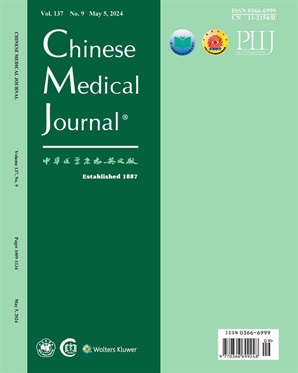
The Chinese Medical Journal (CMJ) is published semimonthly in English by the Chinese Medical Association, and is a peer reviewed general medical journal for all doctors, researchers, and health workers regardless of their medical specialty or type of employment. Established in 1887, it is the oldest medical periodical in China and is distributed worldwide. The journal functions as a window into China’s medical sciences and reflects the advances and progress in China’s medical sciences and technology. It serves the objective of international academic exchange. The journal includes Original Articles, Editorial, Review Articles, Medical Progress, Brief Reports, Case Reports, Viewpoint, Clinical Exchange, Letter,and News,etc. CMJ is abstracted or indexed in many databases including Biological Abstracts, Chemical Abstracts, Index Medicus/Medline, Science Citation Index (SCI), Current Contents, Cancerlit, Health Plan & Administration, Embase, Social Scisearch, Aidsline, Toxline, Biocommercial Abstracts, Arts and Humanities Search, Nuclear Science Abstracts, Water Resources Abstracts, Cab Abstracts, Occupation Safety & Health, etc. In 2007, the impact factor of the journal by SCI is 0.636, and the total citation is 2315.

 求助内容:
 应助结果提醒方式:


 京公网安备 11010802042870号


