Lucia B Varela, Joselyn Elizabeth Miño Zambrano, Brenda Maura Goncalves Costa, Guilherme Santos Marques da Silva, Camila Micaela Escobar Liquitay, Samanta Díaz Menai, Nicolás Meza, Luis I Garegnani
{"title":"Medical cannabis for the treatment of insomnia.","authors":"Lucia B Varela, Joselyn Elizabeth Miño Zambrano, Brenda Maura Goncalves Costa, Guilherme Santos Marques da Silva, Camila Micaela Escobar Liquitay, Samanta Díaz Menai, Nicolás Meza, Luis I Garegnani","doi":"10.1002/14651858.CD016216.pub2","DOIUrl":null,"url":null,"abstract":"<p><strong>Rationale: </strong>Insomnia is highly prevalent and associated with substantial individual and societal burden, while existing pharmacological treatments are limited by adverse effects and concerns about long-term use. The role of medical cannabis in the treatment of insomnia remains unclear because of limited and heterogeneous evidence. Despite increasing clinical use, current guidelines do not provide clear recommendations due to uncertainty regarding its efficacy and safety. A clear synthesis of available evidence is needed to inform patients, clinicians, and policymakers about the potential benefits and harms of medical cannabis for insomnia.</p><p><strong>Objectives: </strong>To assess the benefits and harms of medical cannabis in adults with insomnia.</p><p><strong>Search methods: </strong>We used CENTRAL, MEDLINE, Embase, Global Index Medicus, and two trial registers, together with reference checking, citation searching, and contacting study authors, to identify studies for inclusion in the review. The latest search date was 5 April 2025.</p><p><strong>Eligibility criteria: </strong>We included parallel randomized controlled trials (RCTs), cross-over RCTs, and cluster RCTs in adult participants with any type of insomnia comparing medical cannabis with placebo, benzodiazepine receptor agonists, benzodiazepines, melatonin receptor agonists, antidepressants, and antipsychotics. We excluded studies that were quasi-RCTs and studies using experimental and unregistered drugs, cannabis receptor antagonists and negative allosteric modulators like rimonabant, as well as modulators that enhance endocannabinoid system activity, such as fatty acid amide hydrolase inhibitors, and synthetic cannabis, like levonantradol.</p><p><strong>Outcomes: </strong>Our critical outcomes were quality of sleep/satisfaction with sleep, total sleep time and adverse events. Our important outcomes included sleep onset latency, wake after sleep onset, daytime functioning, withdrawal symptoms, and quality of life.</p><p><strong>Risk of bias: </strong>We used the Cochrane RoB 2 tool for parallel RCTs and the Cochrane RoB 2 tool for cross-over RCTs.</p><p><strong>Synthesis methods: </strong>We synthesized results for each outcome using meta-analysis where possible, using a random-effects model. Where this was not possible due to the nature of the data, we synthesized results narratively. We used GRADE to assess the certainty of evidence for our critical outcomes, daytime functioning and quality of life for the comparison of medical cannabis versus placebo.</p><p><strong>Included studies: </strong>We included nine studies with 537 participants aged 18 to 76 years. Most studies included predominantly female populations (72.66%), focused mainly on participants with primary insomnia, although one study focused on insomnia associated with comorbidities. Three studies included patients with acute insomnia, and six included patients with chronic insomnia. One study compared medical cannabis with antidepressants (amitriptyline), while the other eight studies compared medical cannabis with a placebo. Two studies used licensed medications (one plant-based cannabinoid, one synthetic cannabinoid), and the other seven studies used magistral preparations.</p><p><strong>Synthesis of results: </strong>Medical cannabis versus placebo The synthesized evidence from our comparison indicates that, compared with placebo, medical cannabis may have little to no clinically meaningful effect on the quality of sleep/satisfaction with sleep (SMD -0.49, 95%CI -1.06 to 0.08, I<sup>2</sup> = 91%; 7 studies, 374 participants, very low-certainty evidence), total sleep time (MD 7.68 minutes, 95% CI -23.04 to 38.39; I<sup>2</sup> = 80%; 6 studies, 194 participants; very low-certainty evidence), and daytime functioning (SMD -0.34, 95% CI -0.83 to 0.16; I<sup>2</sup> = 65%, 5 studies, 144 participants; very low-certainty evidence), and may improve quality of life (SMD 0.84, 95% CI -0.61 to 2.29; I<sup>2</sup> = 78%; 3 studies, 95 participants; very low-certainty evidence), but the evidence is very uncertain. Additionally, medical cannabis may result in a slight increase in adverse events (OR 11.25, 95% CI 4.46 to 28.35; I<sup>2</sup> = 0%; 3 studies, 98 participants; low-certainty evidence; participants with adverse events in the intervention period: 37; in the placebo period: 0; in both periods: 14; in neither period: 47). The main reasons for downgrading the certainty of the evidence were high risk of bias, serious inconsistency, and imprecision.</p><p><strong>Authors' conclusions: </strong>Medical cannabis may have little to no clinically meaningful effect on quality of sleep/satisfaction with sleep, total sleep time, or daytime functioning. It may lead to an improvement in quality of life, although the evidence is very uncertain. Medical cannabis may result in a slight increase in adverse events, but the certainty of this evidence is low. Future research must address the substantial uncertainty in the current evidence by conducting adequately powered, well-designed randomized trials with longer follow-up, standardized outcomes, and detailed reporting of efficacy and safety, including long-term harms. In addition, studies should explicitly incorporate equity considerations by enrolling more diverse populations and reporting disaggregated data by sex, age, and other relevant characteristics to improve the applicability and fairness of the evidence base.</p><p><strong>Funding: </strong>This Cochrane review had no dedicated funding.</p><p><strong>Registration: </strong>Protocol: https://doi.org/10.1002/14651858.CD016216.</p>","PeriodicalId":10473,"journal":{"name":"Cochrane Database of Systematic Reviews","volume":"10 ","pages":"CD016216"},"PeriodicalIF":11.1000,"publicationDate":"2026-10-13","publicationTypes":"Journal Article","fieldsOfStudy":null,"isOpenAccess":false,"openAccessPdf":"https://www.ncbi.nlm.nih.gov/pmc/articles/PMC13657789/pdf/","citationCount":"0","resultStr":null,"platform":"Semanticscholar","paperid":null,"PeriodicalName":"Cochrane Database of Systematic Reviews","FirstCategoryId":"3","ListUrlMain":"https://doi.org/10.1002/14651858.CD016216.pub2","RegionNum":2,"RegionCategory":"医学","ArticlePicture":[],"TitleCN":null,"AbstractTextCN":null,"PMCID":null,"EPubDate":"","PubModel":"","JCR":"Q1","JCRName":"MEDICINE, GENERAL & INTERNAL","Score":null,"Total":0}
引用次数: 0
Abstract
Rationale: Insomnia is highly prevalent and associated with substantial individual and societal burden, while existing pharmacological treatments are limited by adverse effects and concerns about long-term use. The role of medical cannabis in the treatment of insomnia remains unclear because of limited and heterogeneous evidence. Despite increasing clinical use, current guidelines do not provide clear recommendations due to uncertainty regarding its efficacy and safety. A clear synthesis of available evidence is needed to inform patients, clinicians, and policymakers about the potential benefits and harms of medical cannabis for insomnia.
Objectives: To assess the benefits and harms of medical cannabis in adults with insomnia.
Search methods: We used CENTRAL, MEDLINE, Embase, Global Index Medicus, and two trial registers, together with reference checking, citation searching, and contacting study authors, to identify studies for inclusion in the review. The latest search date was 5 April 2025.
Eligibility criteria: We included parallel randomized controlled trials (RCTs), cross-over RCTs, and cluster RCTs in adult participants with any type of insomnia comparing medical cannabis with placebo, benzodiazepine receptor agonists, benzodiazepines, melatonin receptor agonists, antidepressants, and antipsychotics. We excluded studies that were quasi-RCTs and studies using experimental and unregistered drugs, cannabis receptor antagonists and negative allosteric modulators like rimonabant, as well as modulators that enhance endocannabinoid system activity, such as fatty acid amide hydrolase inhibitors, and synthetic cannabis, like levonantradol.
Outcomes: Our critical outcomes were quality of sleep/satisfaction with sleep, total sleep time and adverse events. Our important outcomes included sleep onset latency, wake after sleep onset, daytime functioning, withdrawal symptoms, and quality of life.
Risk of bias: We used the Cochrane RoB 2 tool for parallel RCTs and the Cochrane RoB 2 tool for cross-over RCTs.
Synthesis methods: We synthesized results for each outcome using meta-analysis where possible, using a random-effects model. Where this was not possible due to the nature of the data, we synthesized results narratively. We used GRADE to assess the certainty of evidence for our critical outcomes, daytime functioning and quality of life for the comparison of medical cannabis versus placebo.
Included studies: We included nine studies with 537 participants aged 18 to 76 years. Most studies included predominantly female populations (72.66%), focused mainly on participants with primary insomnia, although one study focused on insomnia associated with comorbidities. Three studies included patients with acute insomnia, and six included patients with chronic insomnia. One study compared medical cannabis with antidepressants (amitriptyline), while the other eight studies compared medical cannabis with a placebo. Two studies used licensed medications (one plant-based cannabinoid, one synthetic cannabinoid), and the other seven studies used magistral preparations.
Synthesis of results: Medical cannabis versus placebo The synthesized evidence from our comparison indicates that, compared with placebo, medical cannabis may have little to no clinically meaningful effect on the quality of sleep/satisfaction with sleep (SMD -0.49, 95%CI -1.06 to 0.08, I2 = 91%; 7 studies, 374 participants, very low-certainty evidence), total sleep time (MD 7.68 minutes, 95% CI -23.04 to 38.39; I2 = 80%; 6 studies, 194 participants; very low-certainty evidence), and daytime functioning (SMD -0.34, 95% CI -0.83 to 0.16; I2 = 65%, 5 studies, 144 participants; very low-certainty evidence), and may improve quality of life (SMD 0.84, 95% CI -0.61 to 2.29; I2 = 78%; 3 studies, 95 participants; very low-certainty evidence), but the evidence is very uncertain. Additionally, medical cannabis may result in a slight increase in adverse events (OR 11.25, 95% CI 4.46 to 28.35; I2 = 0%; 3 studies, 98 participants; low-certainty evidence; participants with adverse events in the intervention period: 37; in the placebo period: 0; in both periods: 14; in neither period: 47). The main reasons for downgrading the certainty of the evidence were high risk of bias, serious inconsistency, and imprecision.
Authors' conclusions: Medical cannabis may have little to no clinically meaningful effect on quality of sleep/satisfaction with sleep, total sleep time, or daytime functioning. It may lead to an improvement in quality of life, although the evidence is very uncertain. Medical cannabis may result in a slight increase in adverse events, but the certainty of this evidence is low. Future research must address the substantial uncertainty in the current evidence by conducting adequately powered, well-designed randomized trials with longer follow-up, standardized outcomes, and detailed reporting of efficacy and safety, including long-term harms. In addition, studies should explicitly incorporate equity considerations by enrolling more diverse populations and reporting disaggregated data by sex, age, and other relevant characteristics to improve the applicability and fairness of the evidence base.
Funding: This Cochrane review had no dedicated funding.
期刊介绍:
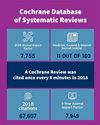
The Cochrane Database of Systematic Reviews (CDSR) stands as the premier database for systematic reviews in healthcare. It comprises Cochrane Reviews, along with protocols for these reviews, editorials, and supplements. Owned and operated by Cochrane, a worldwide independent network of healthcare stakeholders, the CDSR (ISSN 1469-493X) encompasses a broad spectrum of health-related topics, including health services.

 求助内容:
 应助结果提醒方式:


 京公网安备 11010802042870号


